Commentary on politics today is concerned with size—the size of superpowers and client states, GDPs and deficits, armies and arsenals. But what’s often forgotten is that the issue of scale in modernity was first about inclusion. For Enlightenment philosophers, this is what separated the moderns from the ancients. From the eighteenth century onwards, albeit slowly, ever more people came to regard government as something they should have a say in—and a right to.
It was not long before this widening field of participation was redescribed more anxiously, as the “rule of the masses.” And indeed, once they got rights, the masses did not remain inert. They organized themselves through collective institutions—parties and unions, parishes and town halls—giving their grievances form and force. Their focused energy could strike fear in the halls of power. Writing at the height of the Cold War, the footballer-cum-spy Ernest Cuneo remarked that the masses, once organized, were far stronger than even their numbers might suggest: individual desire could explode into mass movements.
Those energies persist, yet they’ve lost their shape. There is less fear today of the kind of organized eruptions that recurred regularly throughout the twentieth century. In his new book, Hyperpolitics, Anton Jäger, like many others, attributes this diminished power to the fact that our politics is suffering from a crisis of association. From parties to churches, institutions that once sustained collective life are hemorrhaging members, and our body politic is becoming infirm.
But Jäger, a lecturer in political theory at Oxford University, doesn’t think we’re witnessing democracy’s death throes—at least not necessarily. On the contrary, there has been of late a kind of resurgence. The end of the Cold War dulled mass politics for a time, but in the last few decades discontent has found a voice again, one amplified by the increased speed and reach of communication, exposing ever more people to a continuous stream of information, verifiable and otherwise. But the lack of structured associations to channel this discontent, in Jäger’s view, has led to “extreme politicization without political consequences.”
At first glance, Jäger seems to be rehearsing a story Commonweal readers know well. The crumbling of the Berlin Wall, he notes, was quickly followed by political apathy. The Baby Boomers, content with the calm brought by liberalism’s apparent victory, mistook equilibrium for resolution. The problems of politics had been dealt with, many thought. Yet as the liberal order’s fault lines became harder to ignore, especially after the 2008 financial crash, disinterest gave way to discontent, which quickly hardened into disaffection.
In Jäger’s telling, this produced an “antipolitics” whose antipathies did not stop at presidents and parliaments but spread to everything elites and the establishment touched. While mass parties were the first to feel the strain, all the great membership organizations that once underwrote public life decayed in tandem: not only were citizens increasingly “bowling alone,” in Robert Putnam’s famous phrase, but congregations thinned, union rolls shrank, and community halls emptied out. Civic frustration spawned social fragmentation.
Helpfully, Jäger doesn’t stop here. Antipolitics didn’t simply register a distaste for the old order; it led to the post-2008 populist eruptions whose rhetoric repoliticized public life. In this sense, the antipolitical—and populism along with it—was less an endpoint than a prelude to what Jäger considers our defining condition: hyperpolitics. More of a “tendency than a totalizing style,” he writes, the hyperpolitical names the “mood of contemporary politics” that emerged around the mid-2010s: one of “incessant yet uncoordinated excitation.” Grievances are voiced, identities formed, and demands made ever more intensely, but in increasing isolation and with decreasing commitment.
Our market societies don’t help. In a world defined by what Jäger—borrowing from the economist Albert O. Hirschman—calls “ease of exit,” commitments of all kinds become provisional: relationships, jobs, and political loyalties are continually reappraised and abandoned. In a sense, he points out, citizens have become akin to investors at the stock exchange, “allocating resources and withdrawing them once the return on investment is no longer guaranteed.”
Jäger’s account doesn’t so much break new ground as sharpen some familiar diagnoses of democratic crisis. Since Alexis de Tocqueville, many commentators have identified the central danger of modern politics as an excess of egoism (something investors are also prone to). Given that democracies are sustained by the belief—or myth—that every citizen has a voice, there is a risk that public life will splinter, lapsing into restlessness, instability, and private self-concern. The remedy, according to this view, is association. Between citizens and the state stands a dense middle layer of organizations—churches, town halls, civic groups—in which private interests are disciplined into public habits. Through dialogue, cooperation, and small-scale decision-making, these voluntary associations become “schools of democracy.” As we witness the demise of associations today, Tocqueville’s followers might conclude that political disarray emerges as a matter of course—hyperpolitics is merely the latest expression of an unmediated, egotistical citizenry.
But that explanation, as Jäger’s account implies, has limits. The Tocquevillian tradition valorizes associational life chiefly for how it facilitates public order: individual passions are disciplined, egoism tempered, democratic polities made governable. But this vision of politics is defensive in a way Jäger doesn’t endorse. For him, the virtue of mediation lies not in protecting society from the harm of unbridled instincts; rather, it provides shape to that energy which so troubled Tocqueville and Cuneo.
Jäger has more hopes for civil society than mere stability. Unmediated social life may be unfocused, but it can generate new political possibilities. If it is only valued for its stabilizing effects, civil society will become subservient to government, which will determine its purpose and meaning. Instead, we should recognize that society harbors a plurality of identities and wants, practices and ideals—none of which can be fixed in advance. The ends of associations lie not in their political effects but in themselves—in the ways the members’ aspirations are worked out in their relationships and cooperation. Giving form to these desires and dynamics, association renders them intelligible to political society as a whole—not just its governors. The challenge of our hyperpolitical age, then, is not to protect civic order from the people, but to recover forms through which the people might give shape to the society they inhabit.
Jäger is hesitant to judge in advance the substance of social discontent itself, but he is comfortable diagnosing the forms through which it is—or isn’t—being organized. This is apparent in the book’s treatment of the social movements we’ve witnessed over the last decade, including on the left. Protest politics since the “Trump/Brexit moment,” Jäger writes, have been mired in the hyperpolitical mood. Whether climate activists or anti-lockdown protesters, those who have taken to the streets “resemble less a militant collective,” he observes, than “swarms, a myriad animated by brief, potent stimuli.”
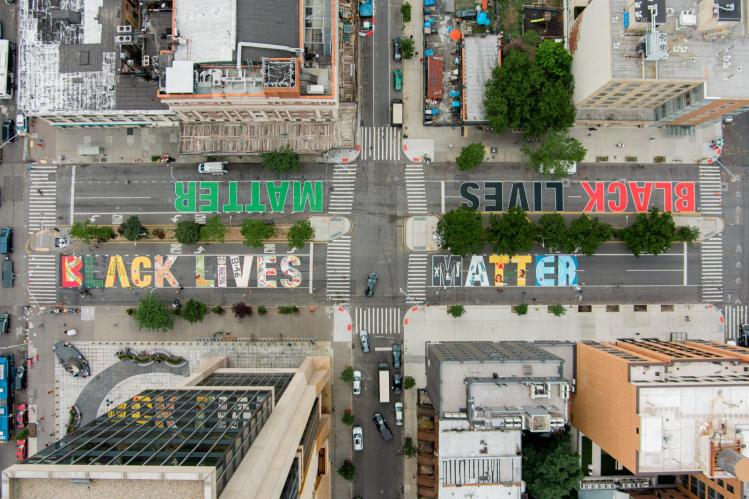
One of the more striking passages in Hyperpolitics is its comparison of the Black Lives Matter protests of summer 2020 to the storming of the Capitol in January 2021. While Jäger notes that they are, on moral grounds, “worlds apart,” they nevertheless reflect the same organizational patterns: fleeting in duration, without structured membership or real discipline in those who take part. Though some see such uprisings as useful expressions of social desire, Jäger remains convinced that they are simply “the product of a hard but hollow environment.” He appreciates BLM’s attempt to “break the iron grip of neoliberalism” but stresses that it is trying to do so “without the requisite tools.”
In place of swarm-like protest, Jäger wants to see not less politicization but more durable forms through which it can become consequential. Throughout the book, he returns to mass parties and trade unions: institutions that, in their heyday, aggregated grievances, trained activists, and translated diffuse discontent into strategic leverage. In the absence of such groups, today’s protests risk resembling not the organized politics of the 1930s but the recurrent peasant uprisings of the ancien régime. While they may register anger, they struggle to alter underlying inequalities.
Jäger is not simply nostalgic for a vanished world; he is clear that classical mass parties belonged to a social order of stabler loyalties and clearer lines of conflict than our own. But with the return of some of the old macroeconomic hardships—inflation, wage stagnation, war—the collective bodies that once made those pressures politically consequential need to be revived, even if complete restoration proves impossible.
Here, though, Hyperpolitics raises an awkward question. If durable association is the remedy to hyperpolitical fragmentation, then the right has often proved better than the left at supplying it. Jäger’s discussion of the Tea Party is particularly instructive. Whatever the balance between elite orchestration and grassroots initiative, the movement was more effective than its left-wing counterparts at channeling scattered anger into structured political opposition. This points not simply to the right’s superior sociability, but to a different kind of organization.
Right-wing associations often derive their strength from forms of authority—charismatic, traditional, moralistic—that impose order on the contingencies of social life rather than giving democratic shape to them. What they gain in discipline and cohesion, they lose in any capacity or desire to challenge inequality. Their internal habits are more readily reconciled with neoliberalism’s preference for hierarchy, even when they clothe it in the language of popular revolt. “For the left to catch up with its rivals,” Jäger writes, “will require a philosophical reckoning with the historic decomposition of voluntary association.”
But the solution may be more piecemeal than Hyperpolitics suggests. Jäger tends to pass over the fact that many of the movements he dismisses—often rightly—as too diffuse, too fleeting, too unsteady in their attachments, are nevertheless trying to rebuild social life. Beneath their volatility is a more durable ambition: not only to protest the world as it is, but to practice, however imperfectly, ways of living that might point beyond it. This has been the impulse at work across much protest politics over the last two decades. It has often failed, and Jäger is very good at explaining why. But at their most serious, such movements are not merely expressive; they are attempts to rethink sociability today so that it might become the structure of politics in the future.
The fragmentation of associational life has a lot to do with the decomposition of trust—in institutions as well as in each other. We need to rebuild those practices of fellowship that are the pillars of communal life. Wisdom here can be drawn from Pope Francis. Back in July 2015, in his address in Bolivia to the World Meeting of Popular Movements, Francis warned that well-ordered civic life would not just emerge from a romantic affection for spontaneity or the streets. He insisted that positive change doesn’t follow from “any one political decision or change in social structure”; rather, it requires the patient work of process, in which the “drive to sow, to water seeds which others will see sprout, replaces the ambition to occupy every available position of power and to see immediate results.”
What Francis grasped—more clearly than Hyperpolitics does—is that stable organizations do not emerge from nowhere. Before there are durable groups, there must be practices that make endurance possible—habits of cooperation, forms of mutual recognition, a sense that one’s fate is bound up with others. The real political work, in other words, begins before the institution fully appears. It is done gradually, from below, in the slow reconstitution of social relations. This is no alternative to organization; but for Francis, organization cannot last unless it’s already rooted in a form of life. The same intuition is behind synodality: institutions are renewed not only by programming or leadership, but by remaking the practices through which people learn to inhabit them.
Jäger identifies a need for organization but leaves its preconditions insufficiently specified: how political forms are prepared in everyday life. The problem with hyperpolitics, in other words, may lie one step further back—not in the lack of durable organizations, but in the thin social world behind failed organizations: a world that has become more mobile, less trusting, and less capable of sustaining attachment. To rebuild associational life, then, it is not enough to restore the channels through which grievances can be aggregated and disciplined. We must reconstruct, at a more basic level, the bonds that hold people to one another.
This too is political, but at a more basic level of civic relationship. What is needed is nothing short of a refashioning of collective belonging itself. Only then might attempts at political action acquire the weight, form, and endurance required to become more than a passing mood.
Hyperpolitics
Extreme Politicization Without Political Consequences
Anton Jäger
Verso Books
$19.95 | 128 pp.
We welcome your comments about this article. Please send your response to [email protected].