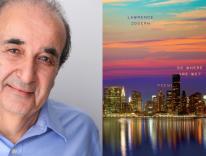
The title of Lawrence Joseph’s latest collection of poetry, Precisely Now (Farrar, Straus and Giroux, $18, 96 pp.), can be read in at least two different ways. First and foremost, these poems describe what it’s like to live now: not roughly now; not just about now; but exactly, precisely now. Joseph has a sensitive eye and an even more sensitive ear, and he’s spent years observing how America looks and sounds: the “sad, secret violet” of the Hudson River and the “light particled / with sawdust” in Detroit; the deranged speeches of our politicians and the power-hungry language of our bankers and lawyers. He is, to borrow from an earlier poem of his, our country’s poetic “Recording Angel / complet[ing] the exactest chronicle.” And it’s the exactness of Joseph’s language that suggests another meaning of his title. The book registers what it’s like to live at this precise, exact moment, and it does so through the precision and exactness of its language. Precisely Now is about the world; all great poetry is. But it’s also about the aesthetic rendering of the world, the artist’s quest for forms that will do justice to reality.
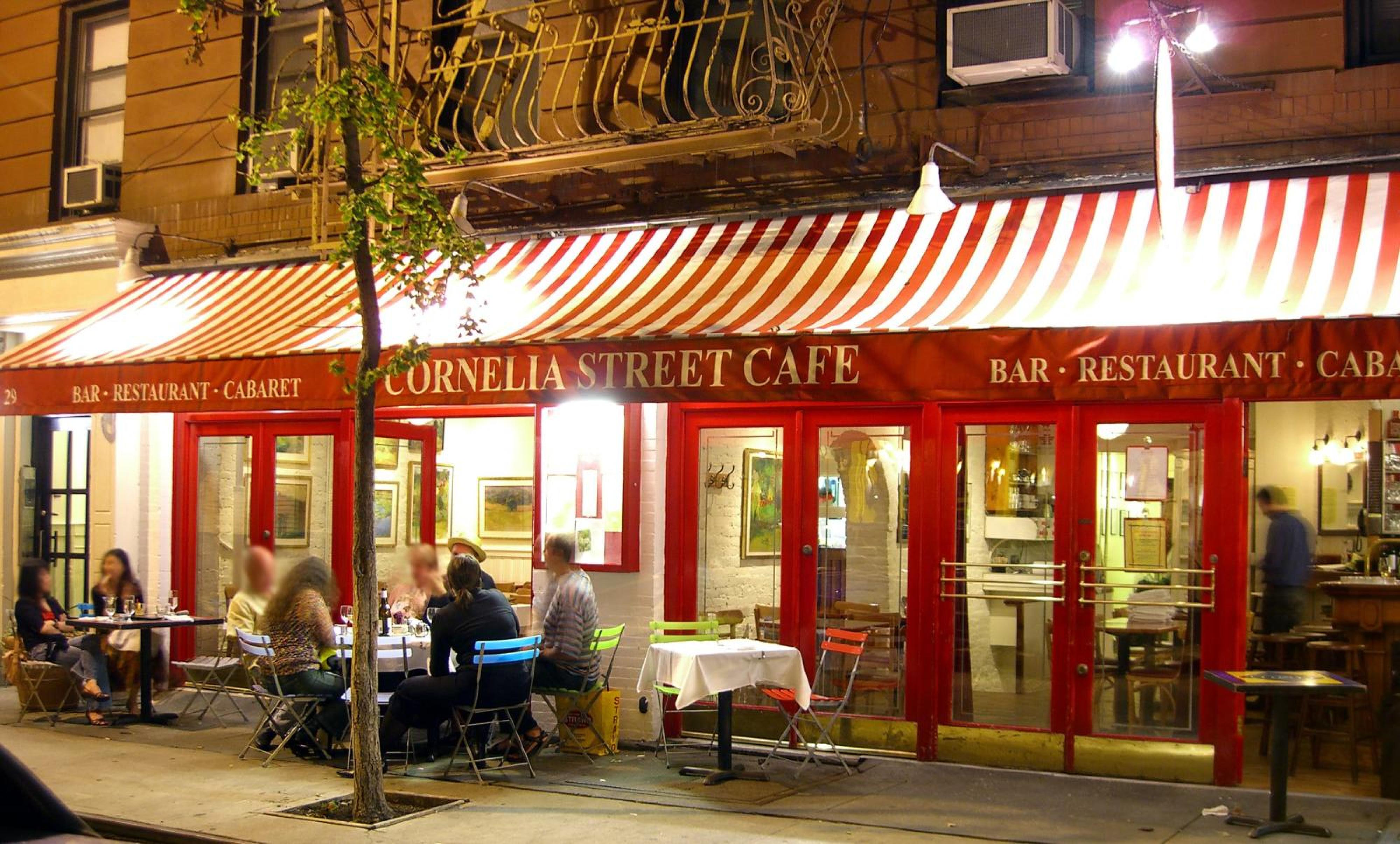
The book’s thirty-two poems, many organized into couplets and all displaying interesting modulations of visual and musical shape, offer a record of “these specimen days” through which we have been living since Joseph’s last book came out in 2017. The book begins “in the café on Cornelia Street” at a moment when “the coronavirus hasn’t happened yet.” It ends during what the title of one poem calls “This Phase of the 60th American Presidentiad,” by which time Joseph’s beloved Cornelia Street Café has closed and “quantum leaps // in the annals of atrocities” have been made. What is it like to live precisely now? It’s to be aware of a “high T, alpha brain-addled ketamine freak / world’s richest man revel[ing] in his Nazi salute.” (Hi there, Elon.) It’s to hear someone declare of a bombed-out Gaza that “everybody I’ve spoken to / loves the idea of me owning that piece of land / creating something that will be magnificent, / think of it as my real estate investment / for the future, we will turn it into the Riviera.” (Hello, Donald.) It’s to look around you—in the physical world and online, in laws and in language —and find “Catastrophe. Power, / domination, sadistic, / avaricious, evil, this, / this hyperreal flow of it now.”
You might like: An interview with Lawrence Joseph
Lawrence doesn’t look away from the violence that constitutes so much of our world. He notes the “exponentially unspeakable” brutality of war that we seek to ignore or obfuscate: “Thermobaric warheads / vaporize bodies, zeroed-out a word // for execution, zero-them a verb.” “The Currency of an Industrial-Scale Slaughter,” a forty-six-line, one-sentence poem about Gaza, begins with horrible clarity: “It exists, oh for certain it exists, / burnt children’s bodies carried in / screaming parents’ arms / exist.” What abyssal difference there is between the past participle “burnt” and the present participle “screaming.” The third and final numbered section of “These Specimen Days” contains four brilliant couplets:
Of grammar,
of syntax, tone and pitch, notes, notations,
days without tears a rare occurrence,
the secret heart of the clock, the heart’s
core, torturers, rifles, inquisitors,
slavers with death’s-head armbands,
these specimen days, yellow, the full
moon at sunrise, in indigo sky.
There’s Yeats here. (“The heart’s / core” echoes the conclusion to “The Lake Isle of Innisfree.”) And there’s Whitman, too. (Specimen Days and Collect is the title of his 1882 prose book in which he sought to get at the “interior history” of the Civil War.) But the precise attention to how violence operates precisely now is typically and distinctively Joseph.
In several of the collection’s most moving poems, Joseph also records the violence done to bodies in more intimate realms: through aging, through disease, through the sheer fact of being embodied, mortal beings. The book doesn’t exactly exhibit what usually passes for “late style”—it’s too elegantly shaped, too rigorously formed, for such a description—but it is about, among other things, being late in life. (Joseph is seventy-eight.) The speaker of one poem, titled “September … October … November … ,” describes the “duodenal / tubular adenoma” that has resulted in him “having been surgically put / to a robotic knife.” (Joseph’s deployment of the past perfect here subtly suggests, as his poems so often do, how we use language to abstract, and thus make less painful, concrete suffering.) In another poem, “March … April … May … June … ,” the speaker, whose beloved is ill, describes his attempt “to find words // to hold my mind against the fact of your body’s / now secret flow of correspondences, dark // the mind that must trace malignance, / the prayer that asks that a tumor be dead.” These two poems, and the book more generally, try to find words to hold the mind against the fact of pain, and that preposition, “against,” works in complicated ways. The language of poetry allows us to keep our minds in a world that is liable to drive us crazy; it offers a stay against suffering’s deforming force. But the language of poetry also brings the mind right up against, into contact with, suffering. Poetry, “language violently / pressurized,” becomes a form of prophetic witness.
There’s pathos in Joseph’s attention to pain at so many different scales, from the global to the personal. Precisely Now also communicates the buffoonish comedy of our time. Remember Rudy Giuliani in 2020, standing outside of Four Seasons Total Landscaping, a company absurdly and perfectly “located between Fantasy Island Adult Books / and Delaware Valley Cremation Center”? Remember Giuliani’s “jet-black hair dye pouring onto his cheek,” his “tortoise-shaped sunglasses, pants unzipped, / two phones in his suit pocket knocking / against each other accidentally activating / Siri who says she doesn’t understand his command”? Joseph does. It’s horrifying to hear President Trump corrupt the language of aesthetics to describe his warmaking: “his bombs, they’re beautiful bombs, / his generals are beautiful generals, / the missiles he sells are beautiful.” But it’s a bit funny to see a man who is so ugly in so many ways, with his “precious, preening, cotton candy hair” and slavering greed, extol beauty as the standard of standards. The velocity of Joseph’s poems, their ability to shift register and tone not just from poem to poem or stanza to stanza but from line to line, matches the velocity of our era, when everything from the flow of capital to the raging of wildfires has sped up. We’re living in “capital’s Great Acceleration, / the Capitalocene,” in a world in which language struggles to catch up to reality: “A new word, / gigafire, pyrocumulus clouds, fire tornadoes.”
The collection’s final two poems, “So I Try to Paint the Wind in Words” and “Now Light,” are among the best Joseph has written. They’re deeply, theologically contemplative, naming without resolving the fundamental mysteries of existence: “That actually calculable point in time / when all the matter in the observable // universe is compressed into a space / smaller than an atom. The idea of an // incarnate God, fully human.” And they’re deeply, sensorially observant: “Now light. Intimacy’s light. / Light’s metamorphosis, a God afloat // in azure air.” Few poets can move so convincingly from the physical and spiritual grotesqueries that occupy much of this collection to the exquisite lyricism of its final poem.
These last two poems are, in every sense of the word, incarnational. Meaning is carried and embodied in their music; transcendence is discovered in the immanent stuff of the world and in the immanent details of Joseph’s language. (Another poem in the collection is called, appropriately, “Immanence, Transcendence, That Talk Again.”) To call these poems incarnational isn’t to deny that the world depicted in them often feels less charged with the grandeur of God than crying out in God’s seeming absence. In “So I Try to Paint the Wind in Words,” the speaker sees “another day consumed // by passion and grief”—lines reminding us that Christ’s birth leads, eventually, to Christ’s Passion. In “Now Light,” the speaker laments “the wars going on / inside our cells.” The line break gets us to think about the many wars going on out there before bringing us back to the many wars going on in here, inside our bodies as they move, always, toward death.
“Now Light” ends with a series of couplets:
… True,
I’m blue, blue as the moon’s blue
penumbra, blue as the snow
in the streets. Never were the leaves
so yellow, a violet sky in our eyes
as we walk beside the river, the Great
Wheel’s turning, cherry trees in bloom.
Let it be, if it be ours. Love I compose.
An earlier poem in the collection began by channeling the Dante of the Inferno: “A Dante-sense, loose hell-time.” “Now Light” channels the Dante of the final lines of the Paradiso, where we see the love that moves the sun and other stars. This is real, not false, beauty: a beauty born of love and rendered through loving composition. It’s a beauty, Joseph reminds us, that is still somehow possible in our precise and horrible moment.
We welcome your comments about this article. Please send your response to [email protected].