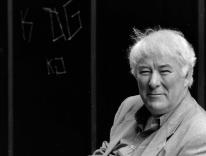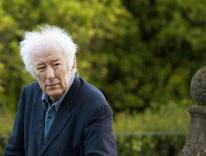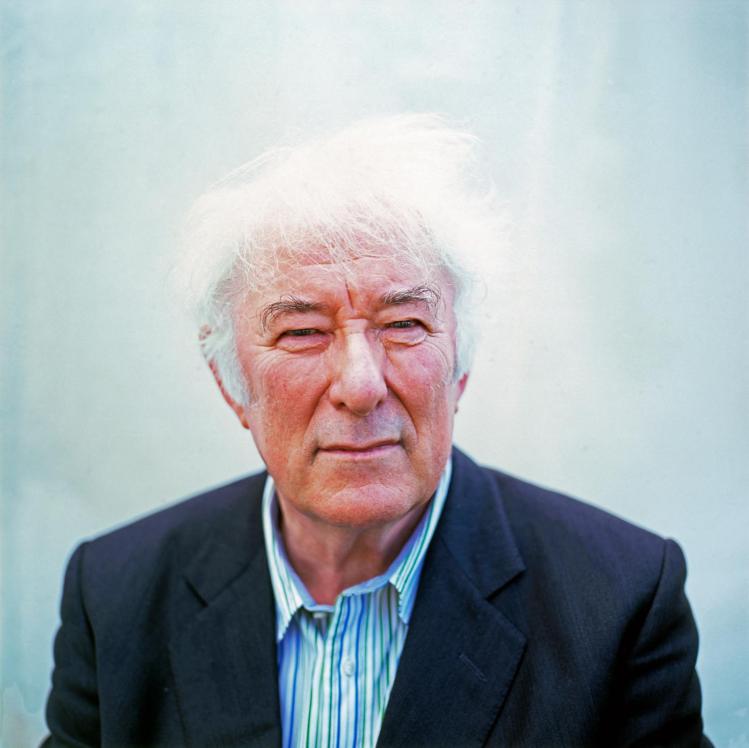
Robert Lowell wrote in 1975 that Seamus Heaney was “the best Irish poet since Yeats”—a claim that some thought hyperbolic, or at least premature. But now, on the arrival of The Poems of Seamus Heaney, Lowell’s view has become consensus. Heaney, who died in 2013 at age seventy-four, produced a breadth and quality of work rivaling that of the first Irish Nobel laureate. Just as Yeats explored the “terrible beauty” of Ireland’s 1916 Easter Rebellion, Heaney weighed the moral scales of “beauty and atrocity” during the three decades of the Troubles in his native Northern Ireland. His ability to channel larger social issues through emotionally intimate lyrics has made a comparably profound impression on Western culture in the twentieth and twenty-first centuries.
Anyone fortunate enough to have been personally acquainted with Heaney during his long and publicly active career knows why the reputation of his writing is only burnished by the legend of his personal generosity. So I begin with a great paradox: though by the 1980s he had given up the doctrinal Catholicism of his upbringing on a small farm in Mossbawn, County Derry, Northern Ireland, Heaney was buried, according to his own wish, with a requiem Catholic Mass. In his homily at the funeral, broadcast by RTÉ in Ireland and simulcast around the world, Msgr. Bernard Devlin, aware of the poet’s conscientious apostasy, nevertheless remembered him as a person manifesting the eight Beatitudes of an ideal Christianity. Heaney’s son Michael ended his eulogy by relating that just before he died on his way to surgery, his father had texted his wife Marie the Latin imperative sentence Noli timere, “Do not be afraid.” While I wouldn’t speculate on the private meaning of that final message, I know that Heaney had used the maxim previously in other contexts, most notably in his poem “The Master,” a tribute to the truth-telling witness of his fellow Nobel laureate Czesław Miłosz, the Polish Catholic poet. I want to think that Heaney’s dying words were also a general exhortation to courage in the face of mortal vulnerability and existential doubt, as well as a testament of “faith” not in Catholic orthodoxy or specific beliefs, but rather to the salutary ends that he believed poetry can serve.
In his elegy for Miłosz, whom Heaney greatly admired and with whom he shared an inheritance of a deep familial and cultural allegiance to Catholicism, he testifies to the resonance of belief in the Eucharist while describing its loss:
‘There was never a scene
when I had it out with myself or with another.
The loss occurred off stage. And yet I cannot
disavow words like ‘thanksgiving’ or ‘host’
or ‘communion bread.’ They have an undying
tremor and draw, like well water far down.’ (“Out of This World”)
While that loss may have occurred “off stage,” a number of Heaney’s poems dramatize his religious agon, which ultimately allows him, in the words of his Nobel Prize citation, to “exalt everyday miracles and the living past.”
While he was actively engaged in the social and political issues of his time, Heaney’s imaginative reach for the transcendent and the numinous makes him, in my opinion, the model of a religious poet for a secular age. In a larger sense, great lyric poets are never just one thing: they have the ability to adapt themselves, their expressive first-person “I” for different occasions at different times. So to value Heaney through other lenses—e.g., as a nature poet probing the darker side of the pastoral tradition, or a sociopolitical poet thrust into the long-suppressed postcolonial violence of the Troubles—can also be compelling. But for this reader, a good part of the draw and fascination of Heaney’s poetry has always been its particular concern with the ultimate journey and fate of the human soul.
The Poems of Seamus Heaney is a rich compendium that presents vivid episodes of this journey: it not only includes all twelve of the individual poetry books published in his lifetime, but also the full stock of previously published but uncollected poems, as well as twenty-five heretofore unpublished poems selected by the Heaney family. This complete Heaney collection weighs in at 1,252 pages, and you needn’t be a scholar to appreciate the careful, thorough, and astute editing by Rosie Lavan and Bernard O’Donoghue, with Matthew Hollis. Their commentary section provides a clear context for each book, and their notes glossing particular locutions, allusions, or relevant facts in individual poems are clear and detailed without being intrusive or pedantic.
Heaney’s debut collection Death of a Naturalist (1966) announced an original, authentic, and already assured voice. His famous lead poem “Digging” ends with a revelation:
But I’ve no spade to follow men like them.
Between my finger and my thumb
The squat pen rests.
I’ll dig with it.
Admiring the skills of his potato-digging father, the speaker has an epiphany that writing can be imagined as an alternate form of farming. While his father digs for the “good turf,” Heaney’s exploration of natural ground in concrete, sensuous language can bring his deepest motives to light:
Now, to pry into roots, to finger slime,
To stare, big-eyed Narcissus, into some spring
Is beneath all adult dignity. I rhyme
To see myself, to set the darkness echoing. (“Personal Helicon”)
In the title poem “Death of a Naturalist” the innocent speaker is suddenly revulsed by the violent biological underside of mating frogs:
I sickened, turned, and ran. The great slime kings
Were gathered there for vengeance and I knew
That if I dipped my hand the spawn would clutch it.
In Heaney’s work, nature often reveals itself as an index of truth and becomes the inspiration for both joyful wonder and tragic lament.
Some of the early poems about the darker side of nature unconsciously anticipate the violent eruptions of the Troubles in the late sixties. The bloody, largely sectarian thirty-year civil conflict in Heaney’s native Ulster exerted immense pressure on him to use a more public voice to ally with compatriots. But while he could not help but express his Catholic and nationalist sympathies in poems like “Requiem for the Croppies” or “Act of Union,” an allegory of English abuse of a feminized Ireland, he resisted, like Yeats before him, the temptation to write poems of rousing partisan appeal. Instead, inspired by his reading of P. V. Glob’s The Bog People about the preserved Bronze Age corpses recently discovered in Scandinavia, Heaney found what he called “images and symbols adequate to our predicament.” He imagines the disinterred body of “The Tollund Man” from Wintering Out (1972) as a ritual sacrifice:
Bridegroom to the goddess,
She tightened her torc on him
And opened her fen,
Those dark juices working
Him to a saint’s kept body
The poem suggests a view of the Troubles as an atavistic tribal conflict. But Heaney does not take refuge in such anthropological analogies. Addressing directly a recovered female body in “Punishment” (North, 1975) as if she were a Catholic victimized for consorting with British soldiers, he indicts himself for hypocritical moralizing:
My poor scapegoat,
I almost love you
but would have cast, I know,
the stones of silence.
I am the artful voyeur
This tendency toward self-examination and confession, which here alludes to the adulterous woman in John’s Gospel, clearly reflects the influence of Heaney’s intensive Catholic training. Such conflicts of conscience become even more pronounced in his work during the 1980s and lead to a crucial breakthrough: translating the medieval Irish tale Buile Suibhne or Sweeney Astray (1983), about a king transformed into a bird by the curse of a Catholic bishop, and writing the title poem in Station Island (1984), in which Heaney confronts a series of ghost figures from his past while on a fictional pilgrimage at Lough Derg. The experience of writing these ultimately seemed to provide a new freedom and buoyancy where he could reconceive and “credit marvels” in Seeing Things (1991), The Spirit Level (1996), and in other late collections, especially his powerful and final volume, Human Chain (2010).
Heaney made clear to Dennis O’Driscoll in his book-length interview Stepping Stones (2008) that he considered “Station Island” “a kind of inner courtroom, as dramatic as it was confessional…written, sure enough, to release an inner pressure.” Laboring under such “inner pressure”—both political and religious—he turns to the ghost of James Joyce for the last instructive words:
‘That subject people stuff is a cod’s game,
infantile, like this peasant pilgrimage.
You lose more of yourself than you redeem
doing the decent thing. Keep at a tangent.
When they make the circle wide, it’s time to swim
out on your own and fill the element
with signatures on your own frequency,
echo-soundings, searches, probes, allurements,
elver-gleams in the dark of the whole sea.’
Here Joyce preaches a gospel of artistic liberation in which, like Stephen Dedalus in A Portrait of the Artist as a Young Man, the poet must not allow the constraints of nationality, language, or religion to repress his creative daemon. Confirming in Stepping Stones that he followed through the “loophole for the soul” that Joyce had created, Heaney in “The First Flight” channels his own voice through Mad Sweeney, the king transfigured to a bird:
I was mired in attachment
until they began to pronounce me
a feeder off battlefields
so I mastered new rungs of the air
to survey out of reach
their bonfires on hills, their hosting
and fasting
The merged “Heaney-Sweeney” voice is more self-justifying and assertive than the mostly plaintive and repentant one that Heaney translated more literally for the protagonist of Sweeney Astray.
But Heaney’s posture here is far from that of Joyce as heroic aesthete, and in his Nobel Prize acceptance speech, “Crediting Poetry,” he describes himself after this crucial midcareer period in humbler terms as one “bowed to the desk like some monk bowed over his prie-dieu…incapable of heroic virtue or redemptive effect, but constrained by obedience to his rule to repeat the effort and the posture. Blowing up sparks for a meagre heat. Forgetting faith, straining toward good works.”
His next collection, The Haw Lantern (1987), reflects his turn toward “good works” in the form of several ethically oriented parables, including “From the Republic of Conscience,” in which the speaker has become a dual citizen of a moral utopia he must now represent where “no ambassador would ever be relieved.”
Heaney also begins to shift the focus of his elegies. The power of earlier laments like “The Strand at Lough Beg,” for his neighbor and cousin Colum McCartney, and “Casualty,” for a Belfast fisherman friend—both victims of Troubles violence—derives in part from his ability to address larger public issues with personal feeling and formal skill. But in “Station Island,” he also conjures the ghost of his cousin Colum to indict him for artistic distortion and vanity:
‘The Protestant that shot me through the head
I accuse directly, but indirectly, you
who now atone perhaps upon this bed
for the way you whitewashed ugliness and drew
the lovely blinds of the Purgatorio
and saccharined my death with morning dew.’
In The Haw Lantern, Heaney addresses more intimate relationships in a series of aching elegies in sonnet form for his mother. The series, called “Clearances,” culminates in the image of a chestnut tree planted at Heaney’s birth and later cut down:
Deep planted and long gone, my coeval
Chestnut from a jam jar in a hole,
Its heft and hush become a bright nowhere,
A soul ramifying and forever
Silent, beyond silence listened for.
Heaney here sublimates his religious instinct toward more existential and paradoxical images of departed souls, as in the “ramifying” presence of his mother’s absence.
Heaney’s breakthrough collection Seeing Things opens with his translation from Aeneid, Book VI, where Aeneas attains the golden bough necessary to access the afterlife. It closes with his translation of a passage from the Inferno, where Dante prepares to cross the River Styx. This mythological frame charts the dual sources—both classical and Christian—Heaney would draw from during the rest of his writing life. “Fosterling” describes the deep pivot he makes in Seeing Things upward from natural ground into air, beyond the materially visible world:
Heaviness of being. And poetry
Sluggish in the doldrums of what happens.
Me waiting until I was nearly fifty
To credit marvels. Like the tree-clock of tin cans
The tinkers made. So long for air to brighten,
Time to be dazzled and the heart to lighten.
The first section of “Squarings,” a sequence of forty-eight twelve-line poems written in the wake of his father’s death, contains the line, “Just old truth dawning: there is no next-time-round.” This premise seemingly dismissive of an afterlife is the paradoxical keynote of a volume filled with glintings of the numinous. If certainty can undermine the need for religious faith, a poet’s visionary witnessings beyond rational sense or material evidence might enhance it.
While The Spirit Level includes the horrors of real-world violence and injustice, the collection continues to “credit marvels,” as in the local Irish legend of “St. Kevin and the Blackbird,” which imagines the saint enduring physical agony while allowing a bird to nest in his prayerful outstretched palms:
Kevin feels the warm eggs, the small breast, the tucked
Neat head and claws and, finding himself linked
Into the network of eternal life
Honoring the faith that the saint represents, “at the intersection of natural processes and the glimpsed ideal,” Heaney in his Nobel address compares Kevin’s story to those in other cultural and faith traditions, including that of poet-figure Orpheus in Greek mythology, “whose rapture came from music rather than prayer.” Closing this collection, “Postscript” offers a moving image of how a porous, transient self can glimpse the transcendent:
You are neither here nor there,
A hurry through which known and strange things pass
As big soft buffetings come at the car sideways
And catch the heart off guard and blow it open.
The many rich lyrics in Electric Light (2001) and District and Circle (2006), which recover experience through memory and language, illustrate Yeats’s notion that the imagination can grow more vital as the body ages. In this light, Human Chain (2010), composed in the aftermath of Heaney’s stroke in 2006 and the last book published in his lifetime, is especially poignant. Pursuing images of an afterlife that can serve his creative needs, Heaney again turns to the Aeneid, and in “Route 110” and “Album” braids deep personal memories with Aeneas’s mythic quest to reunite with his father Anchises.
Just as a moment back a son’s three tries
At an embrace in Elysium
Swam up in my very arms (“Album”)
In “Miracle,” Heaney draws from the New Testament story about the sick man at Capermaum:
Not the one who takes up his bed and walks
But the ones who have known him all along
And carry him in—
I read the title of this tribute to the neighbors who carried him for emergency aid as aspirational, holding up an act of human charity as a sacred phenomenon. The image of strenuous physical lifting in the title poem “Human Chain” is balanced by “[a] letting go which will not come again. / Or it will, once. And for all.” This premonition of death as an ultimate release may be ambiguous, but not fearful. Noli timere.
Unlike Yeats, who invented his own complex system of the soul’s journey in life and death, Heaney makes clear in Stepping Stones that while agnostic on some counts, he had not lost his sense of the “ordained structure” of his native Catholicism. In any case, like most readers, I do not go to poetry for theological truth, but for imaginative consolation, for new insight—and for the life-enhancing pleasure of “the music of what happens” (as Heaney writes in “Song”). The Poems of Seamus Heaney provides all that, and more.
“So walk on air against your better judgment,” Heaney exhorts in “The Gravel Walks” from The Spirit Level. The line beautifully captures the spirit of a poet’s paradoxical faith. It is carved on his memorial, located in the graveyard of St Mary’s Roman Catholic Church in his childhood town of Bellaghy, Northern Ireland.
The Poems of Seamus Heaney
Edited by Rosie Lavan and Bernard O’Donoghue with Matthew Hollis
Farrar, Straus and Giroux
$60 | 1,252 pp.
We welcome your comments about this article. Please send your response to [email protected].