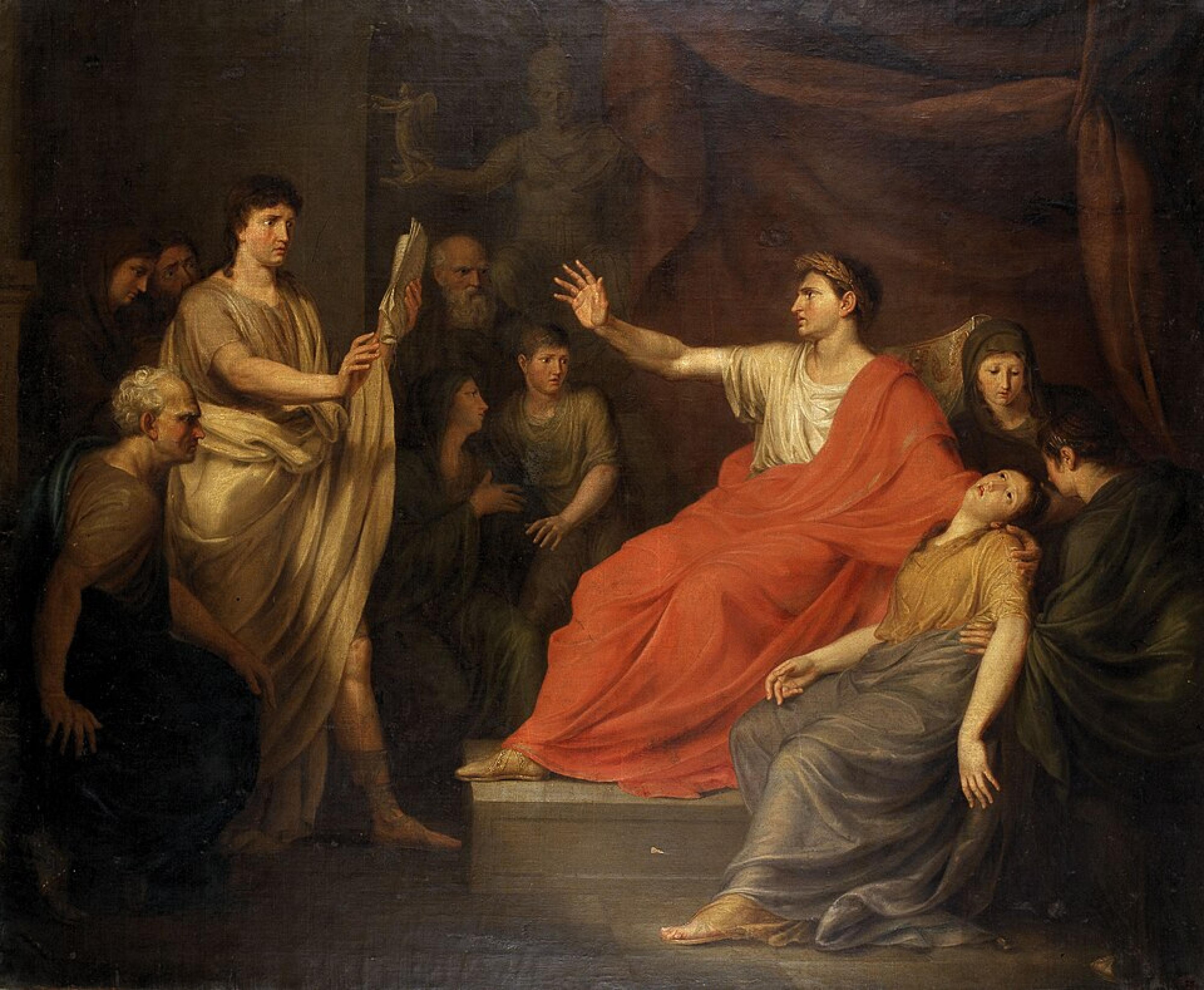
“I enter the ancient courts of ancient men. Received by them lovingly, I feed on the food that alone is mine and that I was born for. There I am not ashamed to speak with them and to ask them the reason for their actions; and they in their humanity reply to me.” Niccolò Machiavelli wrote these words in 1513 while under house arrest, describing what happened each evening when he turned to the literature and history of antiquity.
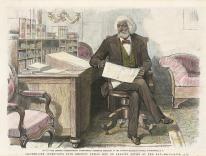
More than three centuries later, W.E.B. Du Bois described a similar experience in The Souls of Black Folk, challenging America to make education available to Black men: “I sit with Shakespeare and he winces not.… I summon Aristotle and Aurelius and what soul I will, and they come all graciously with no scorn nor condescension. So, wed with Truth, I dwell above the Veil.”
Machiavelli and Du Bois believed that the thinkers of the past could be partners in conversation. Reading seemed a way of entering a living exchange that could shape one’s knowledge and way of life. And in engaging those monumental works, they themselves became part of the tradition they inherited.
Over the past several decades, another habit of reading has grown influential: the instinct to unmask, to expose, to diagnose. The philosopher Paul Ricœur gave that instinct a name: the “hermeneutics of suspicion.” Reflecting on Freud, Nietzsche, and Marx, Ricœur observed that they shared “the decision to look upon the whole of consciousness primarily as ‘false consciousness.’” Measured doubt about the external world had been central to Western thought since Descartes. But with those three thinkers, suspicion turned inward. Human consciousness itself became suspect. The stories people tell themselves (about their motivations, about power, about the meaning of their work) were necessarily deflections, disguises, or rationalizations. Once stripped of “false consciousness,” such narratives revealed the hidden operations of ideology or desire that made unjust arrangements seem natural or masked our unconscious wishes.
Freud, Nietzsche, and Marx were not skeptics, Ricœur wrote, but “destroyers,” who nonetheless allowed new beginnings to take place. After their example, the primary question of intellectual investigation was no longer simply whether an object of inquiry corresponded to a describable reality. Instead, interpretation itself came under scrutiny: the stance of the interpreter, the frameworks and assumptions brought to bear, the emotional and ideological investments that shape every act of reading.
Suspicion became not merely a tool of analysis but a stance, one that significantly shaped the humanistic disciplines. This mode of interpretation treats texts not as forthright expressions but as sites of concealment, masking ideology, complicity, or power. That style of reading has yielded insights, showing, for example, how texts can normalize social arrangements such as slavery, political domination, or the subordination of women that earlier readers often accepted without question.
But as Rita Felski points out in The Limits of Critique, suspicion, like any method, can harden into unreflective habit. Over time, it becomes not only a way of reading but a way of not reading, unwittingly encouraging the reader to screen out aspects of texts that do not serve the analytic framework. A mood of cool irony leaves little room for productive wonder. Diagnosis substitutes for engagement.
I worry that this orientation, taken as a default, has drained the humanities of some of their vitality, particularly when it comes to how we teach the Western intellectual tradition. In the effort to resist inherited orthodoxies, scholars have at times come to see the tradition itself as a kind of monolith to dismantle. But ironically, this approach can obscure the fact that the tradition that links Plato to Augustine, or Aristotle to Aquinas, is not a seamless story of progress. Our intellectual heritage is a slow development born of argument, controversy, and struggle. But it is also a fruitful centuries-long conversation about enduring human questions: What is the good life? What is justice? Do we have free will? How should we live in community? How should we face suffering and death? Is the present world all that exists? Does anything await us after death? Does our religious faith matter? These questions are not unique to any one tradition, of course. But what we now call Western thought offers a particular set of responses—shaped by specific cultures, histories, and religious inheritances—that resonate far beyond their original contexts.
Many figures in this tradition (people like Plato, Augustine, Gregory the Great) did not think of philosophy as only an abstract or technical pursuit. They saw it as a way of life. They believed that reading and thinking could shape how one lived. Philosophy, in this older sense, meant striving for wisdom, not only system-building. It was often inseparable from religious practice, deep moral reflection, and the cultivation of one’s soul.
Much recent scholarship has called for the “decentering” or “decolonizing” of the West. But in the process, we sometimes treat the Western tradition as if it were a closed canon, a fixed identity, rather than the internally diverse and globally entangled phenomenon it has always been. Jesus was a Middle Eastern Jew. Augustine was a North African who wrote in Latin, as the Roman empire unraveled. Aristotle reached medieval Latin Christendom through Arabic intermediaries. Alexandria, Baghdad, and multilingual medieval Córdoba were as central to the preservation and transformation of ancient ideas as Paris or Oxford. The tradition is not a fortress. It is a mosaic, one that from a distance may seem unified but that up close (which is where we humanistic scholars live) contains multitudes of interrelated and perdurable conversations.
We don’t need uncritical reverence toward this tradition. But we do need to read with generosity, allowing that a text might be trying to say something profound. Generosity invites a particular kind of relationship between reader and text: one of encounter and accompaniment, not just dissection.
Especially for those of us in higher education, generosity also invites a different kind of relationship between teachers and students. Suspicion alone rarely inspires for long. Our students are already deeply fluent in the suspicious language of critique, however much they might not share academic vernaculars. And the unprecedented way that information circulates today has made it difficult for them (and for all of us) to slow down and pay attention to texts that deserve it, and to do so without cynicism. What students often crave is a chance to wrestle with serious ideas on their own terms. We can meet this desire by modeling reading as a form of attention, dialogue, and humility.
Many of the interpretive habits that now shape the humanities took hold in an academic world, two scholarly generations ago, that assumed a shared cultural foundation: some familiarity with the Bible, Greco-Roman mythology, and a broad narrative of Western European history. That assumption no longer holds. Today’s students often arrive curious and capable but without that background. This is not a failing; it is a fact. It means, however, that we cannot approach those texts only from within a tradition we presume they already know. We must introduce the conversation before we critique it.
If the tradition includes ideas and assumptions we might reject today, remember that the same tradition also planted the seeds of its own critique. The prophetic books of the Hebrew Bible—Isaiah, Jeremiah, Amos, and others—are searing in their moral clarity, condemning not the beliefs of foreign peoples but the injustices, hypocrisies, and failures of their own communities. They insist that no people, however favored, are exempt from moral judgment. Similarly, Socrates questions the conventions of Athens. Augustine subjects his own ambitions and failures to self-scrutiny. Medieval debates over faith, reason, and political authority unfolded through institutions devoted to disciplined disagreement. The tradition repeatedly preserves voices that challenge its own assumptions.
And that tradition still has much to give us. Plato encourages his students to seek truth and align their souls with what is good. Aristotle invites us to consider the good life by observing how people actually lived. Paul’s insistence that “there is neither Jew nor Greek, there is neither male nor female, there is neither bond nor free, for you are all one in Christ Jesus” grounds equality in a shared human dignity. Augustine’s restless search for meaning helped shape enduring notions of inwardness and selfhood. Gregory the Great translated complex theological ideas into moral language that could reach diverse communities.
The Western tradition is not the only one. But it is one that many of us have inherited. And as Machiavelli discovered in exile and Du Bois “above the Veil,” it is a tradition that lives most effectively when readers enter it as partners in conversation.
We welcome your comments about this article. Please send your response to [email protected].