“In this time of global crisis—of war and deep polarization, of rigid paradigms and mounting climate and economic anxieties—we need the brilliance of a new language, powerful stories and images, the voices of writers, poets, and artists.” I was struck when Pope Francis wrote these words, and struck again when he repeated them, almost verbatim, on May 27, 2023, at a conference in Rome organized by Georgetown University and La Civiltà Cattolica, which I then edited. It wasn’t only what he said, it was the urgency in his voice. At a moment when many public narratives had either withered or calcified, Francis seemed to be suggesting that literature might be one of the few remaining forces still capable of shaking us awake. Its task is not to prescribe strategies but to generate vision—to sketch patterns of connection, to spark transformation. And right now, vision is precisely what we lack.
What role might literature play in rebuilding a sense of the common good? It is no small matter. And for me, it begins with a suspicion: that literature itself has not been entirely innocent. At some point it embraced—perhaps even celebrated—the logic of the self-enclosed “I,” the lyricism of interiority. The epic gave way to the personal essay, collective myths to an endless proliferation of private traumas. There is nothing inherently wrong with this shift—every “I” contains its own cosmos—but when all those solitary “I”s fail to add up to a “we,” something essential collapses.
One writer who wrestled with this tension, and whose work has shaped me deeply, is Raymond Carver. His stories and poems are peopled by those on the margins: men and women leading lives hemmed in by hardship, alcoholism, separation, and a quiet sense of failure. Yet beneath every sparse sentence and muted gesture there runs a deep current: the longing for redemption, the unextinguished need for connection. Carver never sentimentalizes. He treats trauma not as an identity badge but as a wound still open to the mystery of the other.
Take “Cathedral,” one of his best-known stories. Its narrator is a cynical, stunted man who finds himself hosting a blind guest, a friend of his wife. The encounter unsettles him. He is uncomfortable, suspicious, even irritated. And yet, at the story’s end, the two sit together and begin to draw a cathedral: the narrator guiding the blind man’s hand, then closing his own eyes. It is an almost childlike gesture, but in that moment, something breaks open. The man sees—not with sight, but through relation. There is no sermon, no moral. Only the quiet epiphany of openness, the slow birth of a “we.”
In another Carver story, “A Small, Good Thing,” the devastation of a child’s sudden death does not magically disappear. The loss remains. And yet in the midst of the wreckage, something is restored: a modest act of care, a shared pastry, a moment of warmth. The “small, good thing” does not erase the tragedy but keeps it from becoming total shipwreck. Carver suggests that salvation—if we can call it that—emerges only in those fragile instants when words are spoken honestly, or when silence is endured together. His stories do not console; they accompany. And in accompaniment, a tentative community is born. Dignity is reclaimed and words rescued from the static of the everyday.
Dante, too, imagined such a movement. In The Divine Comedy, all of humanity is reflected in the salvation of a single soul. From the chaos of hell—where every damned soul is trapped in radical self-absorption—Dante rises to the luminous vision of paradise: a city of saints, harmonized in God’s love. His journey insists that no one is saved alone. He is led by others—by Virgil, by Beatrice—and at the summit he discovers that the engine of the cosmos is love itself.
Pope Francis was fascinated by this vision. He also praised Leopoldo Marechal, an Argentine novelist who reimagined Dante’s epic in Adán Buenosayres. Marechal’s protagonist dreams of a “city of brothers,” a metaphysical Buenos Aires named “Philadelphia”: a teeming, polyglot metropolis where Spaniards, Italians, Germans, Russians, Syrians, and Lebanese mingle, where diversity itself becomes the forge of citizenship. “Among the world’s metropolises, Philadelphia will reign,” Marechal writes. “A peaceful, happy multitude will walk its streets: the blind will see, the exiled will return, the condemned will be redeemed.” It is a vision that anticipates Francis’s encyclical Fratelli tutti.
We live in a time of great loneliness. Digitally, we are more connected than ever—everything is close, immediate, clickable—yet the sensation of estrangement grows. It is as if our identities have hardened into sealed bubbles, which roll past each other but rarely touching. Can literature help us pierce these bubbles? Can it restore a space where different identities and languages can hear each other, a space of true translation?
Pope Francis found such a space in Martín Fierro, the Argentine epic poem by José Hernández. Francis once wrote that the work dramatizes “the forging of a collective, inclusive feeling.” Hernández evokes a society where everyone belongs—gauchos, merchants, shepherds, artisans, Indigenous people, immigrants—so long as no one hoards everything or drives others off the land. Francis’s reflections on Martín Fierro recall the democratic romanticism of Hernández’s contemporary Walt Whitman, who celebrated the carpenter in Dakota, the miner in California, the ferryman, the cobbler.
Literature is one of the rare human practices still able to establish a common ground. Not because it manufactures consensus but because, within a well-told story, differences can coexist in equipoise. A great novel or poem does not simplify the world; it complicates it in a way we can endure. It makes the world harder to judge but easier to live in.
Consider Flannery O’Connor, another writer who has shaped me. Her stories of the American South probe the mystery of grace in a world scarred by violence and, as she put it, “the devil.” Her characters often appear grotesque, twisted, yet at sudden moments they are struck by a harsh, transforming light. O’Connor shows us that truth wounds before it frees, and that the common good is not the product of benign intentions but of deep, sometimes traumatic conversions. Her fiction forces readers to reckon with themselves, not by providing neat moral lessons but by showing us spaces where despair and hope collide.
Francis once called grassroots activists “social poets.” Addressing popular movements, he said:
That’s what I like to call you—social poets. Because you have the ability and courage to create hope where others only see waste and exclusion. Poetry means creativity, and you create hope. With your hands you forge the dignity of each person, of families, of society itself—through land, housing, work, care, community.
Humanity, in its raw state, is ruthless. We see this everywhere, from Gaza to Ukraine, but also in our own backyards. Solidarity is not the default; it is an art. Pity, mercy, and compassion are forms of poetry. Perhaps the reverse is true as well.
Patti Smith once told me something that has stayed with me: “We need a new language—not one that paralyzes people with horror, but one that awakens them with imagination. Imagination is revolutionary energy.” This holds especially true for writers. To create hope with words is to resist the anesthesia of indifference, to narrate what has been left out of society’s dominant scripts, to restore faces and voices to those flattened into numbers or categories.
“You artists can dream new visions of the world,” Francis said once.
You see things deeply and from afar, like sentinels squinting toward the horizon. Your art acts as society’s critical conscience, pulling back the veil on what we take for granted. Like the prophets, you show us what we would rather ignore. You challenge false myths, new idols, banal discourses, the tricks of power. Artists live in tension between reality and dream.
Literature, like all the other arts, is a visionary activity. Its task in our time is neither to soothe nor to shock but to imagine—and help us to imagine—other versions of the world where human beings are not reduced to an algorithm or a set of labels, where pain is acknowledged, joy shared, silence honored. To write is to put experience back into circulation, to make it resonate in another body, to build bridges where society digs trenches.
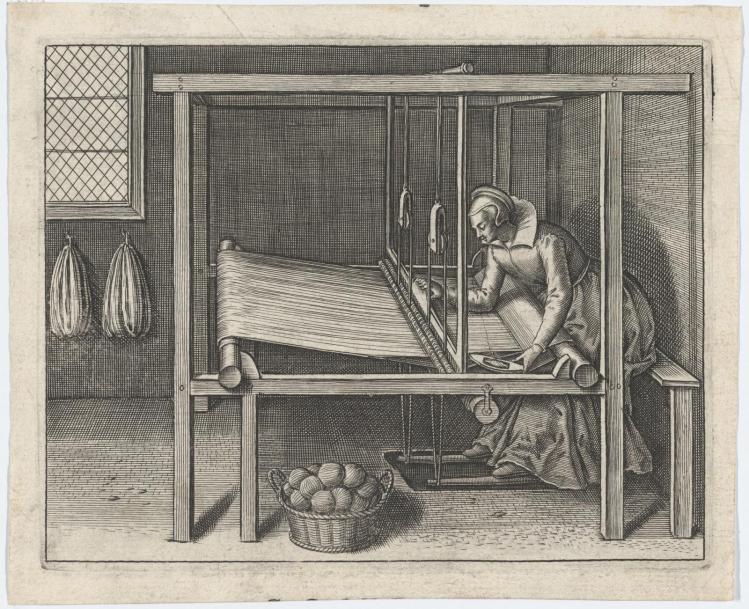
We do not just need more stories. We need stories that help us see differently. Stories that teach us to distinguish beauty from cosmetics, dreams from delusions, vision from tactics. Stories that remind us that every word can be a thread, and every text a loom.
Compare the chessboard with a bolt of woven fabric. Consider them not just as metaphors but as models of thought. The chessboard represents the logic of organized conflict. It is the paradigm of Yalta—the division of peoples treated as pieces on a diplomatic table, with a tenuous peace resulting from balances of power, and territories divided like slices of a pie.
We are in need of another model. We could call it the spirit of Helsinki, recalling the 1975 Conference on Security and Cooperation in Europe, when thirty-five nations from the East and West signed a pact rooted in dignity, sovereignty, equality, and dialogue. Not partition, but participation. Not hierarchy but an interwoven fabric of mutual interest. This fabric of peace is achieved not by imposition but by connection.
For Francis, weaving is the paradigm of authentic communication. “We need patience, waiting, and weaving,” he once wrote. “In this way we reconnect the thread of memory and return to dialogue with the fabric of life.” This is an invitation to tell stories that connect, to mend what is torn, to make visible what the algorithm erases.
The common good cannot be built with decrees or dogmas; it must be woven with stories. A literature adequate to the needs of our time must be not a contest of moves and countermoves but a practice of attention, listening, and truthful speech. A loom, not chessboard. This is why writers bear such responsibility. Their task isn’t to mint new slogans but to weave together voice with voice, story with story, creating a fabric strong and flexible enough to support the common good in all its irreducible diversity. Good literature does not just mirror the broken world as it is, but helps us to imagine alternatives so that we can rebuild it.
We welcome your comments about this article. Please send your response to [email protected].