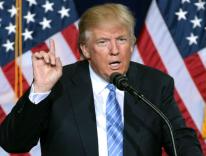
Despite what Donald Trump says, the country is neither a "hellhole," nor are we "going down fast." We're getting better but still have more work to do.
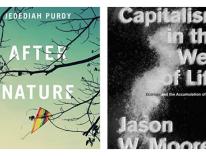
In their respective books, Jason Moore and Jedediah Purdy both reckon with ecological disaster under capitalism. But John Ruskin knew something they don't.
The best advice for readers moved by Andrew Bacevich’s Brexit analysis is to rethink what democratic commitments require of educated and economically secure people.
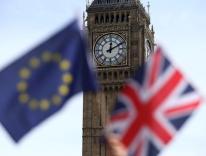
The British referendum revealed the weakness of the political establishment. The phenomenon points to the opening of a new chapter in Europe's post-war history.
Brexit may end up being not a setback but an opportunity. And a decade or two from now, we may well find it difficult to recall what all the fuss was about.
When it comes to the world’s most deadly diseases, our profit-based pharmaceutical system is a failure. That's why Rachel Kiddell-Monroe wants fundamental change.
In his new book 'Inequality,' Anthony B. Atkinson argues that we can’t reduce inequality by fiscal policy alone. We must also change how incomes are generated.
The American labor movement has been pushed back on nearly every front. Its revival is the key to reducing economic inequality and fostering shared prosperity.
Many Americans (and American businessmen) think that the United States has the highest tax rates in the world. But that it isn’t even close to being true.
Robert J. Shiller and George A. Akerlof examine influences on the marketplace beyond supply and demand, and wonder: Why didn't economists see the 2008 crash coming?
Pope calls for change in economic theory and practice to deal with refugees in Europe while Rome's Augustinian Institute unveils "Master in Joseph Ratzinger" degree.
Matthew Desmond's book, through data he compiled on evictions across the U.S., explains the grubby mechanics of exploitation at the bottom end of the housing market.
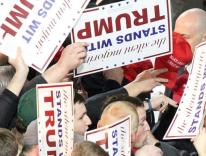
Donald Trump’s Republican primary triumph means that this cannot be a normal election. Americans must come together across party lines to defeat him decisively.
Donald Trump has played on the fragility of our media system, which can’t get enough of him, and on a pervasive pain among those cast aside by our economy.
In two new books, Hazareesingh and Bell incorporate American views into the 20th century struggles between republicans and Catholics in France over "basic freedoms"
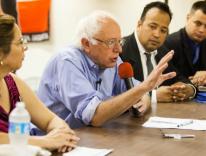
How and why Bernie Sanders was invited to the Vatican; Cardinal Burke's backlash and the pope's "bodies"; the important difference between "the Synod" and "synods."
The "culture industry" testifies to the expansionist ambitions of the late capitalist system, which can now colonize fantasy and enjoyment as it once did countries.
Slots, video poker, and other gambling machines are often described as games, but they're a sinful rejection of the goodness of the world and a failure to rejoice.
It has long been a truism among economists that free trade is the ideal. But maybe it's time to consider the harsher lessons of the past fifteen years.
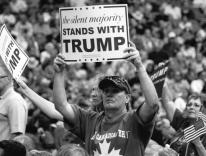
The “rebellion” of mostly white, working-class voters that Donald Trump has cynically appealed to could destroy an enduring institution. It has only itself to blame.
If Republicans are engaged in a three-sided civil war, Democrats are having a civilized argument over who has the best theory about how progressive change happens.
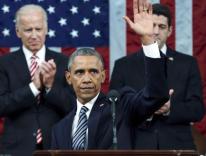
With venomous voices of the GOP dominating dialogue, President Obama used his final State of the Union message to battle against intolerance, anger, and pessimism.
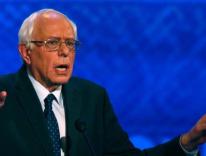
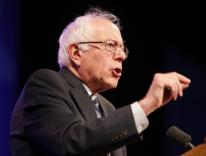
Hillary Clinton and Bernie Sanders have conducted a remarkably substantive debate on a range of issues, including how to help U.S. workers and regulate Wall Street.
How to cut through the entitlement or ambivalence of college students and get them to see the connections between economics, ethics, inequality, and oppression?
Andrew Hartman's argument is that while “cultural conflict persists,” it has come to partake of a highly ironic flavor—and continues to ignore economic inequality.