The environmental movement gets criticized for neglecting social and economic injustice. But California is seeking to align climate and economic policy-making.
The debates we have witnessed have provided an incontestable answer to the question of which party embraces the United States of Now in all of its raucous diversity.
Konrad Jarausch's history of Europe's recent past pursues a fundamental question—what is modernization? And is modern progress liberating for all, or still "dark"?
What fascinates Maraniss about Detroit more than its ruin is how central its story is to the broader course of U.S. history—Motown, the local Mob, the auto industry.
If Janet Yellen decides to solve the problem of low lending interest by raising rates, does this benefit banks, government, hedge-fund managers, or the rest of us?
Congress needs to show that though voters have given the presidency and control of Congress to different parties, we're capable of being a functional democracy.
White working-class voters have been key to the GOP coalition. You'd think the party's presidential candidates would want to respond to the crisis they're facing.
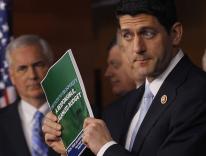
Paul Ryan has always wanted to be several things at once, which makes for a hard balancing act. He knows his faith teaches compassion, but he's also an ideologue.
Trump speaks clearly to a group that sociologist Donald Warren identified in 1976 as “Middle American Radicals,” who think the middle class is seriously neglected.
While Franzen’s natural mode as writer is one of confident high spirits, in "Purity" his view of people is steeped in pessimism, and his characters are miserable.
In his new book on labor, Thomas Geoghegan—a longtime labor lawyer in Chicago—lays out many of the depressing ways that American workers have been moving backward.
Readers write in about Catholics breeding like rabbits, writers using "man" to refer to "humanity," the political tsunami in Scotland, and Jewish women cutting hair.
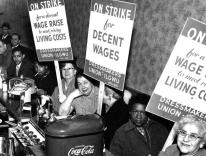
The run-up to Labor Day brought news on the actions of the National Labor Relations Board and other government agencies to strengthen the rights of workers.
Greece may be better off outside the eurozone: Austerity policies have generated a catastrophic collapse of GDP, a worsening of unemployment, and bank shutdowns.
Will Republicans be able to admit that enforcing "conservative" values about the honor of work might require what are seen as "progressive" measures by government?
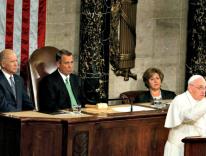
For Francis, climate change is part of a larger ecological crisis—that itself is part of a larger ethical failure involving how we treat the poor and the unborn.
Amusing and engaging, Barney Frank's stories (from sixteen terms in Congress) tell what kinds of “inside politicking” informed the presidencies of LBJ through Obama.
Readers continue the conversation on the morality of contraception in 2015 and how Europe is handling its two most important crises and America its defunct railways.
Hillary Clinton’s foes cast her as the candidate of the past, but it's the GOP, she insists, whose ideas come from long ago. Will voters see her in a new light?
The pattern of income inequality is more than a social problem, Robert Putnam says; it's a social tragedy, most devastating in the lives of poor American children.
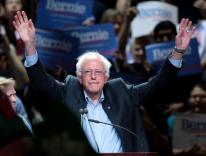
Bernie Sanders is reminding his party of something it often forgets: Government was once popular because it provided tangible benefits to large numbers of Americans.
While other countries outspend the United States in infrastructure, political ideology and lack of investment leave our railroads, highways, and airports crumbling.