"War and Peace" is called the greatest novel ever written, but it’s like sticking a “Kick me” sign on the book. Readers can’t help wanting to take issue with it.
Why are there more versions of 'Anna Karenina' (1878) in 2016? According to some translators "the best" will never be available and so translation must continue.
Before the "Declaration on Religious Freedom" was created, church leaders warned that embracing religious freedom would betray the church’s doctrinal heritage.
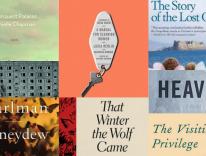
Paul Lisicky's book is a memoir of love and friendship, and how sometimes their boundaries blur. But it's also a book about literary ambition and its discontents.
Jack Mulder seeks to “explain why the Catholic story captivated, and still captivates” so as to enhance Christian dialogue. He succeeds in only one of those aims.
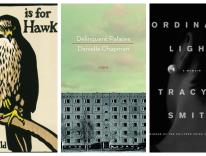
How to describe the almost-madness of loss? Macdonald uses hawk-taming, Smith "ordinary" poetry about death, and Chapman "Christian love of existence."
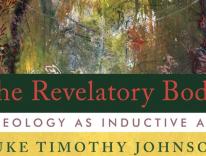
Luke Timothy Johnson provides an important alternative to the “theologies of the body” on offer among those thinkers elaborating themes fashioned by John Paul II.
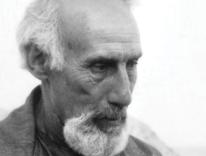
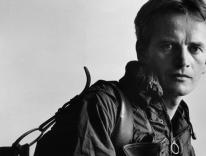
It is the purpose Michael N. McGregor’s biography of Robert Lax to move him out from under the shadow of Merton’s personality and give him his own place in the sun.
Terry Eagleton gives a witty and insightful tour of hope’s complicated linguistic terrain that carefully avoids proposing some once-and-for-all grand Theory of Hope.
Writers engage biblical texts ranging from the Psalms to a single parable.Their essays are wildly heterogeneous in tone and method, kind of like the Bible itself.
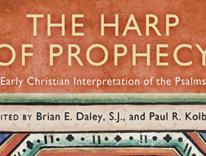
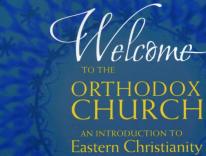
Frederica Mathewes-Green on Eastern Orthodoxy; Brian E. Daley and Paul Kolbert on Psalm interpretations, Philip Jenkins on lost gospels; James O'Donnell on pagans
Philip Jenkins sets out to demolish a popular theological myth that the second-century apocryphal writings were unknown until recently; he makes a convincing case.
Paul Misner's new book goes beyond social and labor movements in the church to deal with papal and episcopal action vis-à-vis the great powers between 1914 and 1965.
For scholars interested in the history of theology and biblical interpretation, these twelve short essays offer new approaches to Psalms, moral philosophy, and more.
Mathewes-Green, a convert from the Episcopal tradition, focuses on Orthodoxy as a path to God and uses the actions and prayers of the liturgy as a basis for theology
Bruce Chatwin casts travel as an act of sacrifice, of “sloughing-off” the world and discovering the self anew. His work contains moments of aching spirituality.
Readers write in to disagree with Jonathan Haidt's "moral foundations theory" and share enthusiasm for an historic liqueur made by monks from honey and herbs.
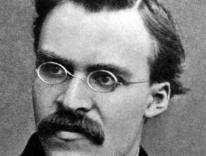
Editors Paul Reitter and Chad Wellmon contend that Nietzsche’s impassioned critique of 19th century education sheds light on the decline of education in the 21st.
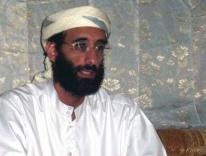
Scott Shane's telling of the U.S.-born Muslim preacher-turned-terrorist and his surveillance by the FBI reveals that the calculus for terrorism is political.
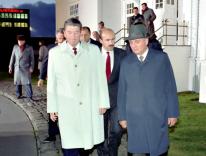
In his latest, Thomas Mallon turns real-life figures like Nixon, Reagan, and Nancy Reagan's astrologer into characters as skillfully as he creates fictional ones.
Andrew Hartman's argument is that while “cultural conflict persists,” it has come to partake of a highly ironic flavor—and continues to ignore economic inequality.
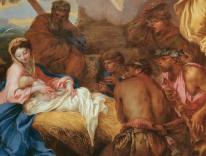
"Metaphysics." The word unexpectedly provided me with new reflections on the deepest meaning of the birth of Jesus and the Incarnation—the seen and the unseen.
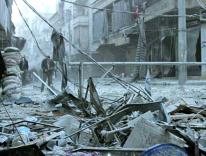
Considering how religiously diverse and culturally cosmopolitan its cities were before WWI, few could have foreseen today's calamity for the Middle Eastern region.
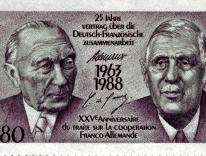
Konrad Jarausch's history of Europe's recent past pursues a fundamental question—what is modernization? And is modern progress liberating for all, or still "dark"?
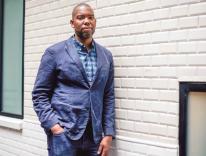
In Ta-Nehisi Coates’s interpretation of race in America, hope doesn't fit into the narrative—something James Baldwin, to whom he's compared, wouldn't leave out.
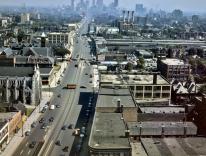
What fascinates Maraniss about Detroit more than its ruin is how central its story is to the broader course of U.S. history—Motown, the local Mob, the auto industry.
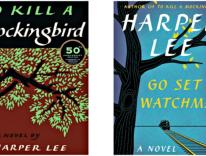
'Go Set Watchman' shows that though Atticus Finch defended a black man in court, he was still a man of his time—on the white citizens council, resisting integration.
John Boyne’s new novel pays attention to the circumstances of priestly life in real-world Catholic Ireland, asking: How does one be a good priest under suspicion?
Anahid Nersessian argues that Romanticism dramatizes the “desirability of constraint.” Her book on how British Romantics imagined "utopia" powerfully does the same.
If today the world and the self are devalued, as Walker Percy has suggested, art—particularly the novel— can awaken the reader to their recovery from '4 p.m. blues.'