A Republican representative's resolution to “vacate the chair” will likely once again remind John Boehner of the nature of the party caucus over which he presides.
Nothing has changed me as much as being friends with gay people has. The theory, the doctrine, the dogma: it all disappears in the face of friendship and love.
Greece may be better off outside the eurozone: Austerity policies have generated a catastrophic collapse of GDP, a worsening of unemployment, and bank shutdowns.
While my husband snapped photos of the flag, I stood in silent debate with Big Ed. And then I spied another Confederate flag; an unwelcome sensation came over me.
Brooks thinks character is what’s missing in our self-centered society, yet has written a self-help book for an age he believes values the self much too highly.
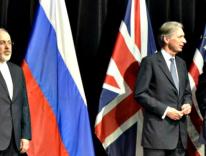
The deal struck by the United States and its partners with Iran to dismantle that nation's capacity to build a nuclear weapon looks like a remarkable achievement.
The problems that bother us most are those we bring on ourselves. That's why Republicans are out of sorts with Trump: They created the beast they now want to slay.
It’s telling about today's Republican party: Kasich would probably be the better bet in the general election, while Walker has a better chance at the nomination.
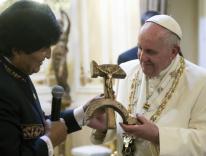
Bolivia's gift to Francis of a hammer-and-sickle crucifix implied its artist was a secret Marxist. I was disconcerted: This was not at all the Luis Espinal I knew.
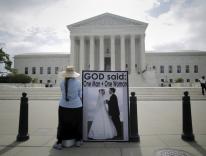
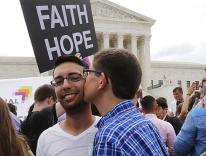
For supporters of same-sex marriage, Obergefell is definitely a victory. But the victory is not primarily one for the Supreme Court—or for Justice Anthony Kennedy.
'Laudato si’' develops a notion of solidarity within and between generations, not only with fellow human beings but with the whole earth and all its creatures.
Whether or not U.S. support for LGBT rights goes beyond the rhetorical, societies still viewing themselves as “under God” will bridle at this sudden turn about.
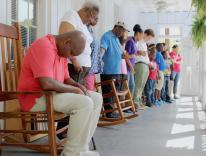
The African-American Christian tradition has been vital in our history for reasons of the spirit but also as a reminder that the Bible is a subversive book.
Will Republicans be able to admit that enforcing "conservative" values about the honor of work might require what are seen as "progressive" measures by government?
Chicago, 1932. The night before he would knock Ernie Schaaf unconscious, the second time a fighter would die from one of Max’s blows. We were standing at the bar.
The core liberal conviction about the Supreme Court still rings true: it is most constructive when power is used to vindicate the rights of beleaguered minorities.
For Francis, climate change is part of a larger ecological crisis—that itself is part of a larger ethical failure involving how we treat the poor and the unborn.
In her new book, Jane Maienschein lays out the history of embryonic science—going back to Aristotle—hoping to answer an old question: When does a human life begin?
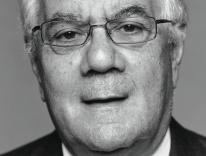
Amusing and engaging, Barney Frank's stories (from sixteen terms in Congress) tell what kinds of “inside politicking” informed the presidencies of LBJ through Obama.
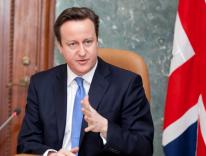
Emerging from the perfect storm of the British general election of 2015, few experts felt able to offer a convincing analysis. Here are some possible explanations.
Right away, anyone who wants to discuss the implications of the shooting is scolded for “politicizing a tragedy.” Thus debate is delayed until the urgency passes.
Any who claim Francis is ignoring the Catholic past and inventing radical new doctrines has to reckon with the care he takes in paying homage to his predecessors.
Hillary Clinton’s foes cast her as the candidate of the past, but it's the GOP, she insists, whose ideas come from long ago. Will voters see her in a new light?
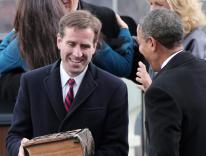
What Beau Biden's funeral brought home is that the feelings nearly all of us -- left, right, and center -- have about family bonds transcend day-to-day arguments.
Marx derided religion as an opiate destined to fade away but ultra-orthodoxy is on the rise. What happened to make faith one of the most dynamic forces in the world?