When it comes to the world’s most deadly diseases, our profit-based pharmaceutical system is a failure. That's why Rachel Kiddell-Monroe wants fundamental change.
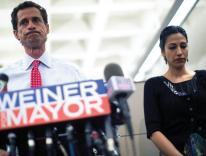
'Weiner' sets out to film Anthony Weiner’s unlikely political comeback, as he sought to put the disgrace behind him with a run for mayor of New York in 2013.
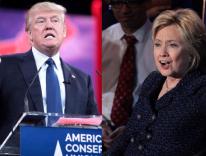
Donald Trump says things to appeal to whatever crowd he's talking to, but casting doubt on Hillary Clinton’s faith before a group of evangelicals is a new low.
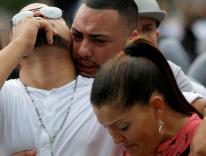
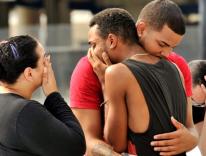
In the aftermath of events like Orlando, it seems as though the God of Jacob does not perceive, and it is no impiety to say so. But that is not the end of the story.
Poland's young extreme nationalists represent a revival for which being Catholic and Polish implies also being anti-European, anti-pluralist, and anti-liberal.
Religious liberty has a damaged “brand” these days, and Catholic institutions have played a role. The nation's largest church now needs to lower the temperature.
Even fervently held dogma is not immune to reality. After Orlando, gun-sanity rejectionists feel the pressure as advocates of sane gun laws move off the defensive.
We need to name the anger of voters but in the restrained rhetoric of the common good. Would the cures offered by Trump and Sanders prove worse than the disease?
Reactions to the killings in Orlando etched a portrait of our national divisions and our inclination to know what we think even when we lack all of the facts.
The American labor movement has been pushed back on nearly every front. Its revival is the key to reducing economic inequality and fostering shared prosperity.
As a student of Reinhold Niebuhr, President Obama has sought out occasions on which he could preach about the ironies and uncertainties of human action.
Instead of jettisoning the just-war tradition, it would be better for the church to be more willing to condemn wars when they fail to meet its rigorous demands.
In the 2016 campaign, there's a profound pessimism among conservative Christians that contrasts sharply with the movement’s hopeful spirit in its Reagan Era heyday.
Historian Frank Oakley rejects the idea that that Greece and Rome were secular. He insists that the “seedbed" for individual rights lies in the Latin Middle Ages.
Lincoln is a riddle because we are a riddle to ourselves. We are his heirs, for good and for ill. We cannot escape his legacy, and we don’t know what to make of it.
Many Americans (and American businessmen) think that the United States has the highest tax rates in the world. But that it isn’t even close to being true.
Can a progressive-minded approach can work in a city where the more severe measures of the past failed to prevent a steady increase in the number of homeless people?
For Clinton and Sanders, coming together should reflect a shared commitment to taking the country in a direction very different from the one Trump is calling for.
How can injustice be remedied when it is invisible? White Catholics—and indeed all white people—must learn how racism perpetuates black suffering and death.
From the archives: The presidential candidate of one of our two political parties is a semi-fascist with a gift for mobilizing millions. What is to be done?
The challenge before Republicans such as Ryan who try to preserve their standing as principled politicians while also preaching party unity requires verbal tricks.
Matthew Desmond's book, through data he compiled on evictions across the U.S., explains the grubby mechanics of exploitation at the bottom end of the housing market.
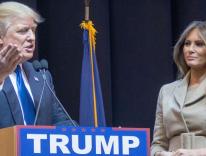
Donald Trump’s Republican primary triumph means that this cannot be a normal election. Americans must come together across party lines to defeat him decisively.
Seventeen states have imposed tough new voting restrictions for this election, a campaign of voter suppression that presents a true threat to our democratic system.
The forced resignation of the widely respected Tony Spence, who had a long history of serving the Catholic press, raises questions about changes at the USCCB.
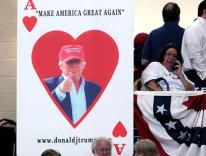
Donald Trump has played on the fragility of our media system, which can’t get enough of him, and on a pervasive pain among those cast aside by our economy.
Candidate Trump offers a set of fatuous, swaggering reactions that he trots out in response to various topics in international relations. Is that "policy"?