A new history of international financial institutions raises the question: What balance can be found between sovereignty and international economic cooperation?
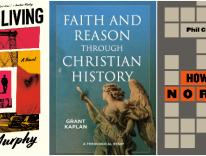
Keith Gessen’s funny, insightful essays capture the extremes of parenthood: joy and exasperation, tenderness and impatience, enthusiasm and exhaustion.
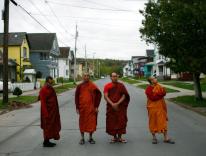
Poet Rodger Kamenetz’s search for God expands the spiritual vocabulary of our time, crossing the borders of faith, driven by compassion and a self-sustaining wit.
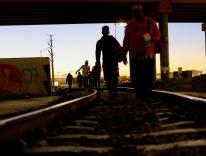
An essential new memoir conveys the fundamental emotions behind child migration—love and longing, loss and trauma—from the perspective of a young Salvadoran boy.
In ‘Common Good Constitutionalism,’ Adrian Vermeule argues with straw men and cites blog posts. The book may rally his followers, but it won’t add to their number.
Paul Morland’s latest book shows that despite living longer, healthier lives, people are less willing to have children now than at any time in history.
The mangling of American history has served to reinforce racism at the most fundamental level: through the stories and ideas we have passed on to our children.
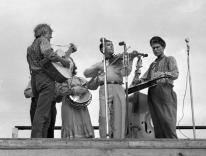
A new book celebrates the fiftieth anniversary of ‘Will the Circle Be Unbroken,’ a groundbreaking crossover album that revealed marvelous sonic vistas.
Some books are best read in fall, after the smell of salty air and sunscreen has returned to memory, and as you find yourself wondering where exactly summer went.
‘Midwood’ is both intimate and distanced. It offers us access to dreams and erotic experience; it keeps us at a remove through irony and syntactical oddity.
In Ada Calhoun’s ‘Also a Poet,’ writing a biography of Frank O’Hara is really a way of writing an autobiography of Calhoun’s relationship with her father.