Physical objects carry meaning for us, but their accumulation can be a kind of spiritual error. Reconciling this contradiction leads us to richer, deeper lives.
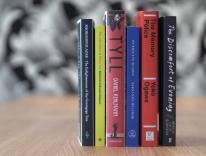
A look at each of the six novels on the Booker International Prize shortlist: from fable to satire, from Argentina to the Netherlands, each an admirable work of art.
I indulged myself even as I missed the thrift stores of our youth, the temples of musty counterculturalism where the point was how cheap, how many times recycled.
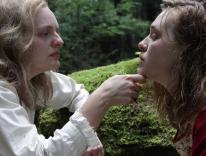
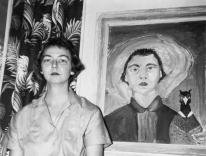
Shirley Jackson is known today primarily as a writer of literary suspense. But she was also a wife, and a mother, roles examined by a new film on Hulu.
Summer’s here, and we’re reading new books by women writers about God, communal religious practice, and the strangeness of American life at the margins.
Joanna Kavenna’s latest dystopian novel tackles surveillance capitalism and artificial intelligence with sharp satire, intelligence, and faith in the human spirit.
Shouldn’t we be paying attention to those minor miracles of creation that occur all around us, even when we’re stuck at home? Marilynne Robinson can help.
As Colson Whitehead argues in his Pulitzer Prize-winning novel, the legacy of injustice is not something we can simply move past. Old crimes continue to shape us.
Service, self-abnegation, solidarity, fraternity, courage: in the trial at hand, the grace of conversion is available to the whole of humanity—including the church.
Many of us are familiar with the absurdity-unto-death that is working remotely. Forget the zoom-and-gloom: put down your devices and pick up these new books.
Refugees and migrants encounter homesickness as they struggle to establish identities in unfamiliar, often unwelcoming territory. Three books show how they do it.
Fiction is hard. Nonfiction is hard for different reasons: the need to ensure accuracy, the risk of angering your subjects. These books succeed brilliantly.
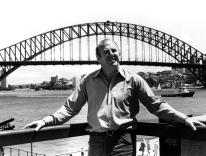
Australian critic Clive James passed away last month. His writings show us that we need not choose between high and low culture: Dante matters, but so do the Doors.
What is a home? And what happens when old patterns of life break down? British writer and former environmental activist Paul Kingsnorth grapples with these questions, and shares his responses.
As anyone who uses Facebook knows, we too quickly explain, meaning explain away, the world and each other. It’s not so simple; three books help complicate things.
Art. Fiction. Memoir. Even a graphic novel. Our critics compile a list of their favorite readings from 2019. They make great gift ideas for the Christmas season.
A new play about a reunion of four friends, all conservative Catholics, is quietly heroic. It reveals the limits of rhetoric as it probes the nature of suffering.
The latest novel from Hungarian writer László Krasznahorkai shows his melancholic passion for sin and the apocalypse, and his compassion for the world as it is.
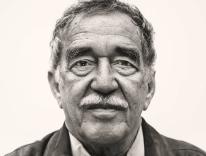
Colombian novelist Gabriel García Márquez wanted to be known more for his journalistic prose than his novels. A new collection reveals the flaws of that desire.
Why do we tell lies and indulge in half-truths? A new novel confronts monsters, both real and metaphorical, as it experiments with the boundaries of narrative.
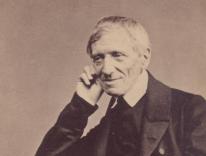
Best known for his autobiographical and educational works, John Henry Newman now has the distinction of being the only saint with two published novels to his credit.
Poet and novelist Fanny Howe is an experimental writer’s experimental writer, the author of dozens of books, one who remains publicly, committedly Catholic.
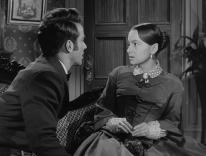
In this final installment of our summer conversation series, we discuss Henry James’s classic novella ‘Washington Square’ and William Wyler’s ‘The Heiress.’