By the time Diego moved in, I was forty and Diego fifty, our marginal existences long established. We ranted about the torture regime he once fled. We danced tangos.
The stories in Colum McCann's collection each have thirteen sections that build slowly, surely toward denouement. By the end, a shift in perspective has taken place.
Why are there more versions of 'Anna Karenina' (1878) in 2016? According to some translators "the best" will never be available and so translation must continue.
In his latest, Thomas Mallon turns real-life figures like Nixon, Reagan, and Nancy Reagan's astrologer into characters as skillfully as he creates fictional ones.
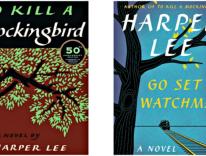
'Go Set Watchman' shows that though Atticus Finch defended a black man in court, he was still a man of his time—on the white citizens council, resisting integration.
If today the world and the self are devalued, as Walker Percy has suggested, art—particularly the novel— can awaken the reader to their recovery from '4 p.m. blues.'
Readers offer a remedy for the church's "unction dysfunction," another disturbing aspect of the Supreme Court's lethal-injection ruling, and more on James Agee.
Centered around the missing bomber pilot from 'Life After Life,' Atkinson's 'A God in Ruins' examines the interplay of real life and the life of the imagination.
Spanning almost James Agee's entire lifetime, these letters between author and his priest cover alcohol, God, poetry, childhood, and a “mouthful of sweet potato.”
Claudia Rankine’s 'Citizen' and Jeffery Renard Allen’s 'Song of the Shank' both take up the issue of race in America in jagged and beautiful poetry and prose.
Anne Enright's new novel suggests something simple—family, for good or ill, keeps forming us even when we try to escape it—but her prose constantly surprises.
Langdon Hammer's biography of poet and writer James Merrill is "wholly definitive" in scope, and threaded throughout with Merrill’s brilliant, always enlivening wit.
Iranian author Azar Nafiri defends the value of canonical American literature—its imagination and humanity—against Common Core, market analyses, and Babbitt.
The award-winning author of the story collection 'Night at the Fiestas' talks about her influences, the importance of empathy in fiction, and washing altar cloths.
Mailer, Trilling, Macdonald, Kazin, Maxwell, Bellow, Auden, O'Hara—men with public moral concerns, who seized power to shape American literature. But who were they?
Baxter reads fiction to “see bad stuff happening.” He writes characters who get into serious trouble, and face their own "human wreckage" at someone else's request.
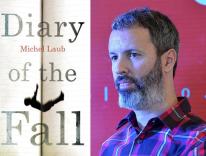
Through the eyes of a middle-aged alcoholic grandson of an Auschwitz survivor, Michel Raub's fifth novel contemplates the infinite ways humans torment each other.
What sort of a fugitive am I, living in a two-car garage, that old temple of middle-class respectability? Simon almost sneered: You're not exactly Anne Frank.