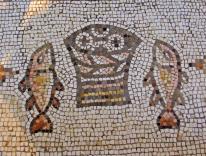
Luke Timothy Johnson reviews books on (perhaps) the world's oldest church, evolution and the Bible, the fear of God, and the relations between different monotheisms
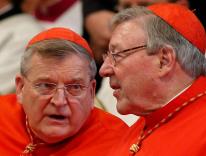
Cardinal Burke and Steve Bannon share an ominous clash-of-civilizations ideology. They fear progressive movements. Their “meeting of hearts” is nothing to celebrate.
The tightly controlled and highly centralized approach to the translation of liturgical texts that has reigned over the past fifteen years may be coming to an end.
Building a Catholic university is simple, argues John Garvey: a majority of its faculty must be Catholic. But executing that plan is harder, says Mark W. Roche.
Was Fr. Spadaro’s metaphor such a big mistake—or a mistake at all? I don’t think it was, but even if he did fall off the theological high wire, these things happen.
Cinematic in style, leisurely in pace, and preposterously farfetched in narrative premise, "The Young Pope" is by its creator's description also about solitude.
In Mary, God’s unique creative act becomes human procreation and the divine takes on visible form. We might think of her as the first Christian artist.
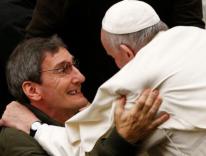
One of the most important contributions Pope Francis is making to the church concerns his efforts to exercise the kind of pastoral magisterium Pope John hoped for.
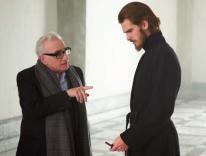
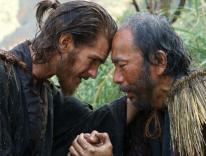
Martin Scorsese talks about apostasy and faith, and how some of the films he's made (and some he's influenced by) have taken up these ideas in different ways.
Martin Scorsese talks about the challenges of filing a story set four hundred years ago, the similarities between Endo and Graham Greene, and the idea of vocation.
The director talks about growing up on the Lower East Side, his early dream of making a film about Jesus in New York City, and what led him to Endo's "Silence."
Some of the anxiety pervading reception of 'Amoris laetitia' invites misconstruals of the text that dwarf whatever legitimate worries that critics may have.
Simeon Zahl offers thoughts and comments on David Bentley Hart’s "blistering reflection on the economic ethics of the first Christians," and Hart responds.
Henri Nouwen, a Pierrot-like figure with many masks, turned personal vulnerability into spiritual exploration, addressing other people’s pain by sharing his own.
It is worth stopping to reflect on what Francis has described as “the very foundation of the church’s life,” now, while the Year of Mercy remains fresh in our minds.
Fond memories and beautiful places are fine, but they are not all that matters. Indeed, there is a “Catholic way of doing things” when it comes to death.
Problems with faith cross religious boundaries. Here are the fruits of a conversation that I’ve been conducting, with my friend and in my mind, for a long time.