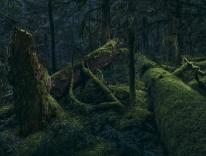
In an old-growth forest, everything is connected. No individual plant or animal, and indeed no species, is an island. As Pope Francis warns, we should pay attention.
William Blake critiqued the Enlightenment, industrialization, and the expansion of the British empire. His work shines at the Tate as the shadows of Brexit loom.
What we find outside are physical manifestations of the holy, representative of the sloughing off of old skin, the salt of blood and the sea, signs of the divine.
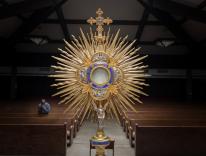
Again and again throughout the Mass, word and gesture proclaim the Real Presence. What explains the liberal Catholic reluctance to pursue the question?
The late German theologian Johann Baptist Metz believed theology was a culture of questions, not answers. Key to his theology was the unsettling figure of Christ.
What is a home? And what happens when old patterns of life break down? British writer and former environmental activist Paul Kingsnorth grapples with these questions, and shares his responses.
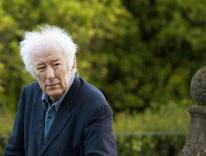
Heaney’s legacy and his continued popularity as a lyric poet rest on the twelve volumes from which this selection is chosen. What makes his work so alluring?
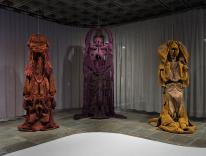
A new show at the ICA in Boston addresses the global migration crisis by posing a simple question: what is a home? And why do more than 60 million people lack one?
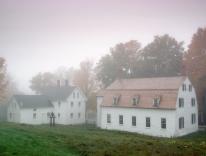
The Shakers, who arrived in America in 1774, are a religious community facing extinction. Their decline means nothing less than the end of an idea of heaven.
Thanksgiving is at once the most traditional of holidays and the most radical. Even the best things we do are contingent on support and help from others.
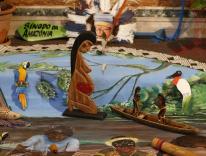
Rather than pagan nature-worship, perhaps the statue of a pregnant woman suggests that the Amazonian people are bringing the seeds of the gospel to fruition.
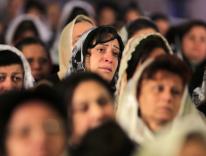
Thousands of migrants are now camping along the border in Ciudad Juárez, enduring squalid conditions as they await responses from U.S. Customs and Border Protection.
The sisters I met along the border know well the intractability of poverty, disease, and violence. That does not keep them from working to relieve them.
Recent nonfiction increasingly takes ego as starting point. Jia Tolentino and Leslie Jamison use self-aware essays to examine popular culture and female experience.
What matters at the Amazon synod is not the imperative of universal consistency across all regions of the church, but the pastoral welfare of the People of God.
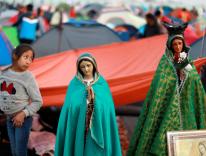
Guadalupe began as a paradoxical figure, both symbol of indigenous faith and tool of colonialist oppression. Now, she demands we listen to the poor and marginalized.
Best known for his autobiographical and educational works, John Henry Newman now has the distinction of being the only saint with two published novels to his credit.
The first of a series by Fr. Incognitus, who has worked in Southwest parishes serving immigrants from Central America, Mexican Americans, and Euro-Americans.
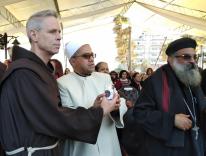
2019 marks the 800-year anniversary of St. Francis of Assisi’s meeting with Egypt’s Sultan Malik al-Kamil during the Fifth Crusade. The dialogue must continue.
There is a basic division in contemporary Jewish life, and in all communities that purport to interpret a religious tradition: that of self-expression and community.
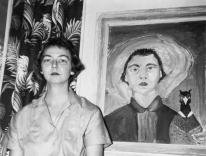
Poet and novelist Fanny Howe is an experimental writer’s experimental writer, the author of dozens of books, one who remains publicly, committedly Catholic.
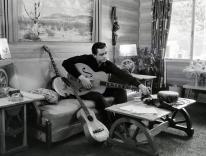
Famed documentarian Ken Burns traces the long and complex history of country music, revealing old American tensions between personal and collective freedom.
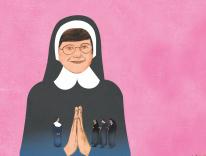
I’m nineteen years old, the year is 1958, and I’ve already made it through the first nine months of probation. More than anything in the world I want to be a saint.
A new show at the Barnes in Philadelphia transports audiences into the heart of the Bill Viola’s pioneering inquiries into the phenomenon of visual perception.
Someone churchy thought a girl’s outfit was more important than her presence at church. Religion offers many excuses for emotional predation; we have to call it out
The need for abortion is evidence of our broken humanity, but our current response also shows our Church’s inability to respond fully to the female experience.
Thomas Merton taught me to value self-denial, but a bout of depression forced me to question whether asceticism was the healthiest response to my life.