Catholic participation in English-speaking ecumenical translations has been withdrawn and has not resumed. 'Liturgiam authenticam' has, essentially, forbidden it
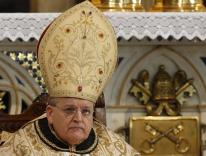
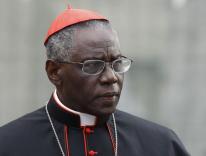
Cardinal Burke and Steve Bannon share an ominous clash-of-civilizations ideology. They fear progressive movements. Their “meeting of hearts” is nothing to celebrate.
The tightly controlled and highly centralized approach to the translation of liturgical texts that has reigned over the past fifteen years may be coming to an end.
One of the most important contributions Pope Francis is making to the church concerns his efforts to exercise the kind of pastoral magisterium Pope John hoped for.
Francis has made it clear he wants to renew the John Paul II Institute by developing the guidelines in "Amoris Laetitia," which traditionalists have criticized.
Has the pope picked predominantly “progressive” prelates as the latest cardinal-electors? Or is it that the so-called "center" has shifted since John Paul II?
The place of the term "revelation" in the church needs to be debated. The church cannot eliminate either “revelation” or “word” as metaphors for divine activity.
Mass facing the people has a profound beauty. A view of the priest’s back and elbows isn’t naturally or inevitably going to make anyone think of the Second Coming.
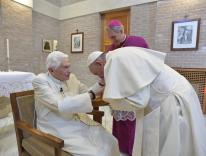
Pope Benedict XVI resigned over three years ago; Francis is undeniably the only pope.Yet in some ways the transition is ongoing and continues to affect the Church.
Church teaching about the use of force is paradoxical. “Just peace”—not just war—should be the distinguishing mark and calling of the global Catholic Church.
As the CDW sets up a new commission, is there hope for Vatican II Catholics that the pope will firmly resist any attempts to roll back the clock on those reforms?
Acknowledging the significance of Populorum progressio and the second confrerence of CELAM is essential to understanding the post-Vatican II Latin-American church
Francis reforms the "evangelical spirit" of the church as a rumored eighty-five percent of cardinals in the Curia disapprove, many because of his work with refugees.