For John Cottingham, theism provides a framework for consciousness and morality. Belief is thus a live option for thoughtful, intellectually responsible people.
Not least among its virtues, a new book of essays on Catholic Social Teaching throws into stark relief the state of the Church in the United States and Europe.
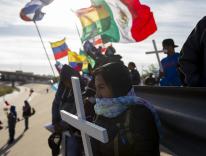
It’s been one year since the El Paso massacre. In this two-part episode, we speak with El Paso natives about how life has and hasn’t changed along the border.
This time of pandemic and mass interracial demonstrations has revealed gaping wounds in our body politic. The ancient homilist Origen can help us heal them.
While St. Ephrem of Syria did not explicitly call for ordination of women to the diaconate, he envisioned radical equality between the sexes in ministry.
Catholics may accept evolution now, but it wasn’t always so. The bunker-mentality of nineteenth-century Neo-Scholasticism damaged Catholic theology for decades.
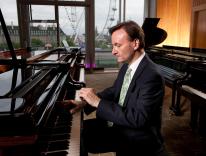
Stephen Hough, one of the world’s greatest musical performers, speaks with us about bioethics, sacramentality, and the challenges of living as a gay Catholic.
For all the supposed fragility of the Church’s institutional system, its persistence is undiminished. It remains, and likely will remain, highly clerical.
Summer’s here, and we’re reading new books by women writers about God, communal religious practice, and the strangeness of American life at the margins.
Shouldn’t we be paying attention to those minor miracles of creation that occur all around us, even when we’re stuck at home? Marilynne Robinson can help.
David Bentley Hart’s book makes the case for universal salvation, arguing that a belief in eternal damnation is morally repugnant and theologically insupportable.
Problems have solutions, while mysteries like suffering, love, and death do not. They must be instead lived out with attention to human richness and interconnection.
Lies and deception have compromised the integrity of the mission of L’Arche. But it has also responded with humility and integrity, and begun the work of healing.
“We might then think of our redeemed bodies almost like diamonds, simultaneously refracting different times of our lives as we turn in the light of God’s love.”