If the hollowness of the 1990s opened up a space for one kind of communitarian moment, perhaps the bewilderment of today is the occasion for another, different kind.
Yuval Levin attributes our political frustration to “nostalgias” of Left and Right baby boomers. His book is worth examination; his framework suffers exaggerations.
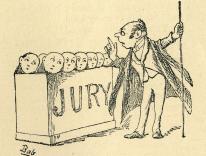
When the summons for jury duty came, I was more than a little excited to see how the system actually worked in real life. The experience did not disappoint.
For many who work, their employment is precarious to the point of affecting their housing opportunities, marriage and family decisions, and general peace of mind.
The U.S. bishops' 'Faithful Citizenship' has turned out to be irrelevant to the most pressing moral and practical questions raised by the 2016 presidential contest.
A disturbing level of Catholic insularity is perhaps inevitable when church leaders frame complex religious-liberty disputes as targeted assaults on Christians.
New U.S. Census Report data on income, poverty, and health-care coverage comes as good news. But amid the recovery, millions of Americans still feel economic pain.
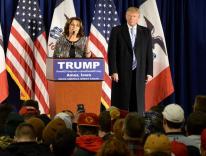
Journalists have been reluctant to call Donald Trump a liar, even when he lies. But the manipulative nature of his birther announcement may change things.
Trump may be what sixteenth-century Catholic theologians were worried about, but Luther wouldn’t have recognized him as a Christian any more than the pope would.
The best advice for readers moved by Andrew Bacevich’s Brexit analysis is to rethink what democratic commitments require of educated and economically secure people.
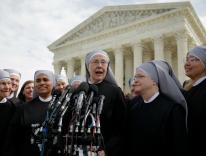
By signing one sentence asking for an exemption, the Little Sisters are not formally cooperating. They are materially cooperating only in a minor and remote sense.
Now that he is the official GOP nominee, the most important fact about Donald Trump is not that he is ridiculous or contemptible, but that he is dangerous.
Where is a compelling vision of human well-being? Missing is the sense that “we are all really responsible for all.” This feeds into the hands of people like Trump.
In his new book 'Inequality,' Anthony B. Atkinson argues that we can’t reduce inequality by fiscal policy alone. We must also change how incomes are generated.
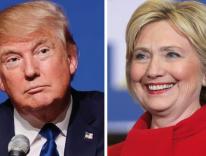
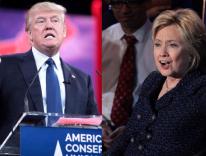
Donald Trump says things to appeal to whatever crowd he's talking to, but casting doubt on Hillary Clinton’s faith before a group of evangelicals is a new low.
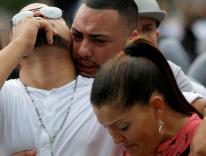
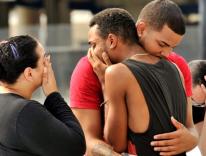
In the aftermath of events like Orlando, it seems as though the God of Jacob does not perceive, and it is no impiety to say so. But that is not the end of the story.
Religious liberty has a damaged “brand” these days, and Catholic institutions have played a role. The nation's largest church now needs to lower the temperature.
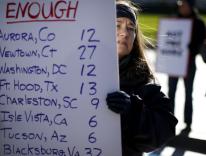
Even fervently held dogma is not immune to reality. After Orlando, gun-sanity rejectionists feel the pressure as advocates of sane gun laws move off the defensive.
We need to name the anger of voters but in the restrained rhetoric of the common good. Would the cures offered by Trump and Sanders prove worse than the disease?
Reactions to the killings in Orlando etched a portrait of our national divisions and our inclination to know what we think even when we lack all of the facts.
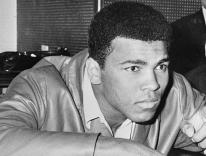
Muhammad Ali’s self-love was transferrable. He beat up his opponents and pick-pocketed their confidence but miraculously helped millions see fresh possibilities.
The American labor movement has been pushed back on nearly every front. Its revival is the key to reducing economic inequality and fostering shared prosperity.
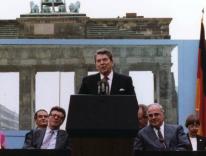
In the 2016 campaign, there's a profound pessimism among conservative Christians that contrasts sharply with the movement’s hopeful spirit in its Reagan Era heyday.