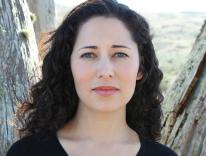
The award-winning author of the story collection 'Night at the Fiestas' talks about her influences, the importance of empathy in fiction, and washing altar cloths.
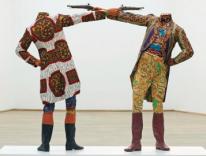
Heaven, Purgatory, and Hell each has its own floor. Evoking horror, repentance and beatitude, more than 40 African artists exhibit a new look at Dante and divinity.
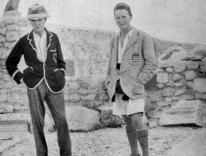
The pro-British kings archeologist-turned-spy-turned-colonel T.E. Lawrence helped establish in Arabia, Iraq, and Transjordan made "Arab unity" a "madman's notion."
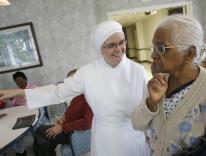
Often the way our society treats "senior citizens" assumes that as bodies age, individuality decreases. But aren't whiskers and white socks a sign of unique wisdom?
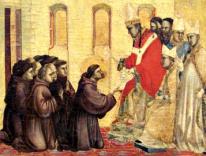
This integrative, enjoyable "book for beginners" still may hold surprises for scholars: nuns absolving sins, petitioners humiliating saints, a woman pope, and more.
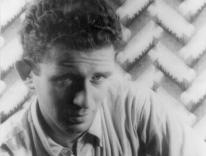
Mailer, Trilling, Macdonald, Kazin, Maxwell, Bellow, Auden, O'Hara—men with public moral concerns, who seized power to shape American literature. But who were they?
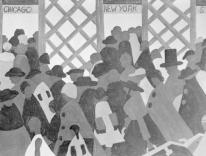
Lawrence painted what he saw and what he knew: strivers and beggars, children and prostitutes, gamblers and preachers, and above all women, like his mother.
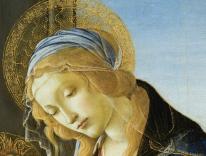
An exhibit pulls together an impressive collection of paintings, sculptures, and liturgical vestments to suggest the wide range of Marian images in Western art.
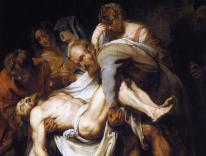
The Catholic painter Peter Paul Rubens presents a particular challenge to classification—decorative, theatrical, busy, pagan, and only superficially Christian.
The poet discusses "accidental theologies," Gerard Manley Hopkins, faith in literature, and what it's like no longer being the editor of Poetry magazine.
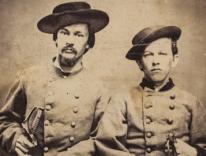
This powerful show constitutes a record of those often unnamed individuals of the Civil War era, documented through the then-new medium of photography.
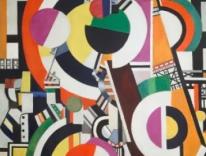
A vigorous and superbly contextual show, “Léger: Modern Art and the Metropolis”—at the Philadelphia Museum of Art—focuses on the artist's most experimental years.
After an extensive renovation and reinstallation, the Met's European paintings galleries reopened in May. The collection now has fully one-third more space.