How can the Church and civil society honor the humanity of those dealing with mental illness? In this symposium, three authors discuss serving the least of these.
Contributions to this symposium challenge us to think more deeply about how the Church and civil society can recognize and honor the humanity of those dealing with mental illness.
Donald Trump built a political career on manipulating conspiracy theories, but his failure to get a handle on the Epstein case has exposed a growing rift among the MAGA faithful.
Few writers have argued against modern egalitarianism with more flourish than Samuel Francis. Donald Trump and his gang now practice what Francis preached.
Accessibility is a fundamental part of community participation, and India's National Building Code gives us the imagination to build community spaces for everyone.
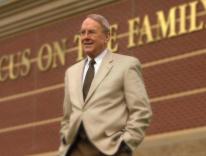
James Dobson’s message prevented my mom from recognizing her own agency, confronting humanity’s messiness, and fully understanding and accepting her family.
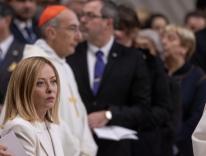
In 2024, Trump made gains among men of all ages, races, and most religious persuasions. But he also made significant inroads among some women—especially Catholic women.
We live in a culture where everyone actually wants to be elite—even though more and more people are decrying elitism. What would it mean to embrace our own blessed ordinariness?
Zohran Mamdani and his supporters are anything but afraid. They are hopeful of making life in the city better and optimistic about the government’s role in doing so.
For all their differences, both Jordan Peterson and Ross Douthat engage in a pragmatic effort to enlist belief on behalf of a reactionary political project.
Trump may waffle about how much economic damage he’s willing to inflict in his deportation campaign, but his hateful rhetoric has a momentum of its own.
Robert F. Kennedy Jr. said he wouldn’t “take away anybody’s vaccines," but as secretary of HSS, he is steadily dismantling our national vaccine infrastructure.