There was a major omission in a recent House Judiciary Committee report that slammed the FBI for doing an “investigative assessment” of a priest from the traditionalist Society of St. Pius X, or SSPX: it never explains why federal agents wanted to question him.
Xavier Lopez was the reason. As detailed in federal court records, Lopez, twenty-two at the time, was a mentally disturbed man who’d accumulated an arsenal of firebombs and boasted on social media that he could “do even better” than Anders Breivik, the far-right gunman who murdered seventy-seven people at a summer camp in Norway in 2011.
Lopez was arrested on November 13, 2022, for possession of weapons, including eight Molotov cocktails enhanced with an additive that authorities said could ignite napalm-like balls of flaming, stick-to-the-skin jelly. FBI agents in Richmond, Virginia, thought his posts on Gab, an uncensored, far-right social-media site, were an effort to draw recruits; he urged followers tso “arm yourself to the teeth,” to beat up Blacks and Jews, and to shoot police who come to the door.
The agents also knew that Lopez had begun catechetical lessons in Richmond at a “traditional church that isn’t totally kiked,” as Lopez put it. He’d written that he “had to deal with the priest and some (thankfully not all) the parishioners talking about how ‘Hitler bad’ though thankfully they do actually acknowledge that the allies were evil.”
Might Lopez have attracted some like-minded recruits at the chapel of a religious society that has been accused often enough of antisemitism to have a denial posted online? Perhaps among those churchgoers who, as he wrote, “thankfully” shared his appreciation for Adolf Hitler? It would have been malpractice for the FBI’s Richmond office to ignore this.
As a prosecutor later asserted at Lopez’s sentencing on February 27, “the defendant wanted to kill as many people as possible.” Judge David Novak of U.S. District Court in Richmond sentenced Lopez to eight years and one month in prison. “The government is certainly right about the danger that this defendant poses,” he said.
The judge was convinced of this because of Lopez’s prior conviction for felony vandalism in 2020. Carrying a Confederate flag, he used a knife to slash the tires of a neighbor who’d posted signs supporting Black Lives Matter. After police put him into a patrol car, “he gained control of a knife and attempted to open the blade. After initially ignoring the officer’s commands to drop the knife, defendant repeatedly kneed and head-butted the officer,” prosecutors said in court papers. After that, police searched the home Lopez shared with his aunt and found a “firearms assembly workshop”—equipment for drilling and machining, various parts and a kit for building AR-15 rifles, and ammunition. Upon his release after serving a year in prison, he began looking for weaponry once more.
This time, the FBI was monitoring his social-media posts, and believed he was using them to seek recruits, according to a report the Justice Department inspector general issued in April 2024. The agents learned that Lopez, who’d referred to himself as a “rad-trad Catholic clerical fascist,” left home only for church. So, the inspector general reported, after alerting the FBI’s high-level Sensitive Operations Review Committee, they sent an informant into the church to try to build a relationship with Lopez. They gave instructions to report only on Lopez, and not about the church in general or other parishioners. Meanwhile, the FBI’s Behavioral Analysis Unit concluded that Lopez was willing and able to carry out violence; he was ranked fourth in the country overall in the agency’s indicators for mobilization of violence.
All this is missing in the report the House Judiciary Committee released on July 22, based on 1,300 pages of additional information that FBI director Kash Patel released to the panel.
“From information made available to the Committee, there appeared to be no legitimate law-enforcement purpose for investigating this priest,” the House report concluded. “This new information suggests that the FBI’s religious liberty abuses were more widespread than the FBI initially admitted and led the public to believe.”
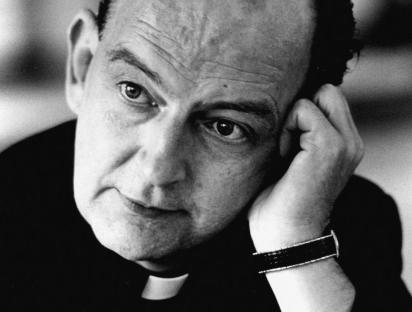
When the agents went to interview the priest—who was catechizing Lopez in preparation for baptism—it went badly. In a partially redacted memo that the committee disclosed, an agent wrote that after he told the priest about Lopez’s “desire and plans to commit violence,” the priest “became very uncomfortable and started incoherently stuttering.”
The priest asked for time to speak with the church’s leadership and attorneys, and thereafter “has refused to speak with us any further, but has continued to speak” with Lopez while in prison, and tried to visit him.
It was reasonable for the priest to want time to respond; Virginia law gives a priest or other minister privilege “as to any confession or admission made to him in his professional capacity.” The agents contended that it didn’t apply since Lopez wasn’t yet baptized and wasn’t eligible for sacramental confession. The Virginia law is broader, protecting the priest from having to disclose any conversations that occurred in his capacity as a spiritual counselor. But the privilege is not absolute, and many courts have taken a narrow interpretation of such laws, which exist in every state. Everyone involved needed to take a deep breath and work through the legal issues.
From internal FBI records the committee released, it appears the agents were in a hurry to learn more about Lopez. The memo doesn’t say so, but the implication is that the FBI agents were concerned about the possibility that there were still confederates who could carry out whatever scheme Lopez may have had in mind.
The agents viewed the priest as “not cooperative” and, according to the House report, began an “investigative assessment.” In the FBI, this is the lowest level of inquiry, not a full investigation or even a “preliminary investigation.” According to the Brennan Center for Justice, it requires only an “authorized purpose” and a “clearly defined objective,” rather than probable cause.
They took another step by making a request for information from a police antiterrorism unit in London, where they believed the priest was going to attend an SSPX conference. Based on his credit-card records, they thought he was in Canada.
You can make an argument that the FBI’s actions concerning the priest were “unconscionable,” as the Judiciary Committee charged. But it’s much easier to do so by ignoring the reason for their inquiry—and also ignoring the Justice Department inspector general’s earlier finding that cleared the FBI agents of any “malicious intent.”
The committee is on much better ground in attacking the Richmond office’s followup intelligence “product”—a memo assessing how to respond to the risk of what it clumsily referred to as “radical traditionalist Catholics.” They blew it by focusing on ideology rather than particular crimes, as the FBI has often done.
The report also asserts that the matter went well beyond the Richmond office, despite the earlier testimony of FBI officials.
But the new information about “what they actually did to this specific priest” was “the most egregious” part of all, Judiciary Committee chairman Rep. Jim Jordan (R-OH) told EWTN’s Raymond Arroyo. That’s the part that’s supposed to convince you that the Biden administration and former FBI director Christopher Wray had it in for all Catholics, starting with those who prefer Mass in Latin.
Conservative media outlets picked up on Jordan’s narrative, and likewise ignored any details on why the FBI tried to speak with the priest in the first place. Arroyo took the bait: “This was a crazy operation they launched against this local priest,” he said with stagy astonishment.
National Review steered around why the agents wanted to learn more about Lopez. “It’s unclear why the parishioner initially attracted the FBI’s attention,” its article said. “The report does not include any information about the parishioner’s criminal history.”
Catholic News Agency, part of EWTN, reported only that the FBI “interviewed the priest about a parishioner who had recently been arrested.” (This isn’t the first time I’ve reported on EWTN leaving out a key fact in its coverage.)
There is something positive to report for Lopez, I would like to add. At his sentencing, he impressed the judge that he had accepted responsibility for his actions. The judge declined to impose the longer sentence prosecutors requested, ten years, in part because of “obvious mental health issues”—the autism spectrum disorder that Lopez’s lawyer said was diagnosed but untreated in her client’s “toxic” childhood, leaving him isolated and unable to work. The conditions of sentencing included the judge’s recommendation that prison authorities provide Lopez with the therapy he’d been deprived of as a child, and required that he continue this when released on probation.
Lopez’s remarks at his sentencing indicated that he’d reflected deeply on how he had developed a “toxic mentality” that defeated his self-worth. “Those beliefs are not anything that I hold right now,” he said. “I now understand much better that I have value and that I can give.”
Autism “means you have limitations like we have all limitations,” the judge replied. “But you can’t ask society to accept you if you’re not willing to accept others.”