Many Christians have the impression that the Gospel requires us to forgive every wrongdoer regardless of the circumstances. They do not distinguish between occasions when Christians are required to forgive and occasions when it would be good but not obligatory to do so. But that distinction is an important one, and it is hard to make sense of our moral experience without it.
When Jesus teaches the disciples to forgive seventy-times-seven times, the context suggests he has in mind repentant wrongdoers (Matthew 18:22). The Gospel of Luke is especially clear on this point: “If another disciple sins, you must rebuke the offender, and if there is repentance, you must forgive. And if the same person sins against you seven times a day, and turns back to you seven times and says, ‘I repent,’ you must forgive” (17:3–4). Of course, there are times when Christian mercy leads an injured party to forgive even an unrepentant wrongdoer. You may recall the example of Pope John Paul II forgiving Mehmet Ali Ağca, the man who had tried to assassinate him, or the parishioners who unconditionally forgave the white supremacist Dylann Roof for the massacre at Mother Emanuel Church in Charleston, South Carolina. No one would have blamed these parishioners for withholding forgiveness from Roof, who hadn’t asked them for it. We praise people who act in morally heroic ways precisely because they go beyond what we ordinarily expect of morally decent people.
A lot rides on what we mean by “forgiveness.” There is no consensus among theologians or philosophers about what it means to forgive someone. I suggest a useful working definition, at least for Christians, would be to regard forgiving as the agape-based commitment of an injured party to (1) resume good will toward the person who has harmed her, (2) forswear resentment of that person, and (3) abandon the right to retaliate. We have fully forgiven offenders when we want what is truly good for them, no longer feel angry at them for what they did, and have no interest in getting even with them. Even imperfect forgiveness after profound harm is a significant moral achievement.
These distinctions lead to some hard questions about the ethics of forgiveness. Are we, as Christians, morally obligated to forgive those who have hurt us even if they do not accept responsibility for doing so? Are we morally obligated—rather than just encouraged—to resume good will toward, say, a scam artist who stole our retirement funds or a priest who falsely denies having abused our child? The Gospel requires us to love every neighbor, but does that really mean we are forbidden to resent unrepentant wrongdoers?
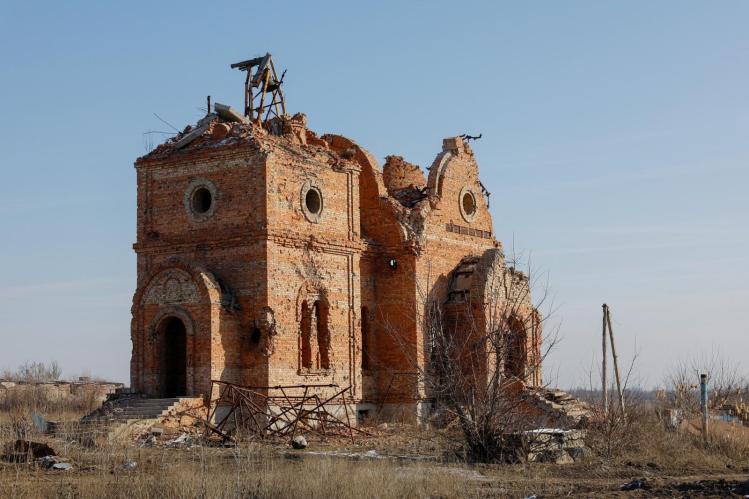
Throughout his pontificate, Pope Francis’s preaching often stressed the Christian values of mercy, compassion, and forgiveness (see, for example, Fratelli tutti, 227–252). In early February 2025, less than three months before he died, Pope Francis met with 250 young Ukrainians via Zoom to urge them to forgive their Russian enemies. The headline of the journal Ukraine Today read: “The Pope suggested that Ukrainians forgive Russia and not respond ‘blow for blow.’” At the start of the Zoom meeting, Archbishop Sviatoslav Shevchuk, the primate of the Ukrainian Greek Catholic Church, reminded the young people in attendance that if they heard an air-raid signal, they were to move immediately to the cathedral’s underground bomb shelter. These young people wanted the pope to know about the horrors of war that they had endured and especially the agony they felt when they discovered that friends and family members had been shot by Russian soldiers, blown up in drone strikes, or taken as prisoners.
For his part, Pope Francis repeatedly decried the evils of war but did not denounce the author of this particular war, Vladimir Putin, whose decision to undertake a “special military operation” in February of 2022 has led to the maiming and massacring of tens of thousands of civilians, the systematic torture of prisoners of war, the targeted bombing of apartment blocks and hospitals, the kidnapping of over twenty thousand children for “reeducation” in Russia, and the killing or wounding of at least four hundred thousand Ukrainian soldiers. Alongside these atrocities, there are also the approximately one million Russian casualties of war. And all of these inconceivably large numbers are growing larger by the day.
One participant in the Zoom event, a thirty-five-year-old woman named Tatiana, said that the immediate challenge for Ukrainians was to do everything they could to resist the “Herods of today.” “How can we forgive and teach children to forgive,” she asked, “when war leaves deep wounds in our hearts?”
Her question rightly assumes that the more someone has had to suffer, the harder it will be for them to forgive. Invoking Herod points to another psychological factor: other things being equal, it is emotionally easier to forgive the repentant than the unrepentant. And of course, we are less inclined to forgive someone who continues to threaten us, and even less inclined to forgive those who are still harming us now. Survivors often feel safe enough to forgive only after the offenders have changed their ways and no longer constitute a threat.
Tatiana’s simple question reminds us that, in Ukraine, extreme harm has been perpetrated by unrepentant offenders who are still engaged in massive wrongdoing. So long as this remains the case, it is highly unlikely that most Ukrainians will have the psychological strength to forgive their Russian enemies, and blaming them for not doing so seems both cruel and clueless.
The pope responded to Tatiana first by acknowledging the challenge—“forgiveness is one of the hardest things”—and then by describing what in the past has helped him personally: “I must forgive as I have been forgiven. Each of us must recall how we have been forgiven. The art of forgiveness is not easy, but we must keep moving forward and always forgive.”
The exact meaning of these apparently simple words is not entirely clear. The statement can be understood in at least two ways. The pope could be saying that since he has been forgiven by people whom he has wronged, he must therefore forgive anyone who has wronged him. But this is a questionable inference. It does not follow that, because someone you have wronged accepts your repentance, you must forgive someone else who stubbornly stands by what they have done to wrong you. Then too, there is an obvious and morally important difference between mundane wrongdoing and what some philosophers call “horrendous evil.” Whatever bad things the pope may have done to others in the course of his long life, the harm his wrongdoing caused is probably quite small compared to the massive and unspeakable evil that the Russian military and their mercenaries have inflicted on the people of Ukraine. The fact that the pope—and the Ukrainians to whom he was speaking—may have been forgiven by the people they have hurt in the past does not imply that Ukrainians should preemptively forgive their Russian aggressors now.
But there is another way to interpret Pope Francis’s comment. “I must forgive as I have been forgiven. Each of us must recall how we have been forgiven”—this seems to paraphrase the Letter to the Ephesians: “Be kind to one another, tenderhearted, forgiving one another, as God in Christ has forgiven you” (4:32). This Pauline exhortation is part of a longer passage characterizing the kind of conduct expected of Christians who have put off their old selves and put on new ones (4:22–24). Those who have accepted God’s forgiveness must be willing to forgive those who have wronged them. This is a kind of converse complement to the fifth petition of the Lord’s Prayer: “Forgive us our trespasses as we forgive those who trespass against us.” Since we all constantly rely on divine mercy, we should in turn show mercy to those who have sinned against us and not act like the unforgiving servant Christ warns us about in the Gospel of Matthew (18:23–35).
Pope Francis’s brief answer to Tatiana’s question implicitly draws on an understanding of divine grace as healing and strengthening our capacity to forgive. Divine love helps us forgive by fostering empathy (those who have hurt us are humans, not “monsters”), humility (including an awareness of our own shortcomings and character flaws), penitence (knowing we live as repentant sinners), gratitude (appreciating ways in which we have been forgiven), mercy (extending compassion to wrongdoers), and generosity (forgiveness is, after all, a kind of gift). The vices opposed to these virtues—callousness, pride, remorselessness, ingratitude, mercilessness, and meanness—are impediments to our ability to forgive. As members of the one body of Christ, we are generally called to conduct ourselves with “love, joy, peace, patience, kindness” (Galatians 5:16–25), all of which contribute to a steady disposition to forgive. But does a spirit of forgiveness require us to forgive every one of our transgressors, whether or not they want to be forgiven?
The Christian paradigm envisions a merciful victim forgiving a repentant wrongdoer. Granting and accepting this forgiveness culminates in reconciliation. This is how John Paul II and many others have interpreted the parable of the prodigal son (Luke 15:11–32). To affirm that God always forgives is to affirm that God always accepts our sincere repentance. This line of argument suggests that we should add a qualification to the famous line from Ephesians: “You should forgive one another as God in Christ has accepted your desire to be forgiven.”
Yes, God always forgives sinners, but we sinners cannot receive this divine forgiveness unless we actually want it—and this wanting is the essence of repentance. For this reason, God’s forgiveness is better understood in light of hesed, absolute love and loyalty that remains steadfast despite our own indifference and disloyalty. God’s forgiveness is radically different from ours in that God in no way changes his mind about us. When someone profoundly harms us, our natural response is to wish them ill or even seek revenge, but when we profoundly offend God, God only keeps loving and willing the good to us. Since “God is love” (1 John 4:8), God cannot but will the good to us even when we are at our worst.
Yet there is also an important similarity between divine and human forgiveness: just as we can only receive God’s forgiveness if we desire it, so those who have hurt us can receive our forgiveness only if they want it. As with God, so with us: we can’t force our forgiveness on someone who doesn’t want it—or someone who doesn’t think they have done anything for which they might be forgiven.
Sometimes, a wrongdoer’s sincere repentance inspires us to forgive, but in other cases, a preemptive offer of forgiveness can inspire a wrongdoer to repent. We can also have good reasons to forgive unilaterally—i.e., without either confronting the offender or ever receiving an apology. Appropriate resentment can be justified, but it is poisonous when it morphs into an obsessive extreme. The decision to “let go” of resentment regardless of the wrongdoer’s disposition is a concession to the challenges of mental health and the complicated nature of our relationships; it does not exemplify the Christian ideal.
After Pope Francis responded to Tatiana’s question, he then told his Ukrainian audience that we must “always forgive.” He announced this quite demanding norm without any qualification. He might have said, “It would be a sign of special Christian generosity to forgive”; or “The Lord invites you to forgive, when you are ready”; or “You should strive to forgive, when conditions make that appropriate.” Instead, he simply asserted that as Christians we are always morally required to forgive our oppressors, presumably even those who are defiantly unrepentant.
Cardinal Avery Dulles maintained that the Catholic Church has never actually taught that Christians are morally obligated to forgive unrepentant wrongdoers (see “When to Forgive,” the 2002 Laurence J. McGinley Lecture). According to Dulles, “No one has a strict right to forgiveness. The prospect of easy or automatic forgiveness could in fact give aid and comfort to aggressors and thus promote injustice.” As I already noted, the Catholic moral tradition has long distinguished between morally obligatory norms and supererogatory ideals, which go above and beyond what the moral law requires. In the Ukrainian context, teaching young Catholics subjected to intense and prolonged violence that they must forgive is, to say the least, confusing. It would be morally obtuse to tell a victim of ongoing physical assault to forgive her assailant even as she continues to suffer grave harm. And the psychological impossibility of acting on this norm creates a sense of moral futility in those trying to do so.
Pope Francis could have proposed the more realistic but still demanding goal of not succumbing to the temptation to hate the Russian invaders. We are required, after all, to regard even our enemies as “neighbors” who bear intrinsic dignity. Few of us would blame Ukrainians who refuse to offer forgiveness to the soldiers and drone operators who have slaughtered their loved ones. Refusing to hate in such circumstances is itself an impressive moral accomplishment and perhaps even a sign of the healing power of grace. We should also admire any Ukrainian who eventually finds it in her heart to forgive such enemies, but we should not regard her virtue as normative for every Christian in every circumstance. Strange as it may sound, we can love our wrongdoing neighbors without forgiving them. We can will the good of those who have harmed us yet still rightly and deeply resent them for what they have done and want to see them held accountable. Indeed, being held to account may be precisely what is best for them.
Instead of recommending immediate forgiveness, the pope could have acknowledged that anger is ethically defensible as long as it is consistent with the requirements of justice and the human dignity of the wrongdoers. Rather than simply telling the Ukrainians to forgive, he could have urged them to keep in mind that we should never deny that wrongdoers may undergo a process of repentance and conversion. Jesus’s famous instruction “Do not judge, so that you may not be judged” (Matthew 7:1) warns us never to condemn anyone as irredeemable.
Some readers might ask, “If what you say is true, then can we ever be morally obligated to forgive someone?” In Christian terms, the short answer is “yes.” Several key Gospel texts depict Jesus as commanding his disciples to forgive (Mark 11:25; Luke 6:37; Matthew 6:14–15), and he warns that those who refuse to do so exclude themselves from the reign of God. But it is one thing to say that we can sometimes be obligated to forgive, and another to say that we are always obligated to do so.
Fidelity to Christ should lead us to assume that, in most cases, we are indeed obligated to forgive repentant wrongdoers—if we can. It can, however, be very difficult for some wrongdoers to truly repent. Most accounts of repentance agree that it must fulfill five conditions. As a wrongdoer, one must (1) truthfully admit one’s wrongdoing to oneself, (2) feel an appropriate degree of remorse (not just regret), (3) honestly and thoroughly apologize to the person or people whom one has harmed, (4) try to make the fullest amends possible for the damage one has done, and (5) commit oneself to personal reform. These conditions are all difficult to fulfill, each in its own way. Take the fourth, for example: serious wrongdoing involves a kind of deep disrespect for which there is no sufficient atonement. You can return or replace stolen or damaged property, but what restitution can make up for crushing someone’s spirit?
Still, Christian ethics does encourage and predispose us to forgive unrepentant wrongdoers, even if it does not obligate us to do so. Since one who is guilty of gravely harming others may not be able to fulfill all the conditions of repentance, her victims are acting in a supererogatory way when they forgive her. This distinction explains the awe we feel when those who survive a terrible injustice forgive those who have perpetrated it, especially when the perpetrators are unrepentant.
The circumstances that can make unilateral forgiveness appropriate may involve what is good for the wrongdoer, what is good for the injured party, and what is good for the community at large. An injured party might decide to forgive a wrongdoer for her own good—if, for example, prolonged resentment is leading her to become consumed with bitterness. She might also conclude that forgiveness would be good for her offender—perhaps disarming his defensiveness would free him to be more honest. Finally, she might choose to forgive her offender because she believes doing so would be good for third parties—one spouse might forgive another not only for her own sake but also for the sake of their children.
Difficult moral dilemmas occur when these considerations conflict with one another. We may see this when wrongdoers confuse an injured party’s willingness to forgive with condoning, excusing, or minimizing the harm they have done. Misplaced forgiveness can be bad for an injured party if it renders her vulnerable to more harm in the future. And it can be bad for the wrongdoer if it emboldens her to continue to act unjustly. Sometimes wrongdoers may need to hear they are loved but not yet forgiven. One can imagine a victim of domestic abuse saying to her abuser: “I am entitled to resent you and will continue to do so until you have shown me that you truly want to change.” Complex cases require us to weigh the potential benefits of forgiveness against its potential costs. Forgiving the right way, at the right time, is an art that depends on the exercise of practical wisdom, and we would therefore do well to think of it as a process guided by reason and not just by intuition or instinct.
Repairing a relationship damaged by thoughtlessness, self-centeredness, negligence, or dishonesty depends on both the wrongdoer’s repentance and the injured party’s forgiveness. I have been arguing that we ought to distinguish between forgiveness as a binding moral norm and forgiveness as a beautiful moral aspiration. The command to love our neighbor requires us to cultivate good will for every human being, regardless of what they have done. But we can love our neighbors while also reasonably resenting what they have done to us and holding them to account. Injured parties have good reasons to be angry at wrongdoers who are defiantly unrepentant, as long as this anger does not turn into malevolence and unrestrained vengefulness.
The Gospel calls us to show mercy without slighting the demands of justice. We must always strive to love our enemies and pray for our persecutors, but we need not—and should not—act as doormats. (This is also why the Catholic tradition holds that countries have a right to use lethal force to defend their citizens against the Herods of this world.) We should be grateful to Pope Francis for his promotion of love, mercy, and forgiveness—not only in his message to the Ukrainians but throughout his pontificate. He was right to admonish us about the dangers of resentment and vengefulness. He knew that a politics of resentment, often fueled by populist demagogues, can lead to more bloodshed. As a pastor, Pope Francis was more eager to remind us of the imperative to forgive than to draw a fine line between appropriate and inappropriate versions of forgiveness. Still, we must keep in mind that the line is there, and it is an important one. Keeping it in view can make all of us wiser as well as more merciful and more just.