Neoliberalism now defines the political mainstream, but where do its boundaries end? Author Quinn Slobodian traces the varied landscape of neoliberal thought.
John J. Lennon has spent the last 24 years in prison for murder. Now, he is the author of a book about true crime, prison reform debates, and his own experience behind bars.
Journalist Cole Stangler traces how Paris—despite its reputation as a creative mecca—became dominated by the dullest professions capitalism has to offer.
"It is our duty to make sure people know where the Catholic Church stands on abortion, and we’ll keep making life miserable for any so-called Catholic who stands up for anything else."
Donald Trump promises a "historic dawn" for a new Middle East, but his plan for the reconstruction of Gaza seems more concerned with "economic integration" than human rights.
Our culture is marked by a competitive victimization. But perhaps we need to see what both secular and religious perpetrators of violence have in common.
Daryl Russell Grigsby’s book, grounded in a tradition of Black social justice Catholicism, brings to life the stories of those who try to make of the world a garden.
The commitment of Western liberal democracies to a two-state solution has always rung hollow—and after more than thirty years, it has failed to realize Palestinian human rights.
Too many political decisions during the pandemic were justified on supposedly scientific grounds when they should have been subject to democratic deliberation and debate.
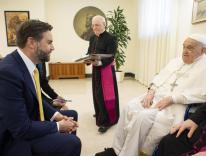
The uproar surrounding Cardinal Cupich’s decision to honor Dick Durbin for his work on immigration reform reveals more about the divisions in the U.S. Church than it does about either man.
The socialist revolutionary Rosa Luxemburg embodied precisely what we need today: a politics that seeks the flourishing of all creatures and recognizes the radicalism of that demand.
How can the Church and civil society honor the humanity of those dealing with mental illness? In this symposium, three authors discuss serving the least of these.
Contributions to this symposium challenge us to think more deeply about how the Church and civil society can recognize and honor the humanity of those dealing with mental illness.
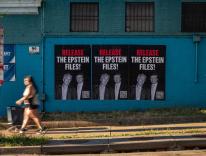
Donald Trump built a political career on manipulating conspiracy theories, but his failure to get a handle on the Epstein case has exposed a growing rift among the MAGA faithful.
Few writers have argued against modern egalitarianism with more flourish than Samuel Francis. Donald Trump and his gang now practice what Francis preached.
Accessibility is a fundamental part of community participation, and India's National Building Code gives us the imagination to build community spaces for everyone.
James Dobson’s message prevented my mom from recognizing her own agency, confronting humanity’s messiness, and fully understanding and accepting her family.