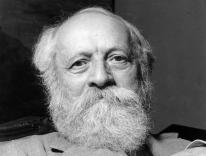
Wendell Berry’s book about American racism, The Hidden Wound, is half-a-century old this year. It can be considered an exercise in white vulnerability.
Stephen Hough, one of the world’s greatest musical performers, speaks with us about bioethics, sacramentality, and the challenges of living as a gay Catholic.
Summer’s here, and we’re reading new books by women writers about God, communal religious practice, and the strangeness of American life at the margins.
James Baldwin’s ‘The Fire Next Time’ reveals the destructive tendency of white Americans—and white American Christians most of all—to avoid self-scrutiny.
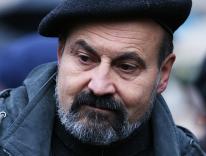
A Czech priest and writer, Fr. Tomáš Halík served as a spokesperson for the church during the Velvet Revolution. His autobiography is now available in English.
Like his wife Joan Didion, John Gregory Dunne had an abiding interest in, and a cleared-eyed view of, the struggle between the haves and the have-nots.
Dorothy Day is well-known for her ‘paradoxical’ nature, which resists political characterization. A new biography also contextualizes her life, filling in the gaps.
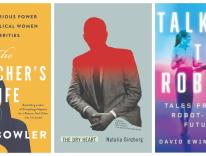
Many of us are familiar with the absurdity-unto-death that is working remotely. Forget the zoom-and-gloom: put down your devices and pick up these new books.
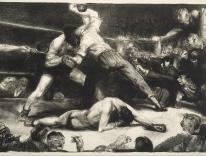
What can boxing teach us about the good life? Gordon Marino riffs on Sartre, Kierkegaard, and Camus, finding that in order to save our lives, we must risk loving.
Australian critic Clive James passed away last month. His writings show us that we need not choose between high and low culture: Dante matters, but so do the Doors.
Every crusade was both more and less than a religious war. No one had a monopoly on brutality, and economic motivations mattered as much as religious ones.
What is a home? And what happens when old patterns of life break down? British writer and former environmental activist Paul Kingsnorth grapples with these questions, and shares his responses.
As anyone who uses Facebook knows, we too quickly explain, meaning explain away, the world and each other. It’s not so simple; three books help complicate things.
Art. Fiction. Memoir. Even a graphic novel. Our critics compile a list of their favorite readings from 2019. They make great gift ideas for the Christmas season.
In recent decades, the institutions created to prevent corrupt dealings have themselves become complicit. Whistleblowers need protection, now more than ever.
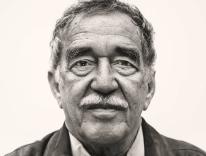
Colombian novelist Gabriel García Márquez wanted to be known more for his journalistic prose than his novels. A new collection reveals the flaws of that desire.
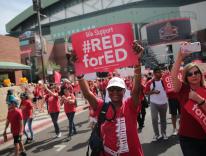
Organized labor was once the backbone of American democracy. A new book argues that the future of collective bargaining requires adaptation to new economies.
Recent nonfiction increasingly takes ego as starting point. Jia Tolentino and Leslie Jamison use self-aware essays to examine popular culture and female experience.
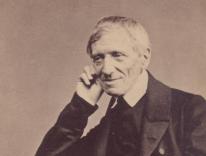
Best known for his autobiographical and educational works, John Henry Newman now has the distinction of being the only saint with two published novels to his credit.
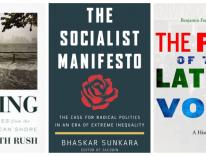
Global warming, the rise of the Latino vote, and, of course, millennial socialism. New books to keep an eye out for next time you browse the bookstore.
Available for the first time in English translation, the letters of a young German couple whose love of God and each other sustained them against Nazi oppression.