Christianity began as a religion of martyrs—that is, victims of state violence. But once Christians gained political power, they went from victims to victimizers, a pivot that has sadly characterized many persecuted peoples in history. While in power, Christians killed mainly other Christians, though also Jews and Muslims. And then, as the Christian Church began to lose power to secular nationalists, notably during the French Revolution, Christians again became victims of state violence.
Power tends to corrupt—and so does powerlessness. Our culture is marked by a competitive victimization: secular writers emphasize religious victimizers while religious writers, such as Thomas Albert Howard, focus on religious victims. Perhaps we need instead a comparison of religious and secular violence, to see what they might have in common.
Howard’s new book is about left-wing repression of organized religion in Europe, Latin America, and Asia, starting with the French Revolution. It is startling to see the rhetoric and practice of “tous les évêques, à la lanterne” (roughly, “lynch all the bishops”) spread from Paris to Mexico City to Istanbul, Moscow, Beijing, and Phnom Penh. Howard’s narrative is well-informed and compelling, moving in each chapter from country to country, outrage to outrage. He persuasively shows that the hatred and murderous assaults on religious leaders and ordinary believers forms a distinctive radical tradition, ranging from Jacobins to a wide variety of Marxists—all united in a Comtean positivist faith that religion is disappearing anyway, so it’s fine to give it an extra push. Howard is to be praised for his attention to the many non-Christian religious victims of (largely) Marxist repression, who are Jewish, Muslim, and Buddhist. Apart from the spell cast by the French Revolution, it is hard to explain why radicals from Mexico and Turkey to China and Cambodia would share a passionate hatred for organized religion, even where religion posed no obstacle to revolutionary goals.
Howard argues, in effect, that leftist progressives have a “religion-derangement syndrome.” He asks, “Why the curious blind spot among many educated Westerners with respect to violence committed under the aegis of ideological secularism?” Howard frames his study as a corrective of popular books, such as Hector Avalos’s Fighting Words, which argue that religion is inherently violent. Unfortunately, by responding to polemics, Howard’s claims also become polemical and his corrective in need of correction. The story of radical-left suppression of organized religion is not a new one, but Howard’s book tells the story with panache and accuracy. What I found largely missing, however, was an attempt to explain the particular motivations of those many and varied historical agents, beyond their allegiance to Jacobin or Marxist nostrums.
Within this left-wing antireligious modernism, Howard distinguishes three phases: first, the “passive secularism” of religious freedom’s liberal champions, from John Locke and Roger Williams to James Madison and Félicité de Lamennais; second, a “combative secularism” typical of the French philosophes and the radical French revolution after 1792; and third, a later “eliminationist secularism” found in many Marxist-Leninist regimes.
Howard argues that “combative secularism” is anticlerical, while “eliminationist secularism” is also comprehensively antireligious. He stipulates that by “secularism” (at least in its combative and eliminationist phases) he means not religiously neutral but positively antireligious. But if he associates secularism with “exclusive humanism,” then it is odd to talk about religious liberty as being in any way a “secular” phenomenon. Religious liberty is a Christian theological ideal going back to Tertullian—however poorly Christian churches have lived up to it—not the creation of modern secular liberals. America and several Western European nations began to protect religious liberty in the eighteenth century not because of Jefferson and Voltaire, but because enough Christians (especially dissenting Protestants) became convinced that their evangelical mission was better served by freedom from political control. On the Christian origins of religious liberty, see Robert Louis Wilken’s Liberty in the Things of God: The Christian Origins of Religious Freedom (2019).
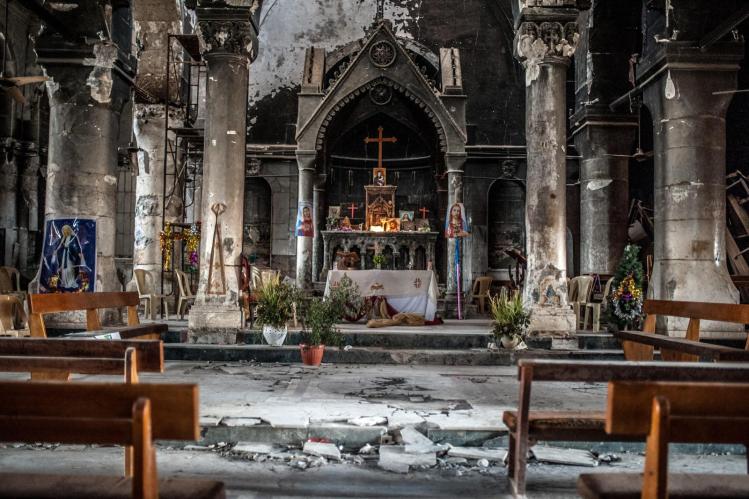
It is worth pointing out that the French Revolution illustrates all three phases of Howard’s secularism, not merely the first two. It is difficult to be more comprehensively antireligious than the Jacobins, who in November of 1793 outlawed Catholicism, banned the Bible, and turned many churches (including Notre Dame) into “temples of reason”—not to mention killing hundreds of monks, nuns, and priests, and desecrating thousands of churches throughout France. The French radicals enacted the complete playbook of antireligious violence that would be reenacted many times and in many places. Howard lists every outrage against organized religion committed by Stalinist regimes during the twentieth century without noting that virtually every single example was rehearsed by the Jacobins during the Terror.
Left-wing revolutionary violence has always been an exercise in historical reenactment, an eternal return of 1789. In one example that Howard somehow leaves out, the Paris communards of 1871—complete with a new “Committee for Public Safety”—kidnapped the archbishop of Paris. When they discovered that this gave them no leverage with their enemies, they murdered him. Friedrich Engels later mordantly observed that had the hapless communards understood history, they would have realized that it would have been smarter to kidnap the president of the Banque de France, the new holy of holies. For left radicals, down to the 1970s, it is always 1789.
Contrary to its subtitle, this book is not about secularist violence in general, but only about a particular tradition of left-wing attacks on organized religion. Left-wing secularist violence against racial minorities, political enemies, the rich, foreigners, and so on is ignored even though Russian Communists killed many more Ukrainian peasants than they killed Christian clergy, and Chinese Communists killed many more farmers than they killed Buddhists and Christians. So, Howard’s focus on antireligious killing understates the true extent of left-wing revolutionary violence.
But even if Howard is really interested only in secularist attacks on religion, he conveniently ignores the rich tradition of secular right-wing fascist and Nazi attacks on organized religion. You would never know from this book that most priests killed in Latin America were killed by right-wing death squads and that German Nazis killed more priests than did the Jacobins and German Communists combined. Howard could certainly reply that right-wing attacks on religion are sporadic, not systematic, and that right-wing radicals do not usually call for the abolition of organized religion. He implicitly codes secularists as left-wing and religious people as right-wing, which reflects trends in contemporary culture more than historical reality.
A major source of secularist antireligious violence has been nationalism. Much of the murderous violence of what are called “the wars of religion” can plausibly be attributed to emergent nationalism. Did the Young Turks kill Christian Armenians because of their secularism or their nationalism? Howard concedes that the violent suppression of Buddhism in Tibet was as much due to Chinese nationalism as to Chinese Communism. As Howard says, in many developing nations during the twentieth century, communism was the language used to express nationalist passion.
If one were out to prove that secular fanatics kill more people than religious zealots, modern nationalism would be Exhibit A. But Howard curiously describes nationalism as a “political religion.” By conceding that it is a kind of religion, Howard also concedes that religion is indeed the primary cause of murderous violence in our world—even though his book is meant to show the opposite.
Altars were being stripped and broken by the thousands long before Voltaire was born. Most Christians who were deliberately killed for their beliefs were killed by other believing Christians, just as most Muslims killed for their beliefs were killed by other Muslims. (The same is not true for Jews.) Howard has chosen to focus on secular antireligious violence, but it would be illuminating to point out that every secular outrage against clergy or sacred objects was pioneered and perfected by Christian and Muslim sectarians long before the philosophes arrived. Protestant reformers closed, desecrated, and looted more monasteries than did Jacobin or Marxist radicals.
The principle of orthodoxy, whether religious or secular, helps to explain why Christians mainly kill other Christians, and communists mainly kill socialists or liberals—even the Jacobins killed many more workers in Paris than aristocrats. Orthodoxy always prioritizes those who are closest, who claim to be redder than Red or more Catholic than the pope. Heresy, whether religious or secular, is like counterfeit money, which is dangerous precisely because it looks like real money—and that is why it must be suppressed.
A comparison of sacred and secular violence might reveal some disturbing similarities, such as what even good people will do when in the grip of a compelling narrative, whether biblical or Marxist. Violent rhetoric is often a preamble to physical violence, and nothing is more abusive and cruel than traditional Christian theological polemics—except, perhaps, for Marxist polemics. Christians and Muslims pioneered the ideological warfare—including all the horrible tortures and sacrilege—that, after 1789, began to be waged against them. Howard tells a shocking story of the cruel secular persecution of organized religion. Rather than bask in the moral comforts of victimization, Christians in particular should look in the mirror: de te fabula narratur.
Broken Altars
Secularist Violence in Modern History
Thomas Albert Howard
Yale University Press
$35 | 296 pp.