It’s been nearly sixty years since Mick Jagger declared that “every cop is a criminal / and all the sinners saints.” The Rolling Stones’ 1968 song “Sympathy for the Devil” was a defiant provocation—an expression of just how unnatural the natural order of things had become. Not everyone agreed, of course.
In fact, despite recent debates about systemic inequality, mass incarceration, mental illness, and addiction, around half the country still seems quite sure that law enforcement is, was, and always will be saintly. What’s changed, maybe, is that those same folks are more apt to see the broader criminal-justice system as wasteful or corrupt—just another mess made by the government.
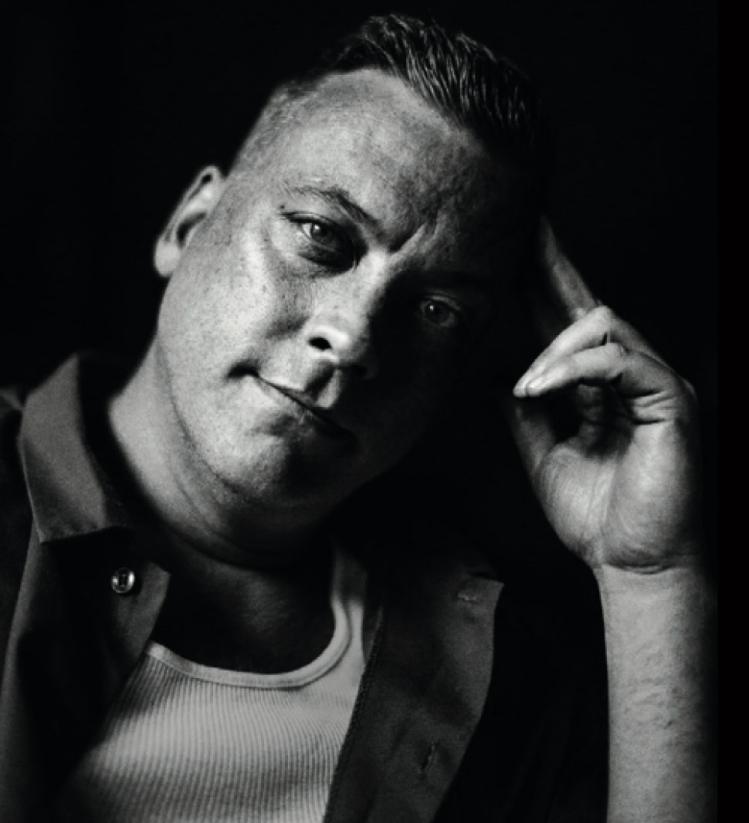
John J. Lennon has a unique perspective—to say the least—on these matters. “While some people in prison are wrongfully convicted, few of us are truly innocent. We just want to be,” he writes in this powerful, provocative new book, The Tragedy of True Crime. “As much as we want to blame prosecutors for overcharging and seeking maximum sentences, they do almost always get it right. Most people in prison are guilty and I’ve always found the guilty man more interesting perhaps because I am one.”
Back when the rest of New York City was recovering from the shock of 9/11, Lennon was selling and using drugs. “One of my drug dealers claimed that a friend of mine…was shaking him down,” writes Lennon, who was born and raised on the white working-class edges of Brooklyn and Manhattan at a time when Italian American and Irish American criminals (sometimes “organized,” often very much not) were still a prominent underworld presence. “This is someone I had grown up with [and who] had just lost his father, and his dope habit was growing out of control,” Lennon writes. “I heard he was robbing other drug dealers. I told myself that killing him was the only solution.”
After his 2001 arrest and a twenty-eight-year-to-life prison sentence, Lennon continued to use drugs behind bars, where he also saw relentless violence, boredom, and despondency. (He also got married twice.) Lennon observed the subcultures and hierarchies of prison life—the cliques of fellow inmates, the tolerable and the intolerable corrections officers, the byzantine absurdities of prison bureaucracy. He learned, for example, that for various bizarre reasons it was prohibitively difficult to order packages of books. Magazines, on the other hand, could simply be sent through the U.S. Postal Service. So that’s what Lennon began reading—voraciously.
Thus began a very unlikely journalism career. Over the past decade, Lennon has published while behind bars on criminal-justice affairs, with bylines in legacy media outlets from The Atlantic and The Washington Post to Esquire, where he is a contributing editor. He is not eligible for parole until 2029.
His new book charges into some of the most contested battlefields of the twenty-first-century culture wars: the “new Jim Crow” discourse, and the barbed and tangled wires of substance abuse, mental health, and violence. Rather than merely chronicling his own story, Lennon also explores the lives and crimes of three other convicted killers, all while interrogating Americans’ seemingly endless appetite for “true crime.” It’s an ambitious undertaking, and while some portions work better than others, it is without a doubt a remarkable book, filled with pain and wisdom, humility and forthrightness—much of it reflecting poorly on Lennon himself.
Don’t expect the kindly guards or manic sadists we see in movies like The Shawshank Redemption or The Green Mile—or the sweeping moral arcs of The Count of Monte Cristo or Dead Man Walking. Lennon is admirably comfortable with ambiguity, even as he makes the dehumanizing effects of prison abundantly clear. He suggests that meaningful reforms will need to include victims’ families, who are too often exploited or ignored amidst philosophical debates over the nature of rehabilitation and punishment.
The Tragedy of True Crime also confronts thorny questions about authorship itself. “[A]s prison reform has become more mainstream,” Lennon writes, we are “experiencing a renaissance of prison writing…. [T]he problem is who gets to tell [these stories].” It’s a dilemma, like so many others, compounded by race. Lennon, who is white, has become a spokesperson of sorts for an issue that disproportionately affects Black men, who make up less than seven percent of the U.S. population, but more than 40 percent of U.S. prisoners. Lennon forthrightly confronts these issues, and his own identity doesn’t lessen the book’s many valuable contributions to urgent, ongoing debates.
Among those debates are some about the Catholic Church. Two of Lennon’s subjects committed crimes that are ominously shadowed by the sex-abuse coverups. One involves the 1987 murder of a highly respected priest from Buffalo. The other is the notorious 1980s murderer Robert Chambers. Known as the “preppy killer,” Chambers was the godson of now-disgraced Cardinal Theodore McCarrick, who eventually advocated for Chambers’s release.
Lennon believes that criminal justice has been compromised by what he calls the “true crime industrial complex”: popular books, documentaries, and podcasts that tell “stories of violence for pure entertainment.” What does it mean, Lennon asks, “for true crime to have such a massive audience when America has the highest incarceration rate in the world?” After learning that some prison officials cooperate with television producers even as they deny certain educational opportunities to inmates, Lennon declares: “I can’t help thinking that one of the reasons they do this is because true crime furthers narratives that justify the existence of their very jobs.”
This is certainly plausible—especially since Americans’ fear of criminal violence is generally far higher than actual crime rates, which continue to trend downward following Covid-era upticks. But it’s important to add that even if true crime does sometimes serve powerful interests, its roots are more complex. Vivid, sensationalistic crime stories were a staple of nineteenth- and twentieth-century journalism that catered to immigrants and the working class, who found more respectable newspapers not just stuffy, but aligned with the elite.
Lennon also wonders if the most exploitative kinds of true crime not only justify the prison-industrial complex but actually “increase the desire for human punishment” by “illuminating human darkness.” He even goes so far as to say that “one thing, more than anything else, is keeping me in prison: true crime.”
It’s a bold proposition to consider. But given the enormity of the issue Lennon is confronting, the absence of context is glaring. Of course, his book is not meant to be a comprehensive scholarly study; still, determining the linkages between criminal-justice policy and popular culture would require a deeper dive into not only the social sciences but also literature, movies, and music: for starters, Poe and Dreiser; Clockwork Orange and American Psycho; Goodfellas and Natural Born Killers; death metal and “gangsta rap.” At what point do provocative representations of human extremes become too explicit and risk either glorifying crime or fetishizing punishment? The line separating progressive and conservative critiques of culture can get very blurry here.
It should also be added that “true crime” comes in wildly varying degrees of quality and complexity. Amid all the frightening trash, there are also thoughtful books and docu-series that eschew scare tactics and approach the sophistication of Lennon’s own work in their complexity and perspective.
Even if Lennon overstates the connections between pop culture and policy, he’s right that salacious true-crime narratives can warp people’s perspectives on criminal justice, including those of the criminals themselves. Some of the book’s most compelling passages explore what one psychologist calls the “malleability of human memory”—when inmates themselves “have distorted their own” recollections of their crimes. He writes:
[We are] so eager to believe in some scandalous theory…when, more likely than not, the causes of…[many crimes] are the same systemic issues that continue to plague our society: poverty, addiction, untreated mental illness, unemployment, poor access to health care and education.
The real problem with true crime, then, is the same one that undermines so much journalism: it’s difficult to dramatize mundane struggles without resorting to sensationalism and personalizing what are systemic issues. This kind of journalism makes it all the more difficult to implement sensible policy solutions, especially at a time when so many Americans—left, right, and center—view institutions as oppressive or incompetent.
It’s been fifteen years since Michelle Alexander wrote The New Jim Crow: Mass Incarceration in the Age of Colorblindness, a landmark book that helped shift public debates about criminal justice. Activists and even elected officials began asking fundamental questions about who ends up in prison and why, and how much social progress had really been made in the wake of Barack Obama’s election. In Ava Duvernay’s powerful 2016 documentary about the prison-industrial complex, 13th, Alexander herself said—albeit somewhat skeptically—that “Democrats and Republicans alike have decided that it’s not in their interest anymore to maintain the prison system as it is.”
But have we seen any substantive changes in the past decade? It’s hard to say. Generalizations are difficult because criminal justice is largely state-specific. Still, prison populations are trending downward; a June 2025 Atlantic report declared that “America’s incarceration rate is about to fall off a cliff.” The 2017 bipartisan First Step Act—signed by Donald Trump, of all people—built on the modest reforms signed into law way back in 2008 by, of all people, George W. Bush.
Lennon himself cites various modest but effective reforms. A federal law mandating a “zero tolerance policy toward sexual assault, for both prisoner-on-prisoner and staff-on-prisoner,” has generally had its intended effect, Lennon says. And while “some argue that the increasing power of the victims’ rights movement…[has] supercharged the policies of mass incarceration,” Lennon cites evidence suggesting that, so long as they are part of the process, crime “survivors” generally support “rehabilitation over retribution.”
The draconian fiscal and law-enforcement priorities of the second Trump administration will surely influence these trends for the worse. But it’s important to add that a profound—and bipartisan—distrust of government is a big reason why Donald Trump has received more than 200 million votes in the past decade and is currently empowered to implement such destructive policies.
Too many debates about criminal justice still devolve into strident, ideological performances. Right-wingers rail against high costs and moral decay; the left decries inequality and root causes. Each, in their own way, rejects state surveillance systems. And each, of late, has seriously considered abandoning central tenets of the justice system as we’ve long known it. “Prison abolition…has established a foothold in elite criminal legal discourse,” the Harvard Law Review noted in 2022, when calls to end cash bail and “defund” law enforcement also became progressive talking points. MAGA, meanwhile, has responded with a dizzying array of “tough-on-crime” policies that jettison rehabilitation and the presumption of innocence in favor of trial by X and sending in the National Guard. (Good luck getting Donald Trump to talk about the First Step Act these days.)
But destroying the system will not rid us of the many social, political, economic, and cultural problems that created it. Lennon’s violent, chaotic life is a testament to these multifaceted problems. But his book—and his apparent rehabilitation—may also serve as a testament to the fact that the system is, despite everything, worth fixing.
The Tragedy of True Crime
Four Guilty Men and the Stories That Define Us
John J. Lennon
Celadon Books
$29.99 | 368 pp.