It’s just over a year now since Donald Trump was elected for a second term, and the despair Democrats have experienced since then has been profound. Trump II has undeniably proven much worse than Trump I. However future historians may come to judge the Resistance’s apocalyptic warnings of democracy’s imminent demise, no one can deny that the Trump administration is seeking to carry out much of the Project 2025 agenda. The increasingly brutal and indiscriminate ICE raids are a national shame, while Trump has put his executive power in the service of a seemingly endless revenge tour. While he tries to broker quick trade and peace deals abroad—in the most gauche attempt ever to secure a Nobel Prize—he’s unsettling American society by attacking its universities, deploying the National Guard in major cities, and weaponizing the Department of Justice while also demanding that it pay him $230 million for investigating him while he was out of office.
Democrats, of course, have not lost all hope. October saw millions of Americans from around the country protest in “No Kings” marches. Meanwhile, Trump’s immigration, tariff, and inflation policies have been met with general dissatisfaction, as one poll after the next demonstrates. One year after Trump’s reelection, Democrats ran the board in off-year elections from California to New York, and there is optimism that they can regain some political control in Washington by performing well in next year’s midterm elections.
Still, there remains a lingering feeling of defeat and disorientation among liberals, and little consensus about the best way to confront and vanquish the MAGA-fied GOP. New York City’s mayor-elect Zohran Mamdani offers a clear alternative to the Democratic Party’s recent neoliberal past, but many of Mamdani’s centrist critics, such Matt Yglesias and Noah Smith, do not believe his electoral success can be emulated outside of NYC. More generally, they believe that his policy proposals—whether described as democratic socialist or social-democratic—are a recipe for economic and political failure. These commentators instead endorse the “abundance agenda” of Ezra Klein and Derek Thompson, who claim that the key to socioeconomic progress is to remove unnecessary bureaucracy and regulation so that both the private sector and the government can build bigger and faster; they pay much less attention to the problems of concentrated wealth and political power. In other words, the abundance liberals aren’t as concerned with inequality as they are with material progress and economic growth. And they worry that Mamdani’s brand of politics, however well-intentioned, is too narrowly focused on redistribution and democratic process. But as journalist Osita Nwanevu argues, “You cannot leapfrog over democratic politics. As successfully as you might be able to administratively push through some project without direct public input, the viability and stability of that project is going to depend upon public buy-in.” In other words, the people need to understand and be on board with whatever the government hopes to accomplish for it to have any chance of long-term success. Nwanevu contends that the Biden administration, which had some real technocratic successes, failed to explain them to the public, and therefore failed politically, leaving the door open to Trump’s return.
All of this raises the question of how to get the people on board with the massive infrastructure projects advocated for by both abundance liberals and Trump’s “Make America Great Again” national-rejuvenation supporters. In this regard, MAGA is clearly limited by top-down policies—tariffs, the expulsion of undocumented immigrants, the silencing of critics by means of legal harassment or funding cuts—that do little to generate long-term public support. The abundance crowd, meanwhile, worries that our democracy, with its vaunted “checks and balances” at various levels of government, provides too many choke points and too many rules, stifling innovation. What, then, would an unreservedly democratic alternative to these visions look like, and how might it be realized?
The most obvious place to look for inspiration is the New Deal. There can be little doubt that the New Deal succeeded because FDR was widely popular—his approval rating hovered around 65 percent. Some say he was so popular only because his presidency occurred in the years just before and during World War II. Wars galvanize countries into patriotic unity in defense of the homeland. In his book The Great Leveler, the historian Walter Scheidel concludes that substantive inequality only declines when “carnage and disaster” strike. Only an emergency such as war compels the people to overcome their old divisions.
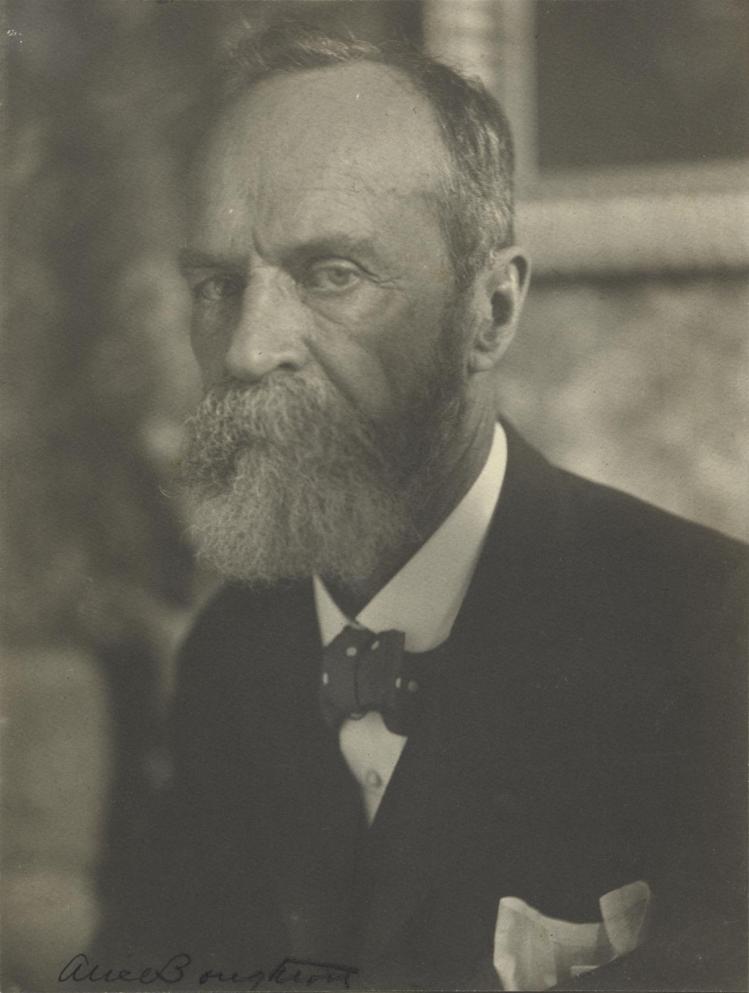
Might there be a peaceful equivalent to war that could generate the same sense of urgency and solidarity? Next year marks the hundredth anniversary of the philosopher William James’s famous 1906 speech, “The Moral Equivalent of War,” which raised this very question. Now that liberalism is in a period of soul-searching—looking for a way out of the current political darkness but also for a new vision for the future—it is worth reconsidering James’s speech.
Today, antiwar sentiment is apparent on both sides of the political divide. Since George W. Bush’s Iraq War debacle, every successful U.S. president has run on an antiwar platform. Obama did it in 2008, noting that, unlike Hillary Clinton, he had opposed the Iraq War. Trump ran as the antiwar candidate in 2016 and 2024, and Biden in 2020 said that he would work to end the so-called “forever war.” Yet, they all failed, in various ways, to live up to their campaign promises. Indeed, it took Trump just a few months to break his 2024 antiwar pledge by bombing Iran in June 2025. Trump’s neoconservative critics, who generally despise him, lauded this decision.
If being antiwar is so popular among the American people, why can’t presidents do what is popular and avoid war? Moreover, if opposing the use of violence abroad has so much bipartisan support, why is there so much violence within the United States? William James had a very interesting answer to these questions. He believed that war was, in a sense, part of our DNA, or as he put it: “our ancestors have bred pugnacity into our bone and marrow, and thousands of years of peace won’t breed it out of us.” James was quick to add that he was an “antimilitarist,” that he rejected a “fatalistic view of the war-function” as pure “nonsense,” and that he ultimately believed “in the reign of peace and in the gradual advent of some of sort of socialist equilibrium.” James believed that the kind of virtues that a wartime society produces could be redirected toward peaceful ends.
But this could be achieved only if states preserved what he called the “old elements of army discipline.” Hence James’s notion that there needed to be a moral equivalent of war to galvanize that discipline. The achievement of a “socialist equilibrium” would require intrepidity, surrender of private interest, and obedience to command. James argued that if those who opposed war did not manage to find an ethical substitute for war’s disciplinary function, they would fail to achieve their goal of a peaceful society. In short, James thought that the pacifists and antiwar advocates of his times had the right ideals but were often too lazy and undisciplined to achieve them. James’s essay is still relevant because it raises a question typically passed over by the many Americans who say they want the country to end its forever wars. What kind of people do we have to become in order to achieve peaceful cities, societies, and states?
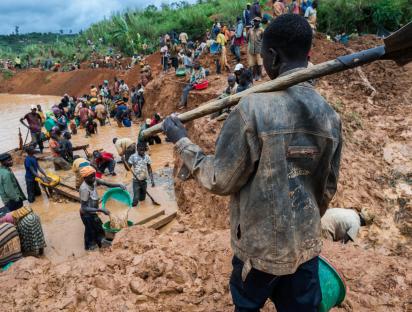
But it also proves relevant because it asks what material and institutional conditions are necessary to realize the moral equivalent of war in the United States. And in this regard James shows why democracy is essential for creating a more peaceful and economically just country. It is by a mere accident of birth, he observes, that some people must endure a life of toil, pain, and social inferiority, while others are born with the privilege of escaping such hardships. But war and military service were not the only conceivable leveler of such inequality. James argued that another kind of service could have the same effects: “a conscription of the whole youthful population, to form for a certain number of years a part of the army against Nature.” James meant that we could conscript the privileged and nonprivileged to partake in common efforts that had the effect of evening out the unequal accidents of nature. “The military ideals of hardihood and discipline would be wrought into the growing fiber of the people; no one would remain blind, as the luxurious classes now are blind, to man’s relations to the globe he lives on and to the permanently sour and hard foundations of his higher life.” Rich and poor working together through a program of enforced conscription—“to coal and iron mines, to freight trains, to fishing fleets in December, to dishwashing, clothes-washing, [etc]”—would serve to overcome the divisions within society and thus create the social conditions for a “pacific civilization.”
James believed that unless such a moral equivalent of war was established via a program of national conscription, war would continue to have its way. But he concluded his talk on an optimistic note:
I have no serious doubt that the ordinary prides and shames of social man, once developed to a certain intensity, are capable of organizing such a moral equivalent as I have sketched. It is but a question of time, of skillful propagandism, and of opinion-making men seizing historic opportunities.
One wonders if James would have remained so optimistic had he lived to see World War I. He died a few years before it began. I asked my students this question and others related to James’s text, which I assigned for a class I am teaching this semester on visions of perpetual peace. Most of them seemed to think that only war could provide the conditions for the kind of solidarity that James valued; there was no “moral equivalent” to war. I imagine that such a perspective is a common one. But if we truly believe that the country is on the brink of a civil war or a fascist takeover, then a drastic plan of action is needed. We cannot wait for a war to solve our problems for us.
Unlike the technocratic abundance agenda, which has been the most discussed vision for the future of the Democratic party since Trump’s return to the White House, something like what James is suggesting—a compulsory nonmilitary conscription program in which the children of both the rich and poor would spend part of their youth serving the community—would be a thoroughly democratic way to address inequality and rechannel the energies that feed the war machine. If we truly want to end “forever wars,” we have to recognize, as James did, that they are inseparable from social conflict and division at home.