The most obstreperous opponents of masks tend to be men, a fact that has been chalked up to machismo and male privilege. But there’s more to it than that.
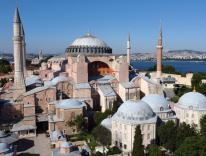
Hagia Sophia’s history as a church, mosque, and museum makes it a unique cultural bridge, but now it is also a symbol of the populist threat to religious minorities.
Largely white and rural, the state has moved right over the past decade. Yet its response to the pandemic may lead to more competitive races this November.
Wendell Berry’s book about American racism, The Hidden Wound, is half-a-century old this year. It can be considered an exercise in white vulnerability.
This summer, President Andrzej Duda of Poland won reelection in two successive rounds of voting. His success represents a growing threat to Polish democracy.
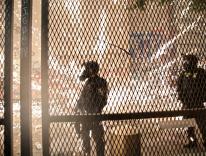
One consequence of Trump’s order to send federal immigration enforcers to Portland is that Americans will get a better sense of the unjust ways these agents operate.
The USCCB’s opposition to the pro-LGBTQ Supreme Court ruling shows a disregard for human dignity and promotes a counterfeit version of religious liberty.
For too long, the fantasy of a conservative court overturning abortion legislation has allied Catholics with otherwise anti-life politics. But it’s only a fantasy.
The gift of the Holy Spirit allows us to passionately fight for the peace of Christ, a peace far greater than the one offered by oppressive authorities.
How should we answer calls to ‘defund the police’? To start, we must begin meeting urgent social needs instead of reflexively resorting to arrest and prosecution.
Humans are hardly the ‘rational actors’ social scientists pretend they are. With COVID-19 cases rising again, epidemiologist Joshua Epstein proposes another model.
Although the Union defeated the Confederacy, the Civil War did not eliminate the Confederate worldview. The oligarchic ideology grew and spread to the American West.
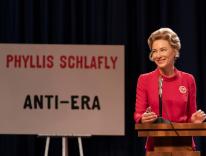
Anti-feminist Phyllis Schlafly sought the perfection of the traditional family, at the expense of reality itself, by fighting against the Equal Rights Amendment.
It is comforting to imagine we are making steady progress in combating racism. But it’s also misleading: we have done far too little in the last fifty years.
James Baldwin’s ‘The Fire Next Time’ reveals the destructive tendency of white Americans—and white American Christians most of all—to avoid self-scrutiny.
Defending racist and violent policing as the result of individual “bad apples” doesn’t just obscure larger systemic problems. It hinders the pursuit of justice.
Pentecost readings can lead to easy, watered-down homiletics about unity amid diverse peoples. In response to the killing of George Floyd, the church must do more.
By all means, we should listen to scientists and take data into account in our coronavirus response. But our leaders also need to exercise the virtue of prudence.
Attorney General William Barr is a disgrace, subordinating the impartiality and professionalism of the Justice Department to President Trump’s political needs.
This year, global carbon emissions could drop 8 percent, the largest reduction since 2008. But with Trump in office, don’t count on permanent improvement.
A desert locust infestation now threatens the food security of East Africa, a region that was already contending with intense drought, floods, heavy rains, and war.
William Barr claims that Michael Flynn was the victim of ‘overzealous law enforcement.’ A close examination of recent legal history shows that isn’t so.
Dorothy Day is well-known for her ‘paradoxical’ nature, which resists political characterization. A new biography also contextualizes her life, filling in the gaps.
We are and always will be vulnerable in some ways. But this does not excuse the short-sighted policy decisions that unnecessarily increased our fragility.