Unlike past Eurocentric taxonomies of world religions, the latest Norton anthology aims to let six major, living, international religions speak...in their own words.
Iranian author Azar Nafiri defends the value of canonical American literature—its imagination and humanity—against Common Core, market analyses, and Babbitt.
The European Union's intent to address migration from Africa comes as a welcome if belated development in a crisis that has been crying for moral leadership.
The pro-British kings archeologist-turned-spy-turned-colonel T.E. Lawrence helped establish in Arabia, Iraq, and Transjordan made "Arab unity" a "madman's notion."
Worshipping with families of Antiochian Christians in Philadelphia, you are an interloper. At the coffee hour, they pile your plate with pastries—"you are new, yes?"
The Obama administration has not made grandiose claims about what a deal with Iran on its nuclear program can achieve. But there is reason for guarded optimism.
The emergence of the Islamic state; the tension with Iran; and the sinister turn events have taken in Israel are attributed in Europe to American irresponsibility.
Finding himself in a close race, Israel's prime minister resorted to scare-mongering and demagoguery on what one is tempted to call an almost biblical scale.
Boehner’s inviting the leader of another nation to criticize our own president, and Netanyahu’s decision to accept, threaten to damage the U.S.-Israeli coalition.
Clint Eastwood's 'American Sniper' has provoked criticism from both right and left. It's awash in patriotic spirit, it glorifies war. It's also a pretty bad movie.
If a president says anything critical about what Christians may have done at any point in history, he's destined to be attacked for engaging in “moral equivalence."
Tracing the political thought of Israel's founding father, Shlomo Avineri reminds readers that the Zionism of Herzl's time is very different from Zionism today.
In defending the use of drones, Obama has classical just-war tradition on his side. But just-war tradition has come to be read in a new and legalistic way.
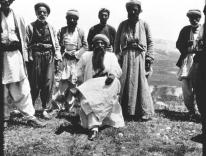
Ancient religions that have survived centuries are often the most persecuted: Mandaeans, Yazidis, Zoroastrians, Druze, Samaritans, Copts, and the Kalasha.
Can we now say with confidence that our government will not use torture again? In light of reaction to the Senate Intelligence Committee’s report, I fear we can't.
Recent evidence suggests that if we intervene in Syria, we are less likely to end the suffering than to compound it, stretching the killing out over decades.