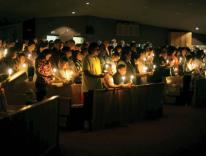
When the priest said “The Mass is ended, alleluia,” she burst out laughing. As a guest at Mass, she sensed the beauty of Catholic worship, and also its strangeness.
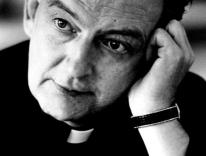
Biographer Randy Boyagoda paints Richard John Neuhaus as an unusually ambitious and politically engaged priest as public intellectual—but is his narrative too tidy?
Readers write in on how academic, humanistic, and prophetic cultures should be balanced, when kids should be confirmed, and why nothing's better than the Eucharist.
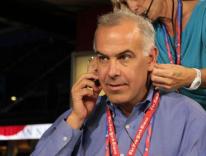
Brooks thinks character is what’s missing in our self-centered society, yet has written a self-help book for an age he believes values the self much too highly.
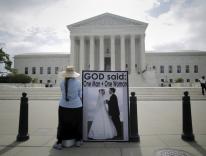
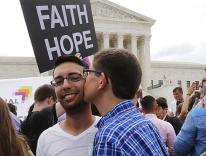
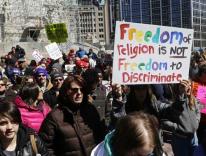
Whether or not U.S. support for LGBT rights goes beyond the rhetorical, societies still viewing themselves as “under God” will bridle at this sudden turn about.
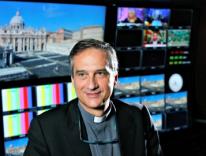
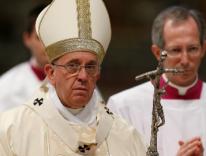
As Francis plans to overhaul the Holy See's media management, a bishop-psychotherapist is assigned to help remove "playboy priests" from an infamous Italian diocese.
The core liberal conviction about the Supreme Court still rings true: it is most constructive when power is used to vindicate the rights of beleaguered minorities.
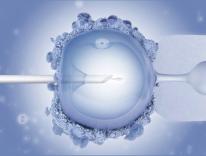
In her new book, Jane Maienschein lays out the history of embryonic science—going back to Aristotle—hoping to answer an old question: When does a human life begin?
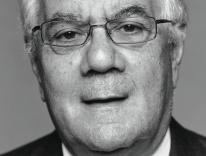
Amusing and engaging, Barney Frank's stories (from sixteen terms in Congress) tell what kinds of “inside politicking” informed the presidencies of LBJ through Obama.
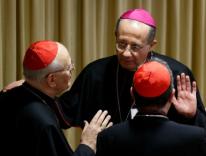
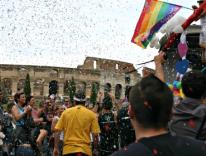
Synod officials released an "underwhelming" working document for October's assembly while Italian Catholics gathered to protest gay marriage and gender theory.
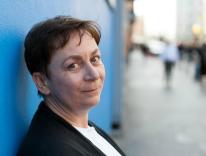
Ireland's fiction laureate talks about sex and death in Ireland; Pope John Paul II's 1979 visit to the country; Kafka and kids; and her new novel, 'The Green Road.'
Francis's week: talking church reform with cardinals and peace with Vladimir Putin. And saints' bodies are en route to Rome. Is Francis reviving medieval devotions?
Marx derided religion as an opiate destined to fade away but ultra-orthodoxy is on the rise. What happened to make faith one of the most dynamic forces in the world?
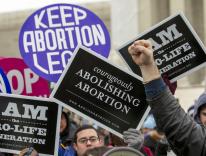
A preview of upcoming papal visits at home, abroad and with Italian protestants. And the press turns Francis's list of "attacks on life" into an abortion debate.
Many people in the West who do not share Christian faith nonetheless share with Christians many of the key ethical values that energize democratic political life.
Many modern American thinkers have asked, often and with anxiety, "What is man?" In his latest book, Mark Greif thinks we've outgrown this—and it's a good thing.
In his final book, the late Peter Gay expands familiar notion of the Romantic rebellion against Enlightenment rationality, to the focus on artistic self-expression.
Readers "angered at the tortured logic of the editors" respond to the removal of Bishop Finn, Francis's failures, the value of "big history," and how to know Jesus.
Cardinal Parolin calls Ireland's gay marriage victory a "defeat for humanity"; progressives and traditionalists hold secret meetings to discuss Synod on the Family.
Unlike past Eurocentric taxonomies of world religions, the latest Norton anthology aims to let six major, living, international religions speak...in their own words.
The starting point for the unraveling of Catholic confidence in the church’s sexual ethics is contraception. Shouldn't the next synod finally meet the issue head-on?
Argentine Archbishop predicts "the people of God" will support Francis's changes long after he's dead—and traditionalists cry schism while non-Catholics convert.
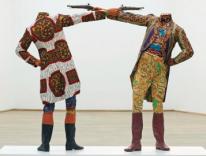
Heaven, Purgatory, and Hell each has its own floor. Evoking horror, repentance and beatitude, more than 40 African artists exhibit a new look at Dante and divinity.
Charles Camosy believes we are “on the verge of a new moment in the abortion debate," politically capable of compromise. But has he misunderstood Catholic teaching?
Is humanity better or worse off believing in the sacred? Kitcher has not provided new reasons for declaring the death of God, but he certainly makes it seem foolish.
Kevin Kruse convincingly claims that the association of patriotism with Christianity comes from a libertarian reaction in American business to the New Deal.
“New atheists” like Richard Dawkins have made a splash with aggressive attacks on religion. But Michael Ruse, philosopher and reflective atheist, is not impressed.
How can we choose to have agency over our lives when we are bombarded by choices? Crawford proposes a way to reclaim your attention span and thereby reclaim yourself