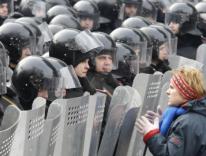
The revolution in Ukraine is about the thuggery of Yanukovich's regime, the impoverishment of the nation, and the thieving from the state coffers by his associates.
Social and religious conservatives should have been the first to oppose the effort to allow businesses to discriminate against same-sex couples on religious grounds.
With ACA enrollment numbers up and the troubled website stabilized, it’s worth looking back at the madness that gripped the Chicken Little pundits a few months ago.
The presence of the Amish in America poses a conundrum: How do a people who espouse a slow and simple way of life not only survive but thrive in a hypermodern world?
The conventional wisdom seems to be that Americans, feeling ripped off by the Affordable Care Act, are ready to pounce. But how does that correspond to reality?
The UN made several recommendations the Holy See would do well to heed. But it weakened its case by weighing in on doctrinal matters unrelated to abuse.
February 11 marked the end of a dismal experiment during which the right wing did all it could to make the United States look like a country incapable of governing.
Conservatives insist that higher incomes at the very top fuel investment and growth and improve living standards. Real-world outcomes make nonsense of these claims.
Our politics are haunted by principles of Austrian economics and their sweeping hostility to any actions by government to keep downturns from becoming catastrophes.
Militant groups aren't wielding 'laïcité' in support of a public sphere embracing diverse religious expression. The employ it as a form of anti-Islamic politics.
Making sure late-term abortions are done only to save the life of the mother—under the safest conditions possible—should be something both sides can agree on.
If you doubt the cost of indulging in political pieties rather than political organizing, compare the influence of Occupy Wall Street with the Tea Party.
Iran’s nuclear ambitions are a serious problem, but demanding complete Iranian capitulation, either at the negotiating table or on the battlefield, is no solution.
A fear that the United States not only has decisively lost its power in the region, but is also responsible for why everything seems to be going wrong.
In spite of historical lessons, blank checks remain the currency of allied nations. During the twentieth century, seemingly competent leaders have issued them.
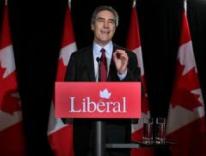
Ignatieff’s constructive approach to politics, like his commitments to democracy and social justice, remains untainted by the bitter experiences he describes.
‘The Irony of American History’ shines a klieg light on the so-called war on terror and the current debate over the operations of our “national security state."