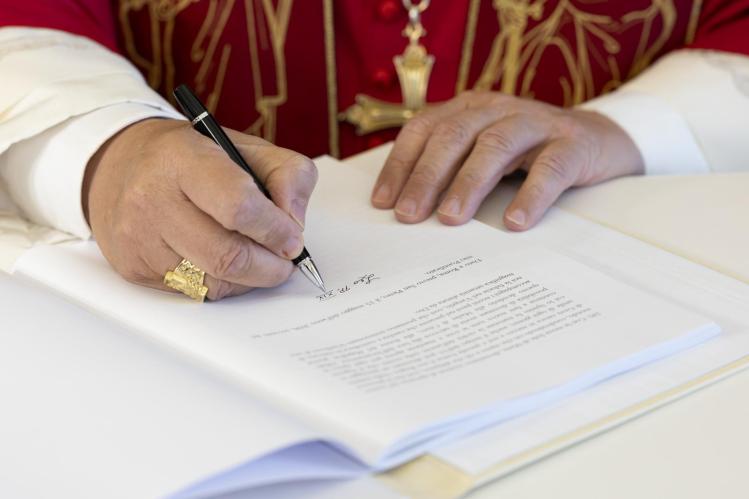
As recent advances in artificial intelligence have radically altered the way we learn, teach, work, and even wage war, and as they begin to challenge our assumptions about what sets us apart from our machines, Pope Leo XIV has emerged as an eloquent critic of the way this new technology is being employed, and of the pretensions of the Silicon Valley technologists who control it. As expected, his much-anticipated first encyclical, Magnifica humanitas, offers a compelling warning about the dangers of unregulated—or self-regulated—AI, but it does much more than that: it reorients Catholic social teaching toward the political and economic problems that have emerged in the twenty-first century, provides a remarkably candid account of how the Church’s social doctrines have developed with respect to war and slavery, and proposes a robust Christian humanism in opposition to those who hope to transcend the human condition or replace the human race. We asked six Commonweal contributors to comment on the encyclical itself, and to reflect on what it may tell us about the trajectory of this new pontificate.
To read all the articles in the symposium, click here.