For John Cottingham, theism provides a framework for consciousness and morality. Belief is thus a live option for thoughtful, intellectually responsible people.
Harvard law professor Adrian Vermeule does not compartmentalize or soft-peddle his Catholicism. But his ‘integralism’ project should not be called Catholic.
This time of pandemic and mass interracial demonstrations has revealed gaping wounds in our body politic. The ancient homilist Origen can help us heal them.
Humans are hardly the ‘rational actors’ social scientists pretend they are. With COVID-19 cases rising again, epidemiologist Joshua Epstein proposes another model.
By all means, we should listen to scientists and take data into account in our coronavirus response. But our leaders also need to exercise the virtue of prudence.
Those of us stuck at home and not on the front lines can become numb. How should we feel about the hordes of lives being lost every day? How should we grieve?
Service, self-abnegation, solidarity, fraternity, courage: in the trial at hand, the grace of conversion is available to the whole of humanity—including the church.
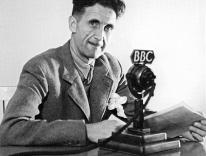
George Orwell was an ornery person, irritable and impatient, and he took an unholy pleasure in upbraiding his left-wing brethren. What would he say to the left now?
Problems have solutions, while mysteries like suffering, love, and death do not. They must be instead lived out with attention to human richness and interconnection.
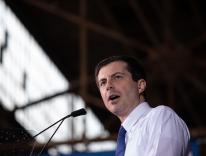
I have known Buttigieg since I taught him at Harvard. One question animated him: how could Americans unite politically when their culture was increasingly polarized?
The debate is not whether modern paganism is real, but where it lives, how it appears, and what it does. In contemporary politics, it's cruelty and violence.
Constitutional issues—like guns or speech—are often seen as coming from opposite points of the ideological spectrum. But they may be more similar than we think.
Does capitalism make us bad Christians? Eugene McCarraher thinks so. His new book, The Enchantments of Mammon, explains how money came to replace God in the modern era, seducing us with false promises of profit maximization.
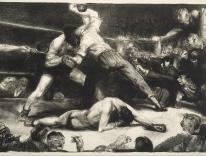
What can boxing teach us about the good life? Gordon Marino riffs on Sartre, Kierkegaard, and Camus, finding that in order to save our lives, we must risk loving.
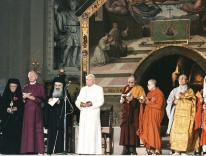
What do me mean when we discuss religion? Do we refer to an integrated ethnicity and culture? In these darkening times, the word’s origins matter more than ever.
Should the church continue to oppose the safe, therapeutic injection of opioids? No, according to this ethical primer on the philosophy of harm reduction.
Fr. Luigi Giussani’s experience as a student and teacher made him especially attuned to the rhetorical challenge of helping young people mature in faith and reason.
As evidenced by his Notre Dame speech, Barr’s understanding of Christianity is essentially Pelagian: his idea of Catholic ‘micro-morality’ ignores the social gospel.
Did liberalism originate in a kind of theodicy? And is there any reason to suppose that egalitarian liberalism is or has to be theological? Not necessarily.
Easy Rider is a lasting work of art not only because it reflects the “spirit of the Sixties,” but because it depicts a bona fide tragedy that transcends its time.
The idea of religious liberty was not simply the product of the Enlightenment. It has ancient origins, going back to early Christians suffering persecution in Rome.
There are some things we'd rather not remember: old wounds, moral lapses, humiliating failures. But there are also things we have a duty to never forget, like historical traumas and present injustices.
Daniel Callahan was one of the most influential editors in Commonweal’s history, and the preeminent creator of the field of bioethics. He passed away on July 16.
Should Christians renounce both the eating of sentient creatures and the performance of experiments on them? Yes, we should, to the extent that we can.
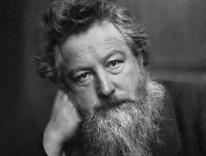
In the debates about democratic socialism, we need a new idea of utopia. The life and work of nineteenth-century socialist William Morris is a good place to start.
A new book by Simon Blackburn considers several different domains of ‘truth,’ including ethics, aesthetics, religion, and the interpretation of legal documents.
The medieval Franciscan philosopher and theologian Duns Scotus is barely studied today. But the church would be enriched by a renewed engagement with his works.