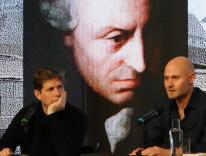
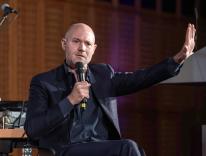
Three writers—a Jewish theologian, a legal scholar and intellectual historian, and a Catholic philosopher of religion—reflect on Omri Boehm’s call for a "radical universalism."
Three writers—a Jewish theologian, a legal scholar and intellectual historian, and a Catholic philosopher of religion—reflect on Omri Boehm’s call for a "radical universalism."
‘The Magic Mountain’ testifies to the power of art to transform life. But before he could complete his masterwork, Thomas Mann had to transform himself.
From the universalist faith that God will redeem everyone, I gained a surprising gift: the capacity to forgive my mother, the woman who murdered her, and myself.
Can I still keep using this Catholic education to understand the world if I’m no longer Catholic? Can I even still ask the curriculum’s questions if I’m no longer professing the faith that animates them?
For Henry David Thoreau, it is only as strangers that we can see each other as the bearers of divinity we really are. Alienation makes us present as closeness cannot.
Modern progressivism suffers from three prejudices, each woven into our understanding of key values: equality, toleration, individual freedom, and scientific advancement.
Carl Elliott's new book documents the stories of whistleblowers who report abuses in the medical system—and asks bigger questions about why so many don't.
From 2025: The work of Jürgen Habermas suggests that secular modernity, which is threatening to spin out of control, needs its sister religion now more than ever.
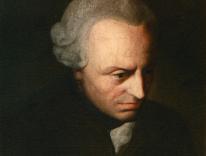
Kant’s work was considered such a threat to Church teachings that even scholars needed special permission from their bishop or religious superior to consult it.
Contrary to what is typically asked of him, the just man does not need imagination but attention. Poetry, too, requires a kind of pure, focused attention.
Philosopher Emmanuel Falque asks what Christians might now say that could actually matter to their post-Christian contemporaries in the academy or the arts.
Conceiving of our deepest selves in terms of neuroses and traumas sends us continually back on ourselves in a way that may reproduce rather than redress our anguish.