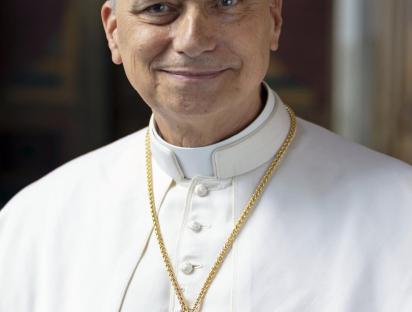
Leo has introduced, in his gentle style, a different way to govern the Vatican—one that is more mindful of the need to work together with all those in the hierarchy.
Since the release of 'Fratelli tutti' five years ago, the encyclical's call for human fraternity, social friendship, and a culture of encounter has lost none of its salience.
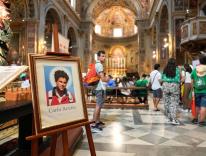
It is remarkable and new, not just that web design was a major part of Carlo Acutis’s life, but that the Catholic Church praised it as an integral aspect of his sanctity.
In Christopher White's 'insta-book' on Leo's early papacy, Pope Francis is a central figure. In Matthew Bunson's biography of the new pope, Francis hardly exists.
Pope Francis thought of the Church as a polyhedron, comprising many faces that meet each other along sharp lines yet always maintain their individuality.
Pope Francis was among the most famous and the most outspoken advocates for climate justice and integral ecology on the planet. Here, 'Commonweal' authors explore Francis's environmental legacy.
“As Francis has magnificently shown us, a pope serves the People of God with a total self-giving, ad vitam: in sickness or in health, strong or frail, able-bodied or wheelchair-bound, clear in voice or raspy and breathless.”
Like all human institutions, the Church has often failed. But it is more than its failures—and much more than the endless quarrels over Vatican II or sexual morality.
The Trump-Vance presidency has the characteristics of an “übermagisterium” aiming to replace the teaching of the Church with a political-religious ideology.