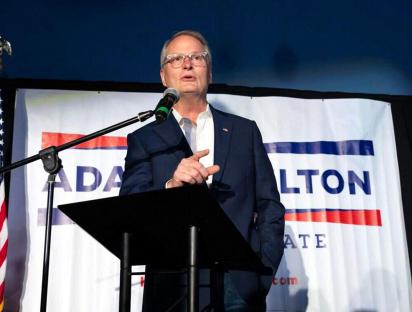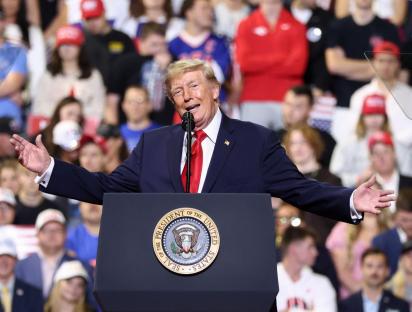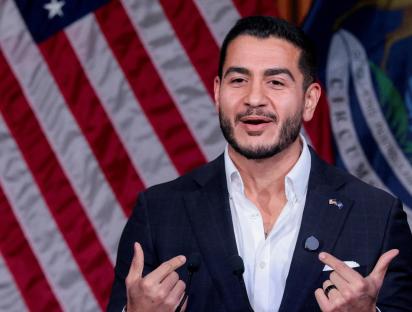
Does the so-called “Blue Tsunami” midterm election, which gave Democrats control of both chambers of Congress for the first time since 2022, indicate that there is now a viable religious left in the country? Given who won, many commentators think so. James Talarico, a thirty-seven-year-old Presbyterian seminarian, captured a U.S. Senate seat in Texas. The Rev. Adam Hamilton, a megachurch pastor of the largest United Methodist congregation in the country, became the first Democrat Kansas has sent to the Senate since 1932. Abdul El-Sayed will be the first Muslim to serve in the Senate after carrying Michigan. The Lutheran pastor Sarah Trone Garriott flipped Iowa’s Third Congressional District, and Lindsay James, a Presbyterian chaplain, joined her in the Iowa House delegation. In Texas, the Baptist preacher Frederick Haynes III was elected in the 30th Congressional District.
Given all this, The New York Times, Rolling Stone, The Telegraph and Vox have all announced the arrival of a new Christian left. But a word of caution may be in order. The political scientist Ryan Burge has observed that the clergy who ran and won this year had very favorable political circumstances: “If you ran Adam Hamilton in 2024, he’s beat by double digits.” Meanwhile, Doug Pagitt of Vote Common Good, a progressive Christian political group, warns that it is too soon to speak of an organized religious movement.
There are still real obstacles to building a durable religious left in the United States. For starters, much of the liberal and progressive world assumes a materialist suspicion of religion. From that perspective, faith is to be understood as, at best, a private matter irrelevant to politics. More commonly, it is dismissed as a form of false consciousness. Similarly, much of the Democratic establishment views populism—even left-wing populism—as an irrational force to be managed or marginalized. Populism and religion often offend the same technocratic sensibility, one that prefers policy briefs to the untutored intuitions of “low-information voters.” Burge notes that overtly religious candidates are simply “not a huge turn-on for a lot of Democrats.” In Pew’s most recent Religious Landscape Study, only 28 percent of Democrats said religion was very important in their lives.
Another obstacle is institutional. The religious right did not emerge from Jerry Falwell’s sermons alone. It was built, from the late 1970s onward, through the mobilizing efforts of the Moral Majority and the Christian Coalition, which distributed endless voter guides and made full use of megachurch networks. Moreover, church attendance among Evangelicals held up after the 1960s when the mainline Protestant denominations began their long decline. The religious left has no comparable infrastructure today. Those who might identify with it are scattered across shrinking mainline Protestant churches, Black Protestant churches, Catholic social-justice networks, Muslim and Jewish communities, and the growing ranks of the spiritual-but-unaffiliated. Hispanic believers, Evangelical and Catholic alike, complicate the picture further: they have become one of the nation’s key swing constituencies, and Democrats can no longer take their votes for granted. The Democratic Party may be more religiously diverse than the Republican Party, but that diversity makes its religious constituencies harder to organize than those of the religious right.
In spite of all this, it was progressive religious candidates who managed to win in Texas, Kansas, Iowa, and Michigan. Given that tension, I want to make the case for why those on the left who remain suspicious of religion should reconsider and be more open. A religiously infused populism, of the kind glimpsed in the midterms, could play a key role in pulling the Democratic Party out of the crisis it has been mired in for more than a decade. Let me offer six reasons why skeptics should welcome religious Americans into their political coalition.
First, there’s a good argument to be made that inclusion of religious voices into the public sphere leads to moderation, while a liberalism that excludes leads to radicalization. In the early 1990s, John Rawls’s Political Liberalism asked citizens to argue about basic justice in terms of “public reasons” that all could accept, which in practice meant setting religious convictions aside. The Christian philosopher Nicholas Wolterstorff replied that many believers think they ought to let their faith shape their “social and political existence” as a whole. To demand otherwise, he argued, is to “infringe, inequitably, on the free exercise of their religion.” Rawlsian liberalism, in other words, could be illiberal toward the religious. The Princeton religious-studies scholar Jeffrey Stout went further in Democracy and Tradition (2004), arguing that such exclusion produces backlash. Instructed by Rawls and Richard Rorty that religion is a “conversation-stopper,” believers might conclude that liberal democracy has no room for them. Stout’s prophecy has, in some sense, been fulfilled by today’s Christian nationalists and postliberal integralists. Perhaps part of a solution would be a left that welcomes religious voices into American democracy’s ongoing conversation.
Second, even avowedly atheist thinkers have recognized that religion can sustain democratic solidarity against the anatomizing force of the market. The late Jürgen Habermas, who called himself “religiously unmusical” and a “methodological atheist,” made this case when he proposed the idea of the “post-secular” society. In his 2004 discussion with Cardinal Joseph Ratzinger, Habermas worried that markets, which “cannot be democratized like the administration of a state,” were taking over spheres of life once held together by shared norms. The danger was a society of “isolated monads acting on the basis of their own self-interest.” Because markets and bureaucracy were “expelling social solidarity,” the constitutional state had an interest in protecting every cultural source of solidarity. Religious traditions, he wrote, can “convincingly articulate moral sensitivities and solidaristic intuitions.” Secular citizens who refuse to take their religious fellow citizens seriously as modern contemporaries reduce democracy to “a mere modus vivendi.” Habermas’s postsecularism was pragmatic, not pious—he hoped for a renewal of the democratic public sphere and thought religious belief could be useful toward that end. Many religious citizens are rightly wary of any attempt to instrumentalize their faith, but Habermas was not wrong that religion remains a strong source of solidarity in a world increasingly desperate for such sources.
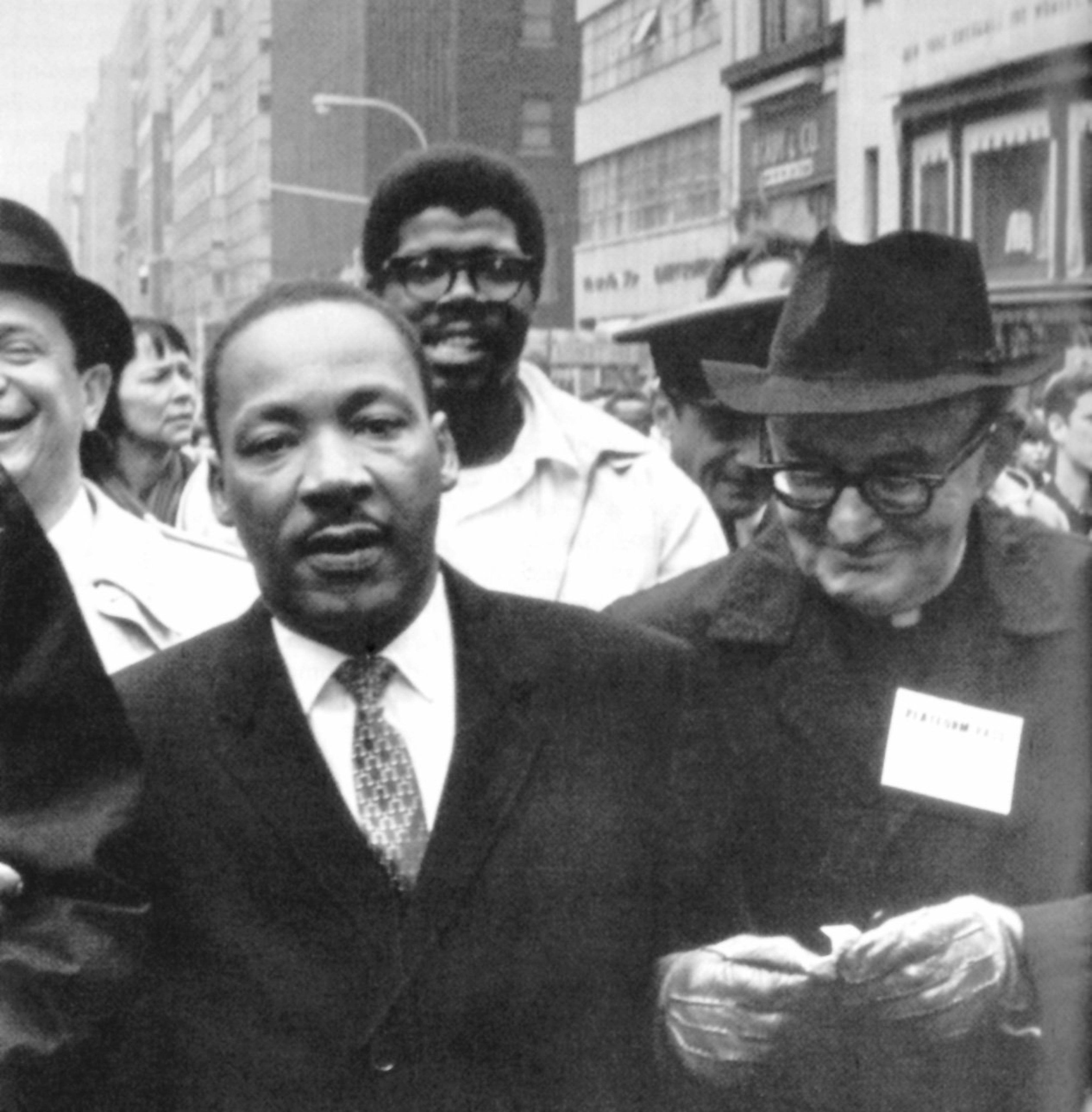
Third, progressive populism in the United States has almost always drawn on religious communities, and the left should reclaim that tradition rather than cede it. In the years that followed the 2007–8 financial crisis, right-wing populists all over the world proved adept at enlisting religion as a marker of who really belongs to “the people” of a given nation. But nothing about that unholy alliance is inevitable. As I have argued elsewhere, there is no inherent link between religion and antidemocratic populism. On the contrary, abolitionism, the agrarian populists of the 1890s, the Social Gospel, and Martin Luther King Jr.’s Poor People’s Campaign all fused religious conviction with democratic insurgency. We fixate on the alliance between faith and right-wing populism, but it would be foolish to forget the left’s own debt to religious traditions.
Fourth, for better or worse, most liberals and leftists now treat identity as integral to politics. Religious identity is identity. This could—and arguably should—mean that the liberal-left will become more accommodating to the role that religious identity can play in progressive politics. El-Sayed’s victory is a good example. His faith became a target for his political opponents, and defending it became a defense of democratic pluralism. He and other Muslim Democratic politicians have demonstrated that religious minorities are already an indispensable part of the Democratic coalition.
Fifth, religion—and Catholicism in particular—has today become one of the most vital defenders of humanism against the antihumanism of AI and other advanced technologies. Even many nonreligious liberals admire Pope Leo for his critique of AI, as well as for his defense of migrants and his opposition to unjust wars. In a sense, Leo embodies Habermas’s postsecular ideal. He speaks from within a tradition but in a language addressed to all people of good will. One could argue that, in the United States, Leo now has just as many liberal-left admirers outside of the Church as he does within it. That indicates a profound shift in the way the left regards the papacy and the Vatican.
Sixth and finally, religion has long been the backbone of the American antiwar movement. Americans across the political spectrum are tired of endless war. By late July, a Reuters poll found that only one in three Americans supported the war in Iran. Leo urged Americans to call their representatives and tell them “to work for peace and to reject war.” That appeal has deep American religious roots: the Quakers and the Fellowship of Reconciliation, the Catholic Worker, Martin Luther’s King’s 1967 Riverside sermon “Beyond Vietnam.” Religious nonviolence and secular antiwar politics have long been intertwined. A left that wants a peace politics will find experienced organizers in the pews. Indeed, a good case can be made that the decline of progressive Protestantism in the United States helps explain the decline of the antiwar movement since the 1960s.
I am not arguing that everyone on the left needs to get religion. I am arguing that the left should stop avoiding those who already have it. That is the modest proposal for a religious left: not a new Moral Majority, but a coalition of believers and unbelievers bound by shared progressive commitments and willing to learn from one another. The stakes are high. The populist right has understood what many secular liberals have not: in a world disoriented by ecological crisis, economic turmoil, and rapid technological change, people need sources of solidarity and meaning. Churches, mosques, and synagogues are still among the deepest of those sources. The main role of a religious left may lie exactly there: in ensuring that the search for solidarity and meaning leads toward democracy rather than away from it.
We welcome your comments about this article. Please send your response to [email protected].