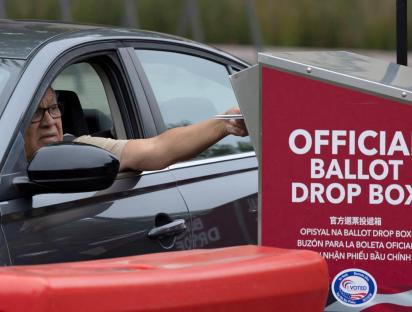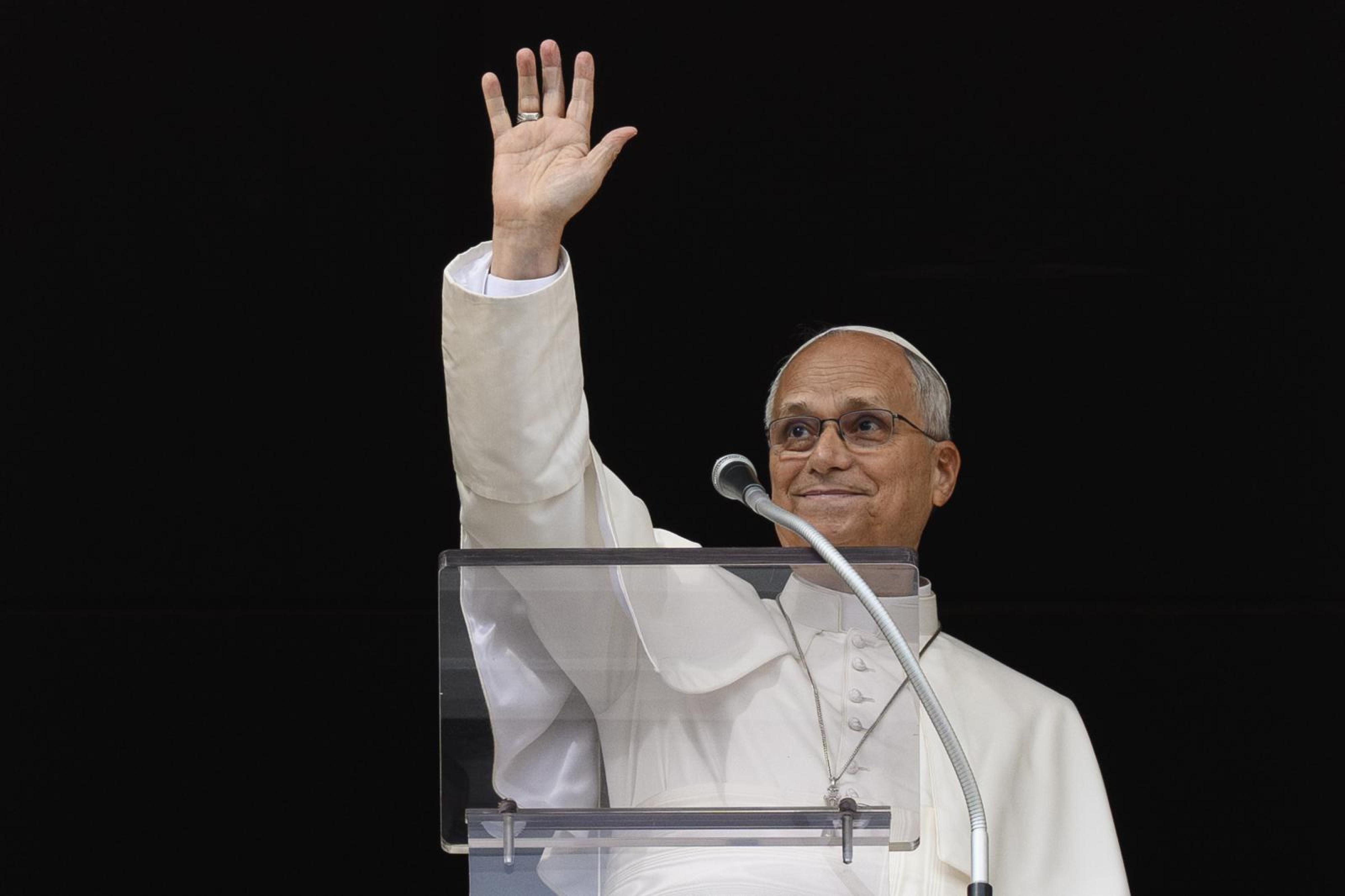
Popes don’t vote in civil elections. Or, they never have before—neither in Italian elections nor those in the countries from which they hail. Until now, it seems, with news that the first U.S.-born pope, still officially registered on the Illinois electoral rolls, had requested an absentee ballot for the midterm elections. It was confirmed both by Illinois officials and later the Vatican, which, perhaps caught by surprise, issued a statement the day after the story broke:
“Pope Leo XIV has exercised his right to vote as a United States citizen, whenever he was eligible to do so. The Holy See Press Office confirms that in keeping with this long-standing practice of civic participation, he has submitted his mail-in ballot in Chicago. The Holy Father has also confirmed that, during his years of residence in Peru he exercised his right to vote whenever he was eligible to do so. The Holy Father expresses his belief in the right and the duty of citizens to participate in democratic processes.”
For a long time, it was simply unthinkable for popes to participate in voting, due to the doctrine of non expedit: the late nineteenth- and early twentieth-century policy of the Church prohibiting its Italian members from participating in politics. The rise of democracy had stripped the Church of its higher sovereignty and governing prerogatives (which it had exercised either directly via the papal states, or indirectly), and then, especially after Vatican II, the Church came to recognize modern secular democracy and even encouraged citizens to exercise their right to vote.
Electoral records show that Robert Prevost voted in the 2012, 2014, and 2016 Republican primaries, as well as in the 2012, 2014, 2018, and 2024 general elections. In 2008 and 2010, the future Leo XIV voted in the Democratic primaries. Whom Leo has voted for this time isn’t known, but the assumption (informed or not) is that he must be voting against Trumpism. By voting he’s also spurred other questions: Can a pope vote? Does he pay taxes in the United States? Could he run for public office in America?
One issue is how Leo XIV has made clear the distinction between his public persona—the pope—and his private one, Robert Prevost, U.S. citizen. The timing may have been coincidental, but the quip he made about whether he was rooting for Villanova or Notre Dame prior to their November 1 basketball game in Rome opens itself to interpretation: “The pope doesn’t take sides. Prevost has another opinion.” (These words, in which the pope uncharacteristically refers to himself by his surname, are absent from the prepared remarks published by the Vatican.)
But several other things are worth keeping in mind. The pope is not just the leader of the Catholic Church; as bishop of Rome, he is also the head of Vatican City State and the primate of Italy. He assigns papal diplomats to countries around the world and to the UN to negotiate on a range of international and regional issues, from nuclear disarmament to humanitarian crises to war and peace. The bishops he appoints serve in countries ravaged by poverty and conflict—including wars initiated or supported by the United States and its allies—and in countries where local churches are still dealing with the legal fallout of the clerical sex-abuse crisis. He makes bilateral agreements with governments of sovereign states, some of them controversial (like Francis’s secret deal with the Chinese government 2018 regarding the appointment of bishops). As a head of state, he is necessarily careful in choosing which foreign countries to visit and when—especially, given the political optics, when his birth country is the United States. The organization he leads receives and manages donations from private donors from the United States and elsewhere. The freedom and sovereignty of the papacy in the Vatican constitute a status that is unique in the world, historically recent, and fragile. In short, the U.S.-born pope is not exactly like every other U.S. voter, nor is he like previous popes.
The current historical moment compounds all of this. The long taboo against electing a U.S.-born pope was lifted, at least in part, in response to the international upheaval caused by Trumpism. Further, in violating established norms of conduct for top elected officials, Trump has encouraged upheaval among others worldwide, and he may have influenced the papacy as well. Both Leo and Francis stepped into the political arena in unprecedented ways. Francis had pushed the scope of the pontiff’s political engagement to its limit, peaking with the letter on the ordo amoris and immigration policies he sent to U.S. bishops in February 2025. Then-cardinal Prevost publicly supported Francis on that matter.
Yet actually voting as pope carries greater risk. Whether or not Leo discloses whom he voted for (and so far he hasn’t), voting invites partisan speculation and maneuvering about his motives, interests, and preferences. We are already seeing anti-Trump Catholics celebrating Leo’s voting as a sign that he’s with them, while Catholics associated with MAGA and Trump are critical. The skirmishing in the media and on social media is just the tip of the iceberg. American politics are already toxic; the pope’s voting could make things even worse, with opposing interests exploiting his vote to drive their own political messaging and agendas. Whoever wins (or loses) could claim that they won (or lost) because the pope took a more direct role in influencing voters to cast ballots for a certain candidate. The pope ought to be—and must appear, beyond any shadow of a doubt—super partes, standing above all political parties, which by definition is incompatible with voting. America has a long history of anti-Catholicism and anti-papism, which began to resurface during the pontificate of Francis. Headlines like “The Pope Votes in Chicago” may have a way of bringing it further into the open.
Treating Leo’s decision as a milestone on the path toward the desacralization of the papacy misses the point (it all depends on the consequences of some desacralizations). There are valid reasons, in my opinion, that a conclave should be the final time a pope casts a ballot in his lifetime. Based on the Vatican’s statement, it seems clear that Leo did not vote in Peru’s general and presidential elections in April. But one wonders whether he might now vote in the Chicago mayoral election in February 2027, or in the U.S. presidential election in 2028. Regardless, he has also now set a precedent for his successors, who might come from countries where there are no regular elections or where they are fraudulent or unfree. The next pope might not have the luxury of voting (or of not voting, after this precedent) that Leo has.
In the contemporary era, Catholics have generally held the conviction that the pope’s authority needed to be shielded from politicization. With Leo’s decision to cast a mail-in ballot in the midterm elections, a threshold has been crossed. It’s a vote that could also be viewed as an endorsement of a particular candidate, party, or movement. It surely is another sign of our extraordinary times: amid attacks on the democratic process, a pope casts a ballot as an endorsement of democracy.
We welcome your comments about this article. Please send your response to [email protected].