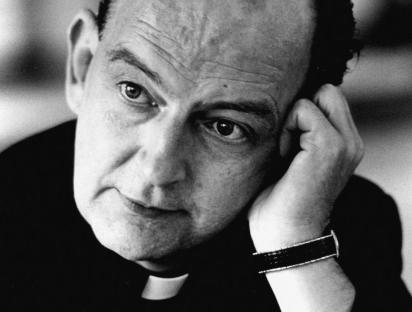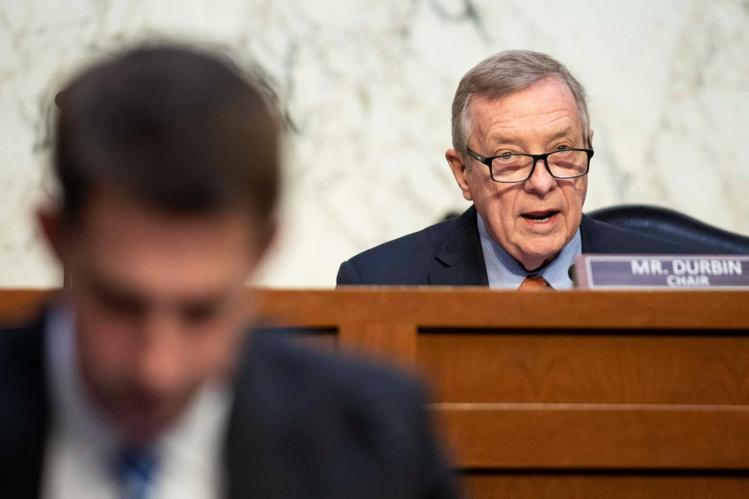
The uproar surrounding Chicago cardinal Blase Cupich’s decision to honor Sen. Dick Durbin for his work on immigration reform reveals more about the divisions in the U.S. Church than it does about either man. What should have been a moment of recognition for decades of advocacy on behalf of immigrants instead became fodder for another skirmish in the endless culture war, with some bishops quick to denounce Durbin on the grounds of his voting record on abortion.
Cardinal Cupich’s response, however, was not only pastoral but profoundly Catholic. In his letter, he made it clear that honoring Durbin was about one thing: his “singular contribution to immigration reform and his unwavering support of immigrants, which is so needed in our day.” That distinction matters. It reflects a Church capable of seeing the whole of a human being’s public service without collapsing every question into a single issue.
Cupich reminds us that the Catholic tradition has never been one-dimensional. To reduce the faith to a litmus test on a single policy is to betray the richness of Catholic social teaching. “We are not a one-issue church,” he wrote, echoing both Pope Francis and Pope John Paul II, who warned America not to lose its compassion for the poor, the stranger, the sick, and the vulnerable.
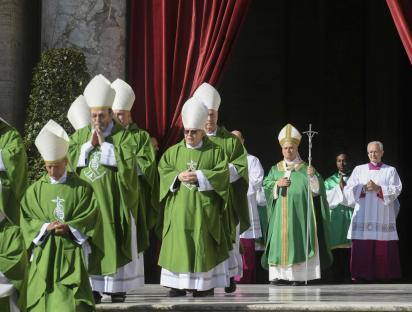
Contrast this with the tendency of some U.S. bishops to weaponize the Eucharist and sacraments for partisan gain. Too often, Communion is threatened or denied not as a matter of theology but as a show of political loyalty. This is not fidelity; it is factionalism disguised as doctrine. Cupich, by refusing to play this game, shows courage—not weakness.
What Cupich laments in his letter is the deep fracture of the Catholic community in the United States. Partisan politics have seeped so deeply into the bloodstream of the Church that Catholics, in his words, are “politically homeless.” No party platform fully embodies Catholic teaching. That has always been true, but in our polarized moment, the temptation is to canonize one set of issues and demonize the other side.
The irony is sharp. New York cardinal Timothy Dolan, for example, recently lavished near-sainthood rhetoric on Charlie Kirk—whose divisive words could not be further from the spirit of the Gospel. (Of course, no one should be murdered for what they say, and violence of any kind must be condemned.) Yet some of those same voices attack Cupich for recognizing the dignity of immigrants through Senator Durbin’s work. The double standard is clear.
Cardinal Cupich does not dodge the seriousness of abortion. He reiterates the Church’s unchanging teaching and its demand for legal protection of the unborn. But he refuses to let that truth cancel out every other form of human dignity. In a deeply Franciscan spirit, he insists that Catholics must learn to “listen to each other with respect” and to live synodally—walking together even when we disagree.
This is the path forward: not total condemnation, which “shuts down discussion,” but encouragement and invitation. To praise the good in another, even an imperfect political leader, is not compromise. It is a chance to call them higher.
At its best, Catholicism does not shrink into ideological corners. It sees the unborn child and the immigrant, the elderly and the prisoner on death row, the poor and the planet itself, as part of one seamless garment of life. Cardinal Cupich has chosen that broader vision, and for it he deserves support, not suspicion.
The U.S. Church must decide whether it will be known for drawing lines that divide or for building bridges that heal. In defending Durbin’s record on immigration, Cardinal Cupich has reminded us what it looks like when a bishop refuses to weaponize the sacraments and instead wields the Gospel—the whole Gospel—for the sake of the whole person.
Pope Leo XIV echoed this wider vision when asked about the debate. He admitted he was “not terribly familiar” with the situation, but he insisted on the importance of seeing a leader’s life in its fullness: “I think that it’s very important to look at the overall work that a senator has done,” he said, noting Durbin’s forty years of service in Congress. The pope went further:
Someone who says I’m against abortion but says I’m in favor of the death penalty is not really pro-life, so someone who says that I’m against abortion but I’m in agreement with the inhuman treatment of immigrants who are in the United States, I don’t know if that’s pro-life. So, they’re very complex issues. I don’t know if anyone has all the truth on them.
The pope’s words underline what Cupich himself has been asking us to see: that Catholic faith cannot be reduced to one issue or one side of the aisle. It is only credible when it defends the dignity of the human person everywhere, at every stage, and without exception. That is the Church we need.