On February 6, 2026, Gov. Kathy Hochul signed the Medical Aid in Dying Act into law to take effect on August 5, making New York the thirteenth American state to authorize physician assisted suicide, in addition to the District of Columbia. The “aid in dying” movement is picking up steam these days, and I’m concerned that a tacit obstacle to effective resistance will come from a surprising source: the selfless and dedicated mothers and grandmothers who form the backbone of the American pro-life movement.
About thirty years ago, when I was just starting out in academia, I gave a talk at a concurrent session of a pro-life conference in Washington D.C. I was by far the least popular speaker there; my audience included at most ten people. Part of the reason for the sparse attendance was the strength of the alternative options, which included a number of pro-life luminaries. But another factor was the nature of my talk: while most of the conference focused on the established issue of abortion, my topic was the emerging issue of physician-assisted suicide.
In my view, there was plenty of reason for pro-lifers to worry, even thirty years ago. From the early 1990s, Jack Kevorkian had been notoriously publicizing the practice with his death van in Michigan. Oregon had become the first state to legalize physician-assisted suicide in 1994. Moreover, the same year, the U.S. Court of Appeals for the Ninth Circuit had declared that a constitutional right to privacy protected physician-assisted suicide just as it did abortion. While the Supreme Court overturned the Ninth Circuit in 1997 in Washington v. Glucksberg, it did not ban the practice. Instead, it returned the issue of assisted suicide to the states, just as it did twenty-five years later with abortion in Dobbs v. Jackson Women’s Health Organization. Since 1997, therefore, the question of physician-assisted suicide has been settled on a state-by-state basis.
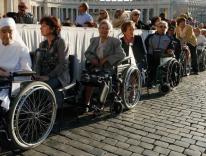
But many of the women in my audience back then were not worried about assisted suicide. In fact, their questions suggested they were ambivalent about the practice. On the one hand, they had dedicated their lives to defending the proposition that all life was sacred “from conception to natural death.” On the other hand, they repeatedly expressed concern about becoming a burden on their loved ones on the way to their own natural death. Their identity was wrapped up with being helpful, not being helped. And the prospect of burdening anyone, particularly their children, was anathema. From this point of view, physician-assisted suicide could be an excusable and even an admirable decision—even if was not technically morally justifiable. It could seem like a way of loving too much: a final act of misguided but generous self-giving to crown a life of selflessness.
Three decades later, those conversations still haunt me. For people inclined to think this way, there is even more reason to worry about being a burden to the next generation. A comprehensive study conducted by The Washington Post shows that the costs of growing old are wiping out the inheritances of many Americans: “Adult children, rather than being the beneficiaries of generational wealth, are in some cases spending down their own savings to pay for their parents’ care.” This phenomenon exacerbates the growing gap between rich and poor. According to economic-policy researcher Jessica Forden, “It’s going to be the folks at the very top end who are passing on inheritance…. The rest of us are going to be spending our assets on retirement and probably on monthly care costs so we can get Medicaid eligibility.”
Medicare does not cover long-term care. To qualify for Medicaid nursing-home coverage, a person has to spend down their assets and become legally impoverished. Here again, however, those with education and resources are at an advantage. People who engage in advanced planning by hiring an elder-law specialist can protect more of their resources, while the families who do not may lose everything after their loved one passes away, including the family home.
What should Catholics do about this situation? I think a two-pronged approach is necessary. First, we need to proclaim that the image of God shines in the frail elderly as much as it does in the vulnerable unborn. We must respect that image not only in others, but also in ourselves. As Pope Francis reminded us, everything is connected. Thinking that physician-assisted suicide is a good idea in my own case is not a private, generous, or even harmless opinion. It tacitly suggests that others who are similarly situated ought to do the same thing.
You might like: Cole Hartin on assisted suicide and the cure of souls
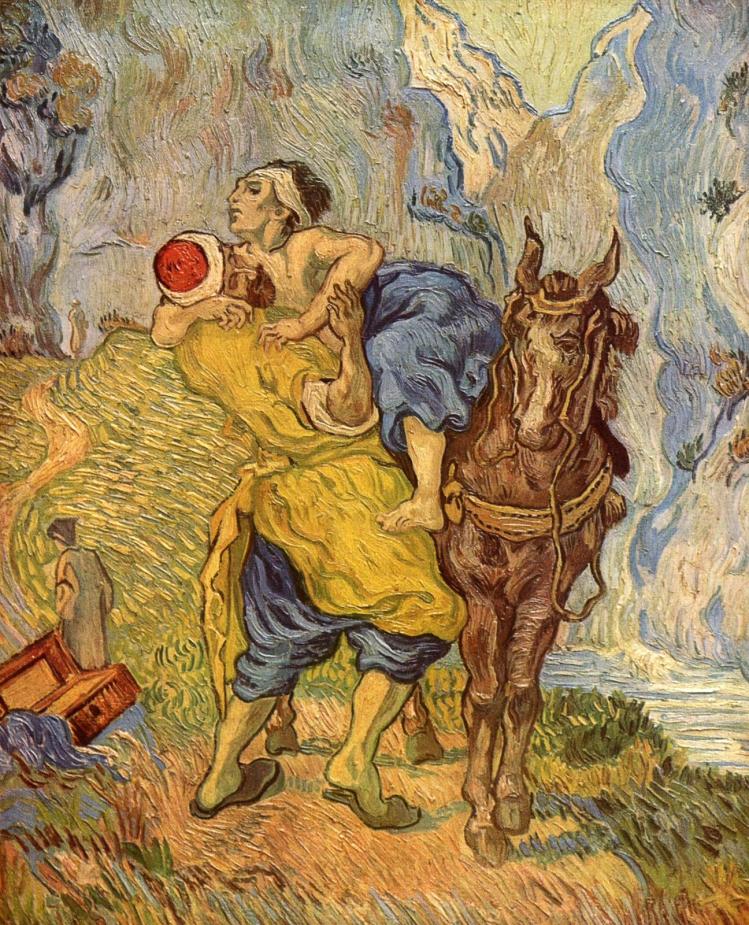
I propose a twist in preaching and teaching practices about the story of the Good Samaritan. Many sermons look at the situation from the perspective of the Good Samaritan, the two passersby, and even the innkeeper. But what about the perspective of the injured man? Did he have an obligation to accept help and care? In my view, recognizing our need for help from a neighbor is intertwined with recognizing our need for help from Christ himself. To think that we can always be helpful, and that we never can or should be a burden, is a spiritual vice.
Second, we need to address the social and financial temptations for physician-assisted suicide. Some conservative Catholics think those temptations can be addressed if women leave the workplace and return to their traditional roles as caregivers in the home. That is a delusion. The past seventy years have seen enormous changes in the way we decline and die. No one without substantial wealth can take care of a person in the midst of a ten-year progression in dementia at home, particularly when they are suffering from comorbidities such as a hip fracture or a heart condition.
The ars moriendi, the art of living well while diminishing and dying, is not an individual practice, but a community one. It is the major challenge for Catholic health care in our time. I suspect that the pioneering Catholic nuns who founded hospitals in the nineteenth century would concentrate their attention on elder care if they landed on our shores today. Our Catholic health-care systems are influential and prosperous; how can they cooperate with powerful government leaders and business visionaries to offer a better third act to the faithful? This challenge may not be intellectually enticing, like AI or genetic manipulation. But it goes to the heart of what it means to be a Catholic who sees everyone as made in the image and likeness of God.
We welcome your comments about this article. Please send your response to [email protected].