Organized labor was once the backbone of American democracy. A new book argues that the future of collective bargaining requires adaptation to new economies.
Why do we tell lies and indulge in half-truths? A new novel confronts monsters, both real and metaphorical, as it experiments with the boundaries of narrative.
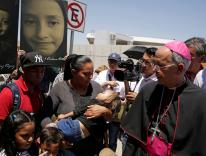
Thousands of migrants are now camping along the border in Ciudad Juárez, enduring squalid conditions as they await responses from U.S. Customs and Border Protection.
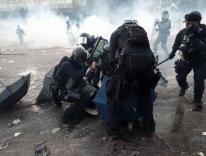
My visit to the besieged city included protests, tear gas, and arrests. It drove home the degree to which Hong Kong has become a militarized police state.
For decades we’ve been assured that trade with China would lead to more liberty there, not less liberty here. The NBA example reveals the limits of this thesis.
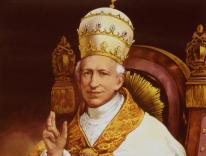
In this moment, where we find ourselves pushed relentlessly toward “either/or” positions, an 1890 encyclical by Leo XIII offers a helpful way of framing nationalism.
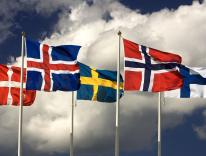
Decades of neoliberalism have rendered the American left understandably wary of welfare benefits for all, not just the poor. But Scandinavia shows that it works.
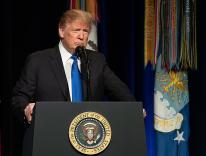
So far, Trump has gotten away with everything short of murder—but as allies peel away, even his anti-liberal rhetoric might not be enough to maintain support.
Words like ‘racism’ and ‘white supremacy’ make people uncomfortable. But as El Paso Bishop Mark Seitz points out in a new letter, we must reckon with them.
We talk to Benjamin Francis-Fallon about his new book, The Rise of the Latino Vote. And the Commonweal staff speaks about what they witnessed at the border in El Paso, Texas.