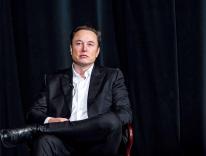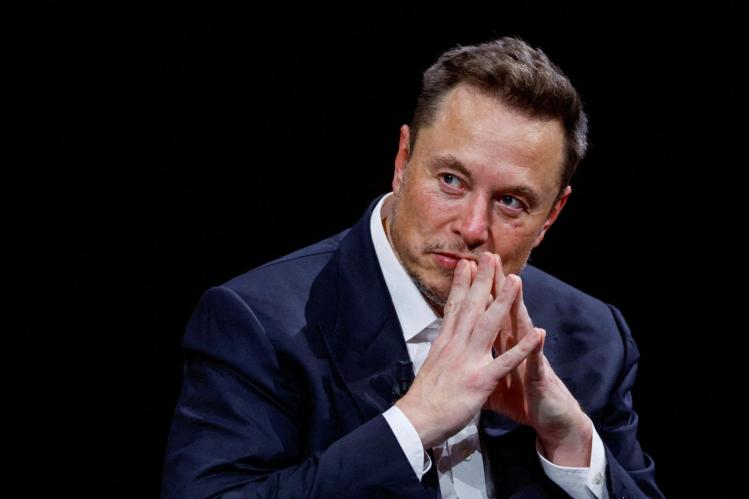
Earlier this summer, Elon Musk became the world’s first trillionaire. It’s hard to imagine a person being so rich; there are only about twenty countries able to produce that amount of economic output annually. Musk’s net worth has since ticked down a bit, owing to a slide in the share prices of his company SpaceX after its July IPO. Still, he remains nearly three times as rich as the billionaires closest behind him, Google cofounders Larry Page and Sergey Brin. Globally, there are three thousand other billionaires, including Donald Trump, who has enriched himself to the tune of $2.2 billion (and counting) since returning to office. Today, the combined wealth of the world’s billionaires is $20.1 trillion. That number, which has risen rapidly from $14.2 trillion in 2024 and just $4.5 trillion in 2011, is equal to one-fifth of the world’s total economic output, according to the International Tax Observatory.
One-third of these billionaires live in the United States. Many of them will say they’ve worked hard to earn their wealth. That may be true of at least some of them. But it’s undeniable that over the past decade, the United States has made it much easier for the merely rich to become stratospherically wealthy. Tax laws that disproportionately favor the rich and corporations, lax financial oversight, and vanishing concern for labor and the well-being of the working and middle classes have supercharged wealth inequality. This trend is the direct and foreseeable result of economic policymaking undertaken by lawmakers in thrall to the richest one percent of the country.
The one percent includes “everyday” multimillionaires in addition to billionaires, and it now controls more than 30 percent of the country’s wealth. Concentration of so much wealth in so few hands can cripple a democratic society. It enables the rich to use the government to their own ends while depriving those without economic leverage of any real political power. Even Anthropic CEO Dario Amodei, himself a billionaire, worries about “a level of wealth concentration that will break society.” Musk is an extreme yet illustrative example. Ben Tarnoff and Quinn Slobodian, the authors of a new book on Musk, propose that he’s accumulated enough wealth and power to sell “sovereignty as a service.” He functions more like a major state than the head of a company.
Musk also contributed $288 million to help elect Trump and other Republicans in 2024. He wasn’t the only big spender. Before the Supreme Court’s 2010 ruling in Citizens United, which did away with most campaign-funding restrictions, spending on elections by the ultrawealthy was negligible. But in the 2024 election, three hundred billionaire families each spent at least $10 million on political donations—most of it going to Republican candidates. That’s more than 100,000 times as much as the average political donation. Perhaps it should come as no surprise that more than a dozen billionaires got roles in the second Trump administration, including, of course, Musk himself. As head of DOGE, Musk wreaked havoc across numerous government agencies and dismantled USAID (leading to the deaths of at least 750,000 people)—all while ensuring the continued flow of taxpayer money to his companies. He is expected to spend millions of dollars to help Republican candidates in midterm elections this fall.
The wealth that enables such outsized influence is made possible, in part, by bad tax policy. The tax law Trump signed in 2017 is a prime example. Among other sops to the affluent, it cut the corporate tax rate by 45 percent. Companies used the savings not to invest in labor but to buy back stock. This juiced the markets to the benefit of the executive class, whose compensation comes largely in the form of shares—which are taxed not as income but at the far lower capital-gains rate. Indeed, most wealthy people pay little to no income tax while legal loopholes also help them avoid taxes on assets like homes, yachts, bonds, and gold. Trump’s grotesquely misbranded “Big Beautiful Bill” of last year made the 2017 tax cuts permanent, introduced still more tax breaks for the wealthy, and made the largest cuts to social safety-net programs in U.S. history. Meanwhile, Social Security is now on the brink of insolvency, and government funding for public goods like education, disease prevention, and environmental protection continues to fall.
Given all this, the recent success of democratic socialist candidates in races around the country should come as no surprise. Nor should polls that show declining support for capitalism among younger Americans struggling to find steady, well-paying jobs or affordable housing and medical care. “Tax the rich” may sound like naïve sloganeering, but it expresses the desire of most Americans for reforms to create a fairer economy and generate much-needed revenue. These include closing the carried-interest loophole, so that managers of hedge and private-equity funds are taxed at regular income-tax rates on their share of the funds’ profits, not at the capital-gains rate. The Joint Committee on Taxation estimates that this one change could raise $63.1 billion over ten years. Removing the cap for the Social Security tax—so that income above $184,500 is not excluded—is another obvious option, as is implementing some form of wealth tax. New York City’s recently enacted tax on second homes worth more than $5 million is a good example of the latter, compelling the wealthy to pay their fair share for services like sanitation and police while directing increased revenue toward expanding preschool. But even such relatively modest measures face long odds because politicians from both parties are still too concerned about courting big donors—and too little concerned with the public’s growing anger at America’s extreme concentration of wealth.
We welcome your comments about this article. Please send your response to [email protected].