When our four children were much younger, our family squeezed into our minivan for a cross-country trip from Arizona to Washington D.C., thinking this might possibly be the last time we could coax the two oldest into a two-week vacation that included their parents. We took a southern route with stops along the way at historical sites and spent the better part of one day in the Birmingham Civil Rights Institute.
It was there that we saw poignant and disturbing explanations of that city’s role in the civil-rights movement. Our youngest, just nine, was especially spooked by the History Channel videos of Klan marches and rallies. Outside the building, we found a ground marker for the Birmingham Freedom Walk, attesting to “high powered water and police dog attacks, thousands arrested, beaten, jailed.” In its center were four figures representing the young girls killed on a Sunday morning in 1963 when nineteen sticks of dynamite packed into the 16th Ave. Baptist Church exploded. We read their names: Carol Denise McNair (eleven), Carole Robertson, Cynthia Wesley, and Addie Mae Collins (each fourteen). I could not fathom the grief their parents felt, with their children’s lives cut short so violently. They were not far in age from my own kids.
This was a warm spring day, and we walked across to the church itself, adjacent to the museum, through its empty parking lot. Martin Luther King Jr. had led the funeral service there before eight thousand attendees, saying: “These children—unoffending, innocent, and beautiful—were the victims of one of the most vicious and tragic crimes ever perpetrated against humanity.” The funeral was a public act of mourning that sparked international outrage for what became one of the defining moments of the civil-rights movement.
You might like: Michelle Nickerson on an Ash Wednesday witness against mass deportation
Our ride turned somber for the next few hours. It gave us pause to think that we had been on the same ground where such an atrocity had been carried out—but where a community had also made its grief public and known to the world.
Such airing of grief is, paraphrasing Walter Brueggemann, an act of bold faith that refuses to accept the world as it is. Lament is a crying-out, an expression of real emotion in a crisis, that things should and can be different; that things need to change.
Tragically, it feels today that we have become numb to such crises. The almost daily airing of atrocities has become too common and chaotic. We sink inward, feeling powerless and without agency. It gets to be too much and we tune out.
Think about how we react today when we see photos of 100 freshly dug graves from our latest war. A school building hit by a missile last month in broad daylight, and 170 slain, most of them young schoolgirls. Does it matter that this may have been an accident? Does it matter that this is Minab, Iran? What unspeakable, inconsolable pain do their parents feel?
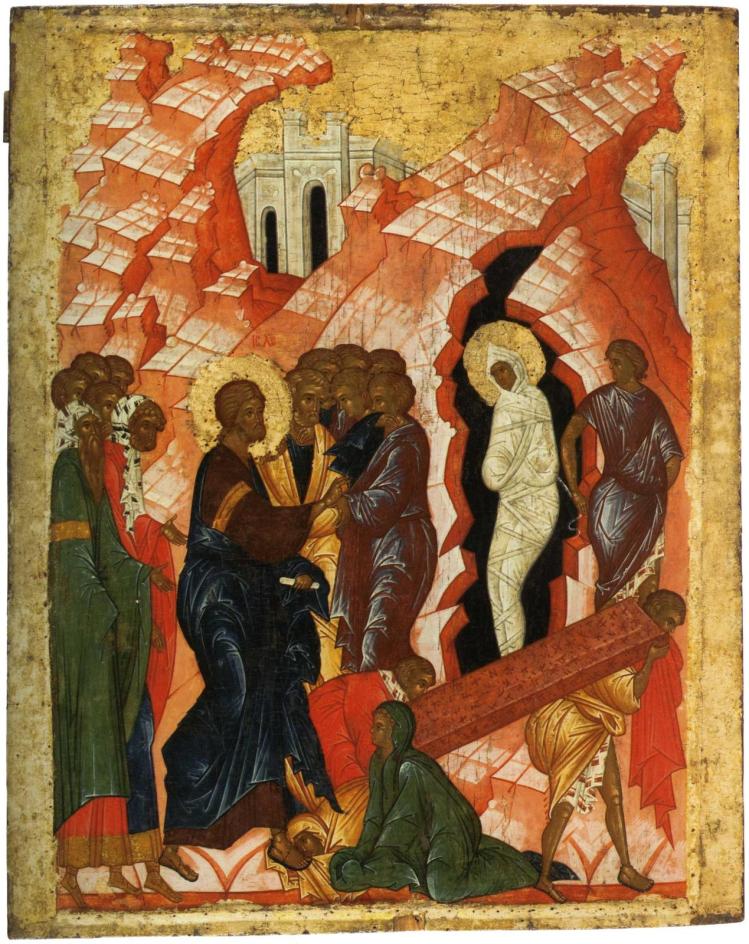
Lament demands a response. In John’s gospel for this Sunday, we find the passage where collectively expressed grief makes such a claim. “Jesus wept” is often cited as the shortest biblical verse, but it may also be the most poignant. The scripture recounts the story just prior to Jesus’ entry into Jerusalem when he learns that his beloved friend Lazarus is ailing in Bethany. You would think that he would rush to be by his side.
But for two days, Jesus lingers. What was he waiting for? Was he exhausted? Unsure of himself? Feeling an immobilizing despair sensing what later awaited him in Jerusalem?
When he finally travels to Bethany, it becomes clear that tending to Lazarus will not be a private matter. Crowds have already joined the mourning, and it’s not a pleasant reception for Jesus. Lazarus has been dead for four days, and his sisters Martha and Mary both confront Jesus for not coming sooner. He encounters a communal lament that is well underway.
The scripture says Jesus grows “perturbed and deeply troubled.” The Greek for this is embrimasthai, meaning to be deeply moved, an internal violent emotional disturbance like a deep groan that comes within and would be unmistakable in any language. Jesus is deeply affected by the mourners and enters into their grief. He is moved to intervene, but strikingly not on his own. This is not a moment of private suffering, so it also requires a communal response.
Jesus tells the crowd to “take away the stone” and then to “untie him and let him go.” The crowd participates in moving the stone and unbinding Lazarus. This is a collective action in a moment of deep crisis, and it is hopeful, showing how things can change. It is public work and connected to power, as the priests and authorities look on.
I am reminded of a past community organizing effort in Arizona, where a notorious sheriff made international headlines by scapegoating and terrorizing immigrants. Arizona was the testing ground for much of what we see today nationally. The sheriff’s first neighborhood migrant raid occurred during Holy Week in central Phoenix, casting a blanket of fear over Latino neighborhoods. Attendance at parish Triduum services was sparse as people stayed “entombed” in their homes, as if under house arrest, not risking venturing into the streets. Meanwhile, the political and business establishment cowered in fear, implicitly consenting to such destructive behavior, not wanting a target on their back. The sheriff was polling very well.
After some serious wrangling, leaders from Valley Interfaith Project, an affiliate of the Industrial Areas Foundation, impressed upon a reticent mayor to visit with immigrant families. In a corner of a parish hall, a group told him their stories: immigrant fathers who had their cars impounded by law enforcement and could not drive to work, so they struggled to feed their families; parishioners suffering repeated burglaries because the perpetrators knew they would think twice about reporting the crime for fear of retribution; a mother’s deep pain when her preadolescent daughter was assaulted and her reticence to report the violation for fear of the family being separated and deported. The mayor had young children of his own and winced with these stories, but he offered half-hearted wonkish responses about city policies before being whisked away by his security detail to another function. We were left staring at one another, wondering if we had wasted our time and unnecessarily placed our immigrant friends at risk.
A few days later, Phoenix mayor Phil Gordon stood before a thousand-person annual luncheon. Startling the crowd, he sharply denounced the atrocities of Sheriff Joe Arpaio and initiated the steps leading to a federal investigation that led to indictments. In the mayor’s denunciation, he referred to the church stories repeatedly and apologized for not acting sooner. Many other politicians (bipartisan) followed suit within the week. (Arpaio eventually received a presidential pardon.)
This was eighteen years ago. But the lessons are even more pertinent now. Today, there are emerging hopeful, courageous efforts bringing in voices from the margins. In Los Angeles, the organization One LA-IAF has called successfully for public hearings with congressional members and city officials to document the atrocities of last summer’s ICE incursion and subsequent occupation by the National Guard and Marines. In Chicago, the Coalition for Spirituality and Public Leadership has organized large acts of public witness to secure the right of religious workers to enter detention centers to bring pastoral care and the Eucharist to the detained.
And many of our faith leaders are issuing prophetic responses. Last Sunday, Bishop Mark Seitz of El Paso issued a pastoral letter on mass deportation and detention to his diocese (and to us all). He says, “To those of you affected by hatred and discrimination and afraid of what comes next, know that the church stands with you.”
Let it be so.
We welcome your comments about this article. Please send your response to [email protected].