With sizable majorities in both houses of Congress, Democrats can quickly get to work on what millions of Americans around the country voted for in November’s historic midterm elections. Addressing affordability, investigating corruption among Donald Trump’s family members and administration officials, stopping the war in Iran, and bringing the disastrous, inhumane program of mass deportation to an end will all be priorities, as they should be. But shoring up faith in an electoral system that Trump has spent many years undermining, restoring provisions of the Voting Rights Act that the Supreme Court has systematically stripped away, and curbing the increasingly abusive practice of gerrymandering should also be on the agenda. Importantly, those initiatives stand a better chance of succeeding now that many state governments across the country are also controlled by Democrats.
It was always clear that the Trump administration wouldn’t allow the midterms to proceed without attempting to interfere, or without manufacturing some excuse to throw out the results. That it could not ultimately sabotage elections was not for lack of trying. On returning to office in 2025, Trump issued multiple executive orders meant to restrict voting while preemptively accusing Democrats of cheating. In 2026, his apparatchiks at the Justice Department duly proceeded to bring spurious lawsuits against dozens of states, seeking electronic copies of voter-registration lists. Department of Homeland Security chief Markwayne Mullin threatened prison time for election officials who didn’t screen voting rolls for noncitizens. There was talk of deploying masked ICE agents or other “monitors” to polling places in Democratic districts. Trump demanded invalidation of the Alaska Senate election if Democrat Mary Peltola won. All of that was intended to intimidate, suppress turnout, and sow doubt about the integrity of the results—in other words, to override the will of the people. “If you don’t have the policies that the people will vote for, then you try to do everything you can to eliminate the people from voting,” Democrat Penny Reynolds Brown, Georgia’s newly elected secretary of state, observed after the election. (The FBI is still actively pursuing Trump’s debunked claim that Georgia’s 2020 presidential election was rigged.)
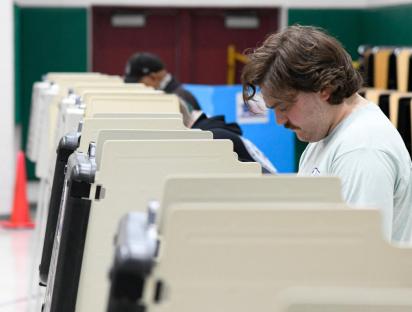
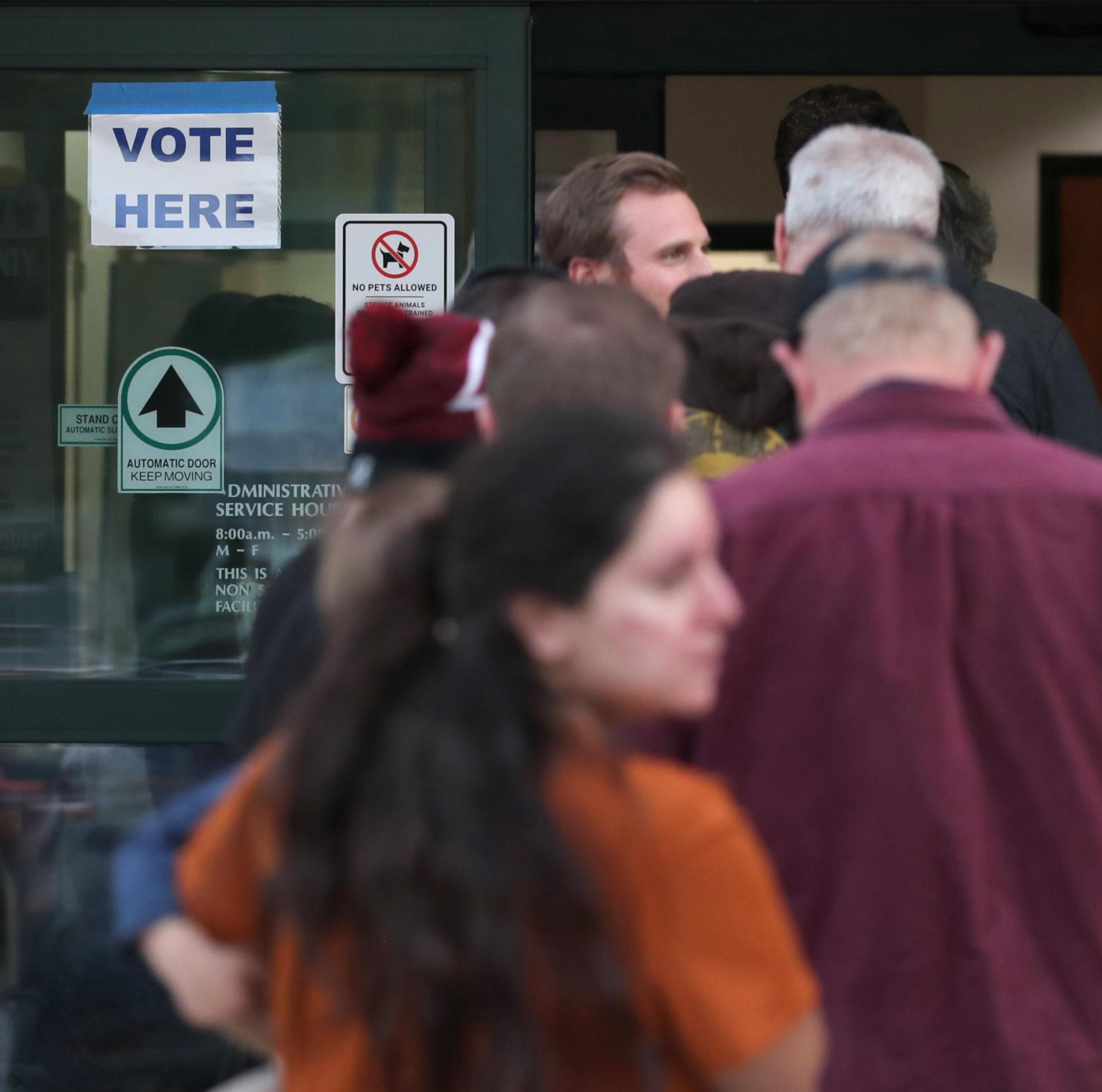
Shortly before the midterms, a global watchdog warned that American democracy was being dismantled at a speed “unprecedented in modern history,” adding that “electoral components of democracy remain stable—for now.” That the elections took place without a major incident came as something of a relief; the system was tested, and it proved resilient. (Even Pope Leo’s ballot was recorded.) But this doesn’t guarantee that Trump or his imitators won’t try to undermine elections in the future. Reforms that make it tougher for election deniers to impose arbitrary rules and nullify outcomes remain necessary. So do measures that undo Republican-led schemes to make voting harder, such as needlessly strict voter-ID laws and restrictions on mail-in voting, ballot drop boxes, early voting, and absentee ballots.
Much of this can be done by individual states. But congressional Democrats should work at the federal level to coordinate efforts and rebuild confidence among all Americans in the fairness and importance of our electoral system. They can do so in part with legislation restoring provisions of the Voting Rights Act, which was dealt “devastating blows” (in the words of the NAACP’s lead attorney) by the Supreme Court with its Shelby (2013), Brnovich (2021), and Callais (2026) decisions. Those rulings did away with longstanding legal protections against discriminatory voting practices. The Brennan Center for Justice has identified several immediate priorities, including a new framework to make jurisdictions with a history of voting discrimination subject to preclearance, an additional preclearance requirement for voter-ID and other practices that are often discriminatory, and the restoration of provisions allowing voters to challenge voting discrimination in court. Such a bill would almost certainly be vetoed by Trump, but Democratic lawmakers should let him and those who still support his antidemocratic crusade own the dishonor of disenfranchising American citizens.
Congress should also act to ban partisan gerrymandering. Conservatives cite Democratic victories as evidence that concerns about gerrymandering were overblown. That is disingenuous. In fact, gerrymandering mostly worked as it was meant to: thanks to mid-decade redistricting, Republicans won seats they would likely have lost had maps been drawn with nonpartisan methods—perhaps depriving Democrats of a veto-proof majority in the House. In some red states where gerrymandering was used to concentrate Black voters and protect Republican incumbents, Democrats won far more votes but netted far fewer seats. Immediately after the Callais decision and in time for the midterms, Louisiana eliminated one of the state’s two majority-Black districts. That Democratic candidates were able to overcome unfair barriers and longstanding structural disadvantages doesn’t magically render the barriers and disadvantages less real.
Democrats aren’t above playing the gerrymandering game—nor should they be, given aggressive efforts in Republican-led states. But this tit for tat risks further eroding confidence in the electoral process as districts are redrawn for every new election cycle. Fair and neutral redistricting in every state can ensure that voters truly have a say in who they want to represent them. This, too, will prove an uphill battle, unless and until Democrats control the presidency as well as both houses of Congress. Even then, it’s not a certainty. Optimism prevails in the days following a wave election, but cynicism and self-interest still pervade our politics. The new Democratic majority in Congress could begin to set things right by taking meaningful steps to ensure that all can exercise their right to vote, and that every vote counts as it should.
We welcome your comments about this article. Please send your response to [email protected].