On the eve of the 2026 midterms, Democrats seem poised to enjoy a “blue wave” comparable to their victories in 2018 and 2006. Republicans face an exceptionally poor electoral environment almost entirely of their own making. Along with unprecedented levels of corruption and openly malicious immigration enforcement, Donald Trump’s return to office has seen a constant stream of painful economic disruptions, from trade wars and welfare cuts to the new bout of inflation triggered by the U.S.-Israeli war against Iran. Once-safe Republicans face competitive races, while a handful of already vulnerable seats are now all but certain to flip blue, paving the way for a Democratic House. Put another way: Mike Johnson’s days as Speaker are limited, unless polling and the latest election modeling are wildly off-base.
There’s nevertheless reason for Democrats to be anxious about the scope of their anticipated comeback. The top question on every hopeful progressive’s mind is whether Democrats can flip the Senate, where the state of play is less favorable. Prospective upsets in House, Senate, and gubernatorial races in red states such as Texas, Iowa, and Ohio could also signal more paths to victory in the 2028 presidential election.
To be sure, forecasting regional shakeups in the Electoral College is premature. Most Democratic challengers this cycle are remarkably well-suited to their districts, and they are also up against some staggeringly flawed opponents whose unsavory biographies have made once-improbable upsets more likely. A case in point: James Talarico has run an impressive campaign in the Texas Senate race, but a victory over scandal-plagued Ken Paxton may be a fluke, rather than the start of a genuine realignment in a GOP stronghold.
One encouraging trend for Democrats is that the field of competition has steadily expanded despite Republican gerrymanders designed to eliminate blue oases in Republican-dominated states. Democrats are particularly well-positioned for rebounds in the Rust Belt and Midwest. On top of California Democrats’ own redistricting efforts, the party’s most likely pick-ups in the House include three seats each in the perennial swing states of Pennsylvania and Michigan, as well as districts in Iowa and Ohio, whose electorates moved right in the Trump era but have lately grown weary of GOP rule at both the local and federal level.
A few Democratic upsets are also possible in “almost purple” states such as Montana and North Carolina for similar reasons. Former North Carolina governor Roy Cooper is widely expected to win a Senate seat over former RNC chair Michael Whatley, whose outside financial support has reportedly crumbled. Two House districts in Arizona, where the MAGA brand seems to have finally hit a hard ceiling, are also expected to go blue. Taken together, these projections have broadened expectations of where Democrats can and should compete as Trump’s grip over large swaths of the electorate finally starts to loosen.
For all their internal bickering, Democrats have managed to maintain a simple and direct campaign message. As in previous “wave” elections, national issues like gas and food prices are dominating tight contests, regardless of whether the Democratic challenger is a pragmatist or a populist insurgent. Anger over political corruption has also played into Democrats’ hands, bolstering their pitch about the cost of living. The sheer audacity of Trump’s cronyism seems to have transcended the usual partisan lines, as more and more Republican voters convey that the president and his Congress have failed to deliver on their economic promises and pursued their own self-interest instead.
Unexpected new issues that favor Democrats, at least for now, have emerged as well. The backlash to data-center construction has become a central theme, especially in Michigan, Ohio, and Texas, and threatens to split the GOP’s traditional coalition even more than inflation. The proliferation of Flock cameras, meanwhile, has raised cross-partisan alarm over mass surveillance, abuse of power by law enforcement, and threats to individual liberty. In the Kansas Senate race, concerns about Flock may actually tip the election to pastor Adam Hamilton in his surprisingly strong bid to unseat Republican Roger Marshall, another candidate dogged by controversy.
Still, the victor in each competitive district will be determined by its own unique mix of national and local factors. For example, notably weak and compromised Republican candidates in Pennsylvania do not guarantee a stunning Democratic revival elsewhere, especially when liberals have retreated from factory towns and farm regions in the last ten to twenty years. Strong recruits like smokejumper Sam Forstag in MT-1 and farmer Jamie Ager in NC-11, both candidates with blue-collar appeal, don’t just need left-leaning constituencies to mobilize and some disaffected Trump voters to flip—they need rising discontent in GOP ranks to depress Republican turnout. The same is even more true for dark-horse Senate candidates such as the independent labor populist Dan Osborn in Nebraska, pediatrician Annie Andrews in South Carolina, district attorney Scott Colom in Mississippi, and state representative Angie Nixon in Florida. All those challengers have attracted a burst of outside financial support but must count on seismic shifts to overcome Republicans’ long-held advantages in their respective states.
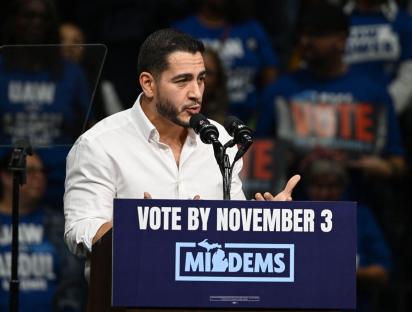
Of course, Democratic momentum may also be stopped by narrow defeats in regions where polls have swung in Democrats’ favor. By far the race causing the most anxiety in that regard is Michigan’s Senate contest, where left-populist Abdul El-Sayed, who is tasked with keeping the seat held by retiring senator Gary Peters, has a narrow lead over MAGA conservative Mike Rogers. For many on the left, El-Sayed has joined New York City Mayor Zohran Mamdani as one of the Democrats’ most charismatic communicators. But there is lingering uncertainty over both his ability to unite the Democratic base and the effectiveness of his courtship of swing voters in a contest where Republicans have fanned anti-Muslim bigotry. Some of those concerns likewise apply to Will Lawrence in MI-7, another progressive trying to change the narrative about where the left can compete beyond coastal cities.
The races are close in Iowa as well, but that state, by contrast, represents a more straightforward test of anti-incumbent sentiment and growing weariness of Republican control. The state that launched Barack Obama before lurching right could be one of the bigger prizes this cycle: Democrats are likely to flip at least two House seats, due in part to the fallout from tariffs and inflation, while analysts expect the governorship to be captured by state auditor Rob Sand, a self-styled independent Democrat who has made accountable government the centerpiece of his campaign. Paralympian Josh Turek is also competitive in the Senate race, though he slightly lags his Republican opponent, Ashley Hinson, in some polls. A vigorous campaigner despite being afflicted with spina bifida, Turek has the kind of biography and message that—like Sand’s—is thought to resonate with swing voters and “open-minded” conservatives. But his odds may hinge on how many of the Republican voters Sand persuaded over local issues like school vouchers are also comfortable electing a Democratic senator.
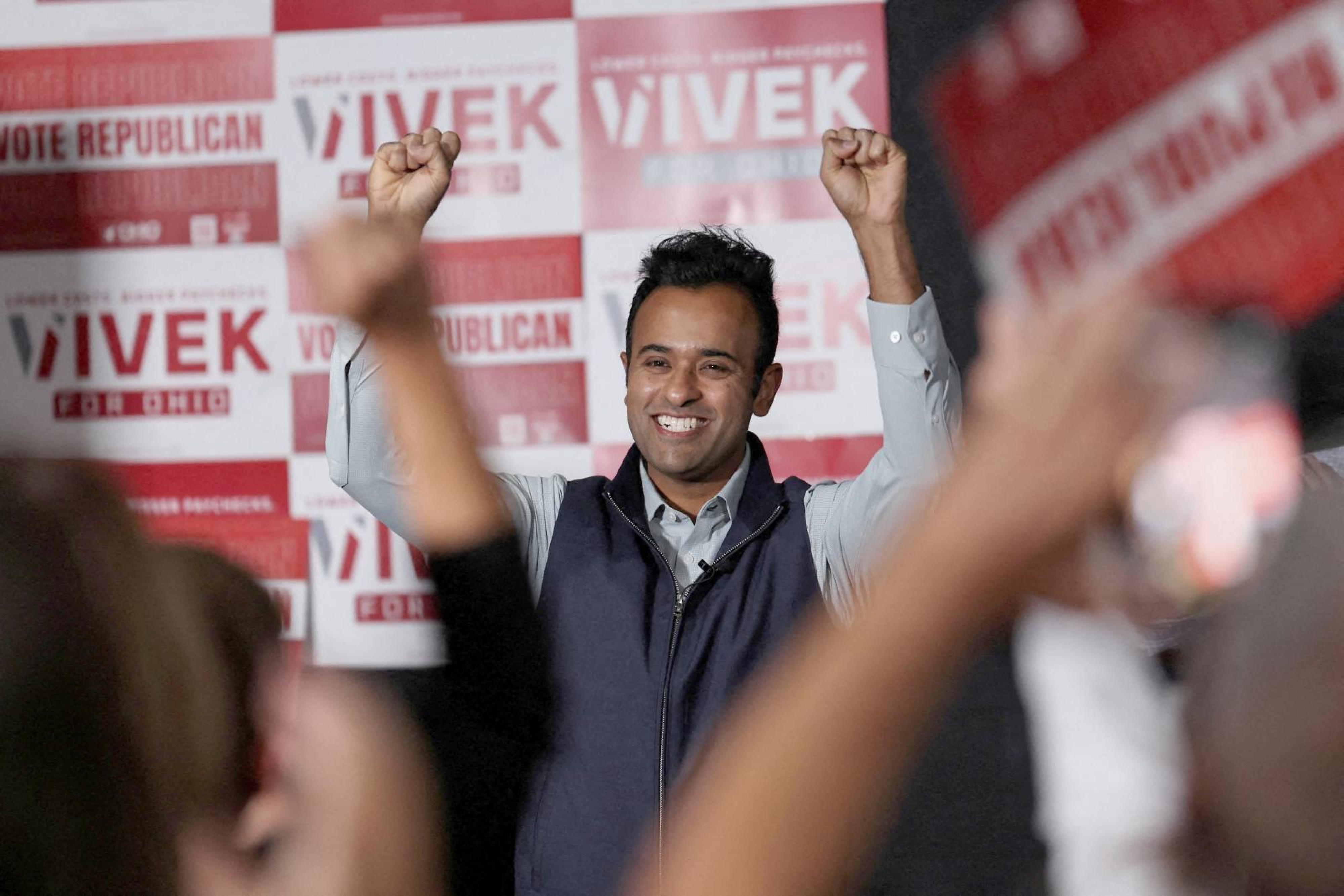
Ohio looks similar, with opportunities that could likewise upend the GOP’s grip on power. Even more than bitter losses in Michigan, Pennsylvania, and Wisconsin, trends in Ohio have symbolized Democrats’ Rust Belt woes. Now, as with other extremely close races, persistent economic pessimism, data-center discontent, and controversies surrounding the character and ethics of Republican candidates have dramatically improved Democrats’ odds. In OH-7, iron worker Brian Poindexter is running neck and neck with incumbent Max Miller, a MAGA sycophant embroiled in serious allegations of domestic abuse, while recent polls show gubernatorial candidate Amy Acton ahead of Vivek Ramaswamy, among the most crypto-friendly and ethically challenged Republicans on a tarred slate. In the Senate race, meanwhile, former senator Sherrod Brown has narrowly overtaken incumbent Jon Husted in the polls. A comeback for the pro-union Brown would hearten Democrats near and far, given his difficult loss to Bernie Moreno in 2024. Yet the purported groundswell behind Acton and Brown may not be enough to save Democratic representative Marcy Kaptur in OH-9, who, after twenty-two terms in office, is struggling to fend off a Republican challenger in a district that backed Trump by seven points.
As the results come in on election night, members of both parties will be alert to developments that add any possible sour note to Democrats’ expected victory. An isolated Democratic defeat, as is possible in Kaptur’s case, would not fundamentally change the takeaway. The same could probably be said in the event of a loss for Maine’s Troy Jackson, who is trying to sustain the movement put together by disgraced insurgent Graham Platner to topple Sen. Susan Collins, or even Rebecca Cooke, who is making her third play for WI-3 but is widely expected to prevail this time.
But a handful of major disappointments would invalidate the “wave” narrative. Notwithstanding the overall decline in swing districts—a trend driven by regional polarization, partisan tribalism, and the “nationalization” of most political issues—this midterm cycle offers Democrats the best possible map in a generation. Moreover, while “affordability” may not be the most rousing theme, it has served to underscore that this election is, at root, a referendum on Trump’s record and a predictably regressive Republican economic agenda. If Democrats cannot win decisively in this environment, how can they ever win?
That kind of question, however, would be an inward-looking—and self-defeating—approach to a muddled outcome. The truth is that most Democrats have not risked much policy-wise in the post-Biden era, nor has the national party’s calculus evolved much. Following defeat, Democrats waited for Republicans’ support to crater, on the reasonable wager that living costs would become the GOP’s albatross. But plotting a political rebound on the basis of anti-incumbent sentiment is not a recipe for strong and steady gains. Perhaps the greatest sign of change will come not on Tuesday but in January when victorious Democratic newcomers will have a chance to demand something greater from a party establishment that has been more often wrong than right this century.
We welcome your comments about this article. Please send your response to [email protected].