Two weeks ago, moments before being whisked away to our Our Lady of the Assumption Catholic Church in Claremont, California, my sister stood in front a long mirror, admiring herself in her lace-column wedding dress and matching cathedral veil. Our Mexican mother approached her to impart a wedding blessing: “Se una buena mujer” (“be a good woman”). I flinched a little at the words, hoping my sister would take them with a grain of salt. When older Mexican Catholic women in my mother’s circle say “good woman,” it often describes someone who is submissive, a doting wife focused on keeping a home, cooking, and cleaning, sacrificing everything for her husband and children, and, if she’s lucky, grandchildren. My mother was herself a champion for justice in my youth, and she and my father inculcated the value of women’s self-reliance, so those words came as something of a surprise. I don’t believe that my mother would consider my sister and me “bad women” for expecting an egalitarian relationship. But in a physical and emotional space suffused with Catholic and Mexican family tradition, she defaulted to the old “good woman” trope to usher my sister into marriage.
Dolores Huerta did not measure up to this image of the “good woman.” She was divorced from her first husband, Ralph Head, with whom she had two children. Five years later, she married Ventura Huerta, with whom she had five children. Then, instead of marrying a third time, she entered into a life partnership with Richard Chavez, brother of Cesar Chavez, with whom she had four children. This relationship endured until Richard Chavez’s death in 2011. In passionately dedicating herself to the grueling work of the labor movement she cofounded with Cesar Chavez, the United Farm Workers, she often left her children in the care of others.
Clearly, the work of organizing was at the heart of her life’s purpose. One image in particular captures that for me: Huerta, microphone in hand, in a T-shirt that says, “There’s blood on those grapes! Don’t buy Gallo Wine.” Her strategic skills, ability to be one with the people she organized with, and communication with important allies like John F. Kennedy and Gloria Steinem made her vital to the success of the 1965–70 Grape Strike and Boycott, which propelled the movement and brought dramatic change to farmworker labor overall. Yet all along the way, she was demeaned by the men who dominated the organization and who minimized her work, while powerful, white-dominated business interests constantly criticized her from the outside. Her contributions were characterized as the work of a woman in support of a man, Cesar Chavez, who in turn took the credit for it.
She didn’t even get credit for the words famously (and incorrectly) attributed to Chavez. It was during a 1972 twenty-five-day fast in Phoenix when Huerta, exhorting discouraged farmworkers to keep up the fight for justice, shouted: “Si se puede!” (“Yes we can!”). This was an act of faith, a testimony of her belief in her people so genuine that they came to believe it themselves. Huerta’s words became the official motto of the movement, and they continue to inspire the oppressed to achieve justice and equality.
If Huerta was seen as not living up to the ideal of “good woman,” there was little doubt that Chavez was anything but a “good man.” Beginning in 2014, the Archdiocese of Los Angeles celebrated an annual Mass for Chavez to honor “the legacy of the civil rights and farm labor leader.” There was no such honor for Huerta, the “bad woman.” It was only after The New York Times exposed Chavez’s history as a sexual abuser and rapist of young girls and women within the UFW—and Huerta herself—that the annual Mass was discontinued. That should have led Los Angeles Catholics to grapple with Huerta’s rightful place in the movement’s history and the Catholic Church’s own contribution to the erasure of it. The archdiocese never honored Huerta’s legacy; as of this writing, it has not announced plans to do so.
Huerta was ninety-five when she finally revealed that Chavez had raped her twice, and that she had given the children she had by him up for adoption. She had remained silent for so long to protect the movement and the communities working for justice. By the time she revealed the facts about Chavez, she had already built a legacy of continued service and advocacy through the Dolores Huerta Foundation. The foundation is dedicated to empowering marginalized, low-income, and immigrant communities in California’s Central Valley through grassroots organizing and leadership development. The foundation’s most recent project includes construction of the Dolores Huerta Peace & Justice Cultural Center in downtown Bakersfield, California, which will serve as its headquarters. The center will offer a national-organizing institute and youth-empowerment academy, an art gallery space for rotating installations, an exhibit celebrating the Central Valley’s history, and community gathering spaces. It is slated to open next June.
Huerta continued her advocacy work to the end of her life. One of her last major public appearances was this past August on the steps of the California State Capital in Sacramento to protest cuts in federal food assistance that would have a devastating impact on immigrant families, children, and foster youth. Masih Fouladi, executive director of the California Immigrant Policy Center, the organization Huerta joined in that effort, said that Huerta “spoke up for the farmworkers who would be hit hardest, the very people who feed this state.”
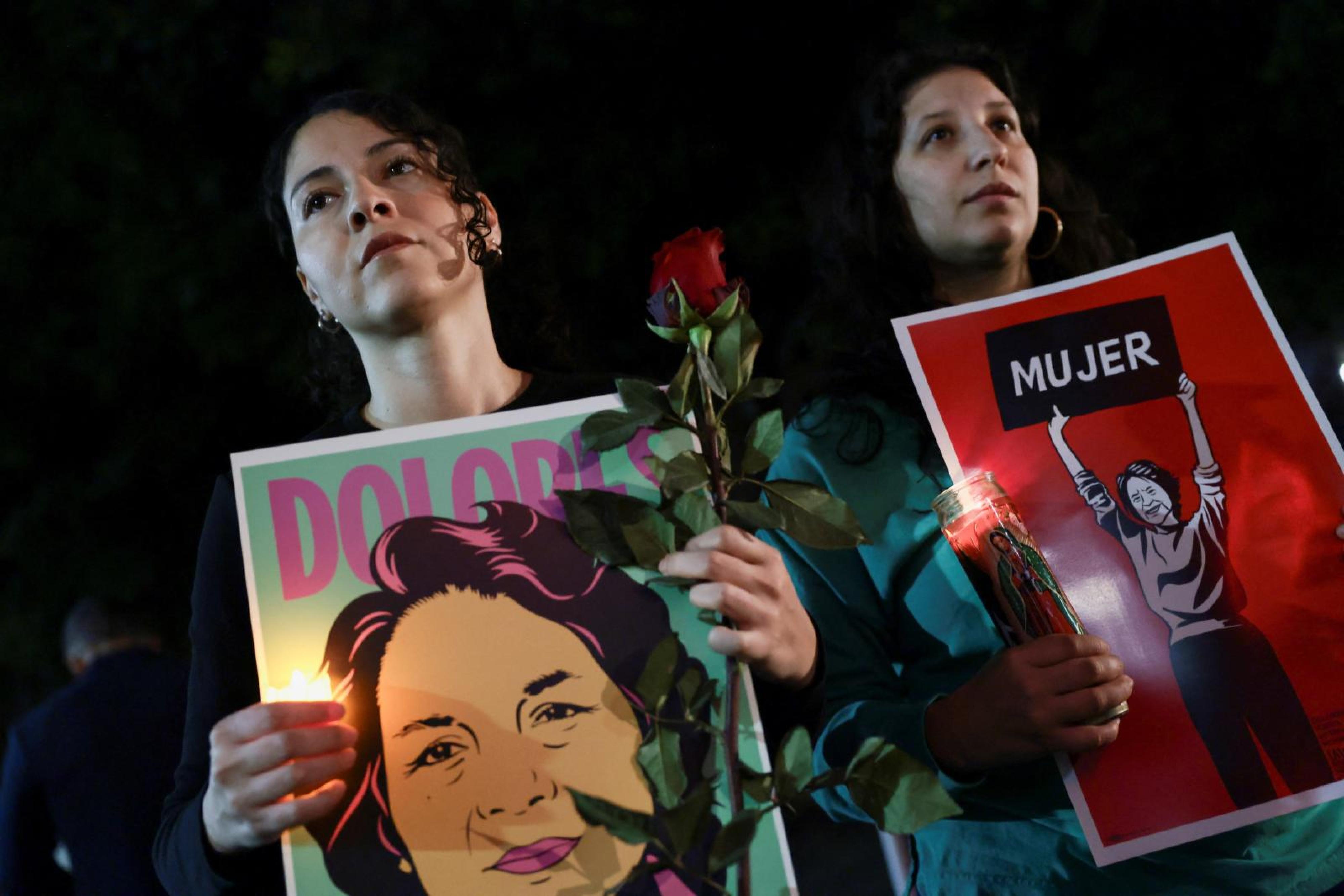
In reflecting on Huerta’s life and legacy, I’m not interested in whether she was a “good woman” or a “bad woman.” Dolores Huerta was a resilient woman, an empathic woman, a just woman, a courageous woman, a powerful woman—a good human being. She was a woman to whom, in significant ways, I, my mother, my father, and my siblings are indebted, thanks to her work empowering Latinos and advocating for our rights. I may have flinched at first when my mother told my sister on her wedding day to be a “good woman.” But I also knew—and know now—that what she was really saying was to be like Dolores Huerta.
We welcome your comments about this article. Please send your response to [email protected].