The New York Film Festival has been running for sixty-four years now, more than long enough to build up a stable of regular collaborators. Every year, some of these auteurs bring their latest films and their presence to Lincoln Center’s Alice Tully Hall—and demonstrate how quickly, and how completely, moviemaking tastes can change.
Over the past decade, the Spanish director Pedro Almodóvar has brought five features and two shorts to New York, including his late-career triumphs Pain and Glory (2019) and Parallel Mothers (2021). Bitter Christmas, his latest and least, presents a set of nested fictions, telling the story of a filmmaker named Raúl (Leonardo Sbaraglia) who is telling the story of a filmmaker named Elsa (Bárbara Lennie), a commercial director suffering from migraines and panic attacks around the turn of the millennium. In Pain and Glory, Sbaraglia played the Almodóvar stand-in’s old flame; here he is just playing Almodóvar, an older man who cannot stop turning the people around him—including his longtime agent and his long-suffering younger boyfriend—into objects of art.
This tendency is most apparent in the film-within-the-film, also titled Bitter Christmas, where storylines and whole characters emerge and transform according to whichever person Raúl has spoken with last. When his agent’s girlfriend attempts suicide, so does an old friend of Elsa’s in the film; as Raúl’s boyfriend recedes into the background of their airy modern home, so does Elsa’s; and when these characters call him out for stealing from their lives, he has his proxy begin on her own script, stolen in turn from the characters around her. This metafictional doubling serves as both creative pursuit and auto-critique, a portrait of the artist as tired old dog, contrite enough, but unwilling to learn new tricks.
This is hardly the first time that Almodóvar has ransacked his own life for the sake of art. Yet those past films have always at least gestured toward a wider world of politics and history. Here all the doubling points only inward, illuminating the life of an artist who knows he is stuck in a rut, and is determined to drag everyone along with him—audience included. Toward the end, Raúl admits that he is writing a minor film, a sly mea culpa from a filmmaker who knows he can do better than this. This wink is clever enough; the audience laughed. Alas, the joke was on us.
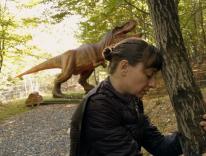
Some auteurs get a free pass; others apparently have to move mountains to get their films shown at the festival. Werner Herzog was last included back in 1982, when he brought Klaus Kinski and Fitzcarraldo to Lincoln Center. He returned this year with Bucking Fastard, a delightful bit of conceptual play drawn from a bizarre true story. Irish sisters Jean and Joan Holbrooke (played by actual sisters Kate and Rooney Mara) live a curiously overlapping life, and do everything in near-perfect sync: speak, pour tea, vacuum their apartment, and attack the neighbor (Orlando Bloom) who once manipulated their affections. They are an object of fascination, and no one quite knows what to do with them.
Herzog’s film is episodic and digressive, opening in a courtroom and concluding deep beneath the earth. Like most of his narrative films, whether it “makes sense” is less important than whether it captivates you, and the Mara sisters are certainly captivating. Their synchronized behaviors and choral sing-speech are strange, but there is just enough difference between them to make it believable. The girls are not quite doubles, not quite mirrors; they aren’t even twins. Imagine a Venn diagram with 95 percent overlap and you’re getting close.
This near-unity gives them a sense of shared purpose, but also frustrates them; there is often too much Jean in Joan’s space and vice versa. Yet just as often their spirit of experiment and play spills out across the rest of the film, giving Fastard an exuberant edge. Its lumpy oddness is really an overmuchness, the sign of a film with more on its mind than it has the time (or budget) to say. Almodóvar could take notes.
So could Jordan Firstman. By all metrics, the writer-director has been having a hell of a year: his directorial debut Club Kid premiered to much fanfare (and a big A24 acquisition) at Cannes, and will probably do well at next year’s Oscars. Firstman also stars in the film as Peter, a hard-living thirty-something party promoter in New York’s queer club scene. Peter’s drug habits and Peter Pan schedule are starting to take a toll on both body and soul. He needs something to shock him back into real life, and because this is an acclaimed indie film, that impetus arrives from England in the form of Arlo (Reggie Absolom), a young boy Peter unknowingly fathered during a coked-out three-way more than a decade ago. With a thicket of curly hair and a quiet demeanor, Arlo turns out to be exactly the right person to set Peter straight. It will just take Firstman two hours of hemming and hawing to get there.
That time passes swiftly enough for the audience. Firstman is a compelling star, and he has peopled Club Kid with performers magnetic enough to distract us from the limp uplift of the storyline. He also has a real ear for dialogue, and the film’s best scenes allow Peter and his friends the space to joke, bicker, and cut each other down to size.
Unfortunately, he needed some help with the plotting. Club Kid’s heart is clotted with simple, mechanistic scenes that exist only to lug the narrative along from one clichéd crisis to another. Despite a perfectly winning performance from Absolom, Arlo is a non-character. Firstman’s script preemptively irons out every potential conflict, making the boy chill, tolerant, and totally unbothered that he has been abruptly transplanted to this new family in a new country. When we finally do see a hint of anger from Arlo, this turns out to be merely a plot device for introducing Peter to a new boyfriend who will assist him in his long laborious attempt to grow up. Every narrative development spirals back to the same basic conflict, and so the film ends up small and too tidy. No wonder so many love it.
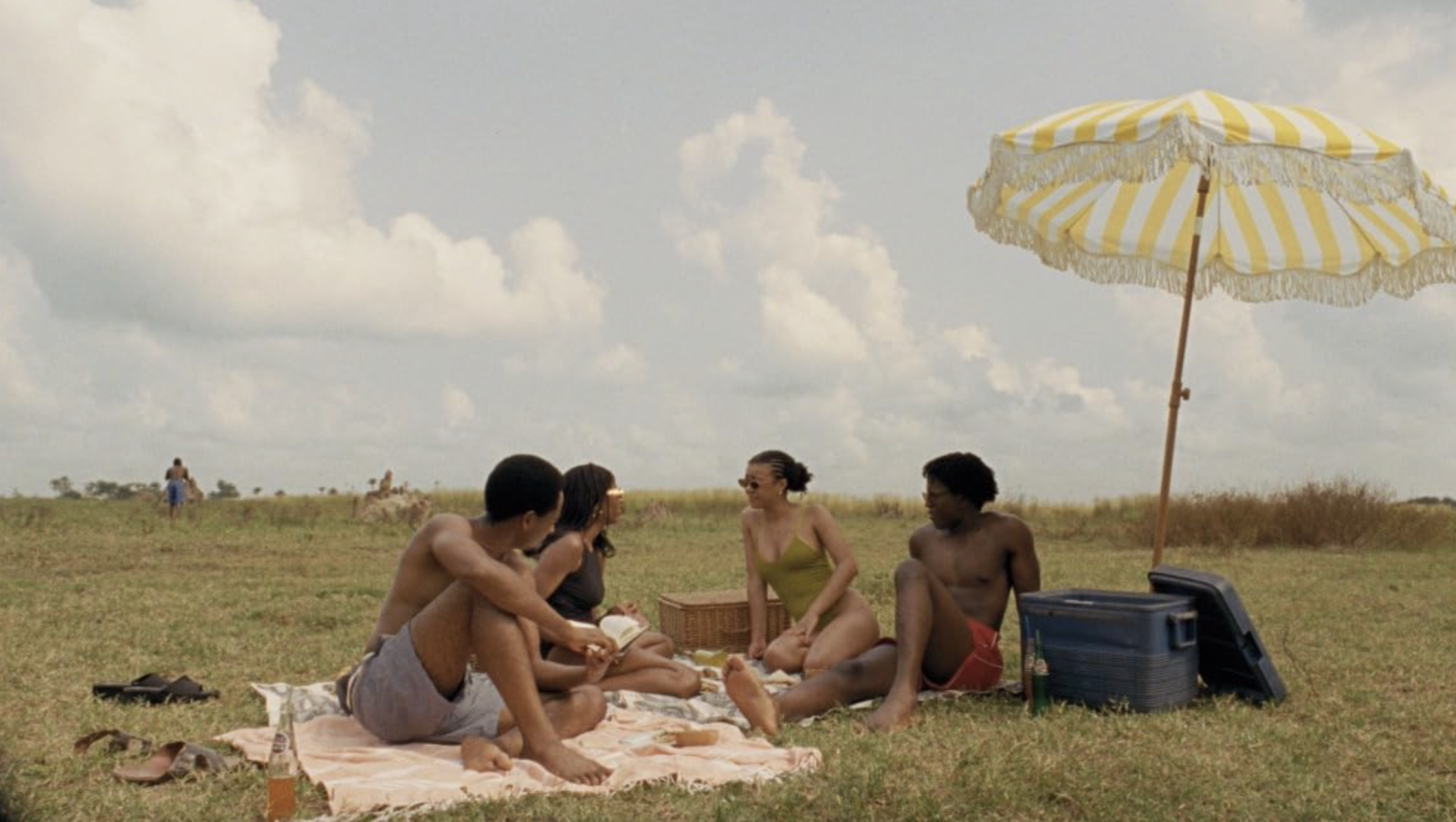
Clarissa—the new film from Arie and Chuko Esiri—is a mere three minutes longer than Club Kid. Yet this expansive adaptation of Virginia Woolf’s Mrs. Dalloway conjures an entire world, transplanting the novel to Lagos and conjuring an epic of modern Nigeria in the process. It’s a fairly faithful adaptation, as these things go: Clarissa (Sophie Okonedo) is throwing herself a birthday party in the home she shares with her husband, a government official named Richard (Jude Akuwudike). Drawing up the guest list, she slips back into memories of a summer spent at her family’s inland estate with her young lover Peter and her friends Ugo and Sally. These were days of love and freedom, when the teenaged Clarissa could still experiment and take risks—before the demands of propriety fell over her like a shroud. Yet they were also days of violence and disappointment, when a newly independent Nigeria was still burdened with codes of obligation leftover from its colonial past.
The Esiris shoot these sequences with a swooning romanticism, all golden days and blooming flowers and long languid double- and even triple-dissolves that serve as a counterpart to Woolf’s high-modernist style, collapsing past and present, experience and imagination. In the film as in the novel, the title character’s experience of the city is not the only one we observe, and the film pushes forcefully against the narrow bourgeois zone in which Clarissa now lives. There is the story of Septimus (Fortune Nwafor), traumatized by his military service in the fight against Boko Haram. There are the worlds of political and cultural corruption that Richard, Ugo, and Peter all must navigate in middle age. And then there is the life of Lagos itself, depicted via bustling documentary images of the laborers who give the city its power, forging metal and baking bread and constructing the high-rise buildings that now tower over Clarissa’s old-fashioned estate.
Alone among the filmmakers discussed here, the Esiris present a total vision. Clarissa fluctuates, transforms, bobs along on currents of history and melancholy toward an acceptance it can never quite reach. The brothers have made a film that looks like the past and feels like the future. Taste changes fast; I hope it is shifting in their direction.
We welcome your comments about this article. Please send your response to [email protected].