At the beginning of each semester, I ask my undergrads at Loyola University Chicago how many of them have heard of Catholic social teaching (CST). Usually only a few hands go up, confirming the adage that this portion of the magisterium is indeed the Church’s “best-kept secret.” In my course, students learn the principles of Catholic social teaching and apply them to contemporary issues, including immigration, racism, war and peace, economic justice, life issues, and global warming. Many of them say they are surprised and grateful to learn that the Church has something to say about topics that weigh heavily on their minds and hearts.
This semester, I’m adding a lesson on artificial intelligence. We’ll read portions of Pope Leo’s encyclical Magnifica humanitas, which contains in its second chapter a succinct summary of the CST principles of human dignity, the common good, subsidiarity, solidarity, and the universal destination of goods. Pope Leo and Pope Francis have certainly made my job easier, with pronouncements and written documents that provide plenty of fodder for my syllabus and class discussions. In fact, Catholic social teaching seems to be having a moment, not only in the Vatican but in the U.S. Church and culture. Suddenly, a lot of folks are taking the Church’s social teaching seriously.
You might like: Anthony Annett on the theology of social democracy
This long-overdue shift has been noted even in the secular press, especially after President Trump lashed out against Pope Leo over his antiwar comments. Writing in Harper’s, Jack Hanson (a Commonweal contributor) described the Church’s “progressive revival,” calling Pope Leo’s recent outspokenness more than “a personal project of the current bishop of Rome.” “Instead,” Hanson writes, “we are witnessing the flowering of tendencies that have long gestated within both the clergy and the laity, a long-neglected voice speaking to a world that, in a moment of profound instability, seems desperate to hear it.” Last November, The Atlantic’s Elizabeth Bruenig highlighted the Church’s conflict with the Trump administration over deportation policies.
More recently, David Gibson of Fordham University’s Center on Religion and Culture, characterized Leo’s points of emphasis memorably in a guest essay in The New York Times: Pope Leo is choosing “social justice over pelvic theology.” He cites Leo’s response to a reporter’s question about blessing gay couples: “We tend to think that when the church is talking about morality, that the only issue of morality is sexual,” the pope said. “And in reality, I believe there are much greater, more important issues, such as justice, equality, freedom of men and women, freedom of religion, that would all take priority before that particular issue.” Such words were a balm to those weary of what Gibson calls the Church’s “near fixation” on sexual ethics, but they infuriated conservatives who prefer a legalistic approach that focuses on personal sins. Of course, for popes and many Catholics, sexual and social teaching is not an either/or; the Church’s support for the dignity of unborn human life is consistent with its concern for workers, migrants, the poor, the abused, and victims of war.
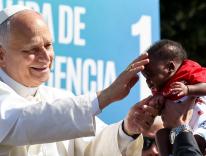
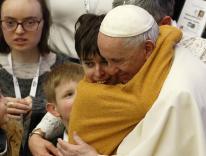
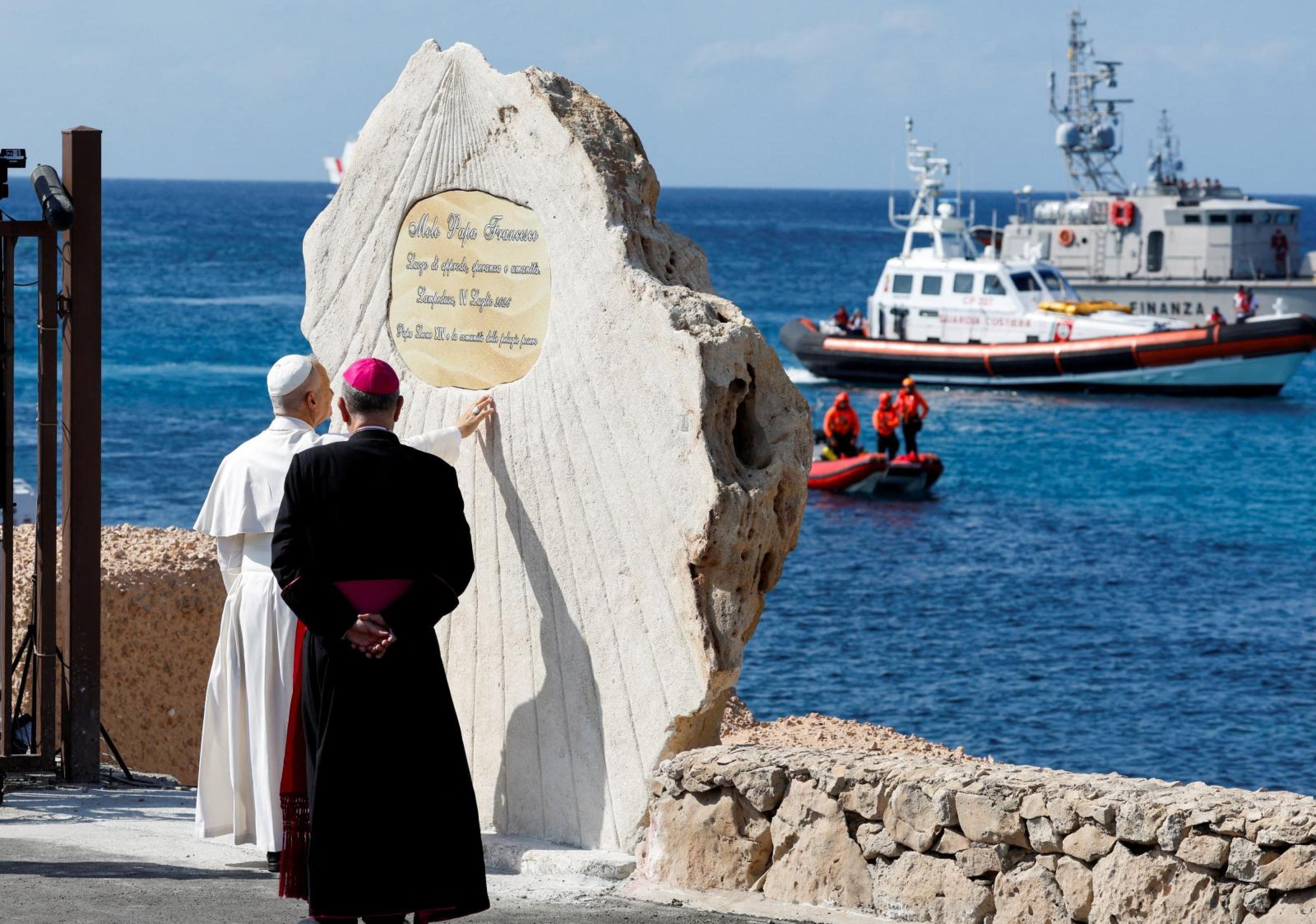
The move away from regarding sexual sins as preeminent began under Francis, who famously asked, “Who am I to judge?” in response to a question about gay priests and who made migration his signature issue. But the prioritization of social teaching became crystal clear when Cardinal Robert Prevost stepped onto St. Peter’s balcony in May 2025 and was introduced as Pope Leo XIV. Vatican watchers immediately recognized the reference to Leo XIII, whose 1891 encyclical Rerum novarum, responding to the struggles of the working class during the Industrial Revolution, is the foundational document of modern Catholic social teaching.
Pope Leo XIV has identified a new societal revolution in need of the Church’s countercultural wisdom. Like Francis, he defends migrants and refugees, and has been particularly outspoken about wars in Ukraine, Palestine, and Iran. But he chose artificial intelligence, with its potential to dehumanize and destroy lives and livelihoods, as the subject of his first full encyclical. In it, Leo traces the history of what he calls Catholic social doctrine, from Scripture to papal pronouncements to the documents of the Second Vatican Council, always emphasizing that the teachings must be applied to the issues of the day, as a way of “embodying God’s love in the concrete events of life.”
The popular pope has not been the only Church leader to underline the Catholic social tradition. Individual bishops and even the usually cautious and culture war–enamored U.S. bishops’ conference have found their voices, pushing back on the administration’s inhumane and violent immigration enforcement and illegal war in Iran. When even conservatives start throwing around CST—including Vice President J. D. Vance in his recent memoir—you know it’s become a force that cannot be ignored.
Of course, just because someone mentions Catholic social teaching doesn’t mean they’ve embraced it. Witness the more than half of Catholic voters who chose a president whose policies flatly contradict the Church’s social teachings—many of whom would likely characterize Trump as the most “Catholic” choice available.
Catholic progressives, on the other hand, have long relied on Catholic social teaching to form their consciences, inform their political involvement, and prioritize the issues they support with their talent and resources. I can only celebrate this wider renewed enthusiasm for CST and pray that the fervor helps redeem the U.S. Church’s reputation. Still, at my first class meeting this fall, I once again asked the students about their familiarity with Catholic social teaching. Only four hands went up. We still have lots of work to do.
We welcome your comments about this article. Please send your response to [email protected].
Editors’ note: An earlier version of this article could be read to imply that Jack Hanson, Elizabeth Bruenig, and David Gibson write from “outside the Church.” All three are Catholic.