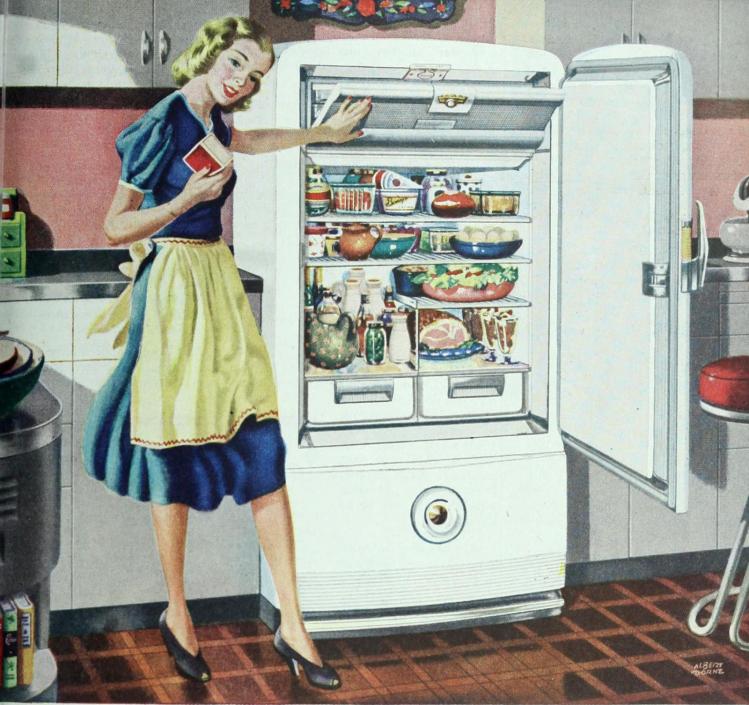
The summer’s most talked-about novel, the debut Yesteryear by Caro Claire Burke, has a tantalizing premise: a tradwife influencer wakes up one day to find that her modern kitchen, two nannies, and the other behind-the-scenes creature comforts that prop up her “traditional” lifestyle brand have disappeared. Instead, she is now living in 1855, where she has to bake her signature sourdough over a fickle fire and bloody her hands while scrubbing clothes with a washboard. Many readers come to the story hoping for a takedown of the internet corner where traditional gender roles reign. It’s no wonder the book has spent fourteen weeks at or near the top of the New York Times bestseller list and has become a favorite of women’s book clubs. Film rights have already been sold, with Anne Hathaway set for the leading role.
There is plenty to dislike about the main character, Natalie Heller Mills, in part because of the judgment and contempt she has for everyone around her: her weak husband, her struggling sister and single-parent mom, her college roommate and other feminist Angry Women (capitalization hers), her cool Gen Z producer, even her own children. Deep down, Natalie also seems to hate herself—and in that respect, this book is an interesting, though sad, psychological portrayal of a contemporary woman trying to navigate a performative life. But readers looking for any insights into the wider tradwife phenomenon—social-media influencers who document their domestic lives, usually with an antifeminist, traditionalist, and often Christian take—will come away unsatisfied.
Natalie’s story is a conglomeration of those of real-world tradwives—most obviously Hannah Neeleman of Ballerina Farm—from their shared prestigious East Coast alma maters to their West Coast organic farms (complete with scandalous exposés of pesticide use), from their large families with a “quiverfull” of children to their penchants for raw milk and vintage prairie dresses. And, of course, it draws on the millions of online followers who comment on their every move and purchase their branded merch. But while Neeleman is married to the real-life son of a billionaire airline executive, Burke’s fictional tradwife married into a political family, complete with a miserable, pill-popping matriarch. Natalie’s husband falls prey to the conspiracy-filled “manosphere” and veers into Christian-nationalist circles. The novel also delves into Natalie’s past, with enough childhood and young-adult trauma to justify her hatred of the career women Natalie believes are even more unhappy than she is. The storyline picks up steam when she tries to escape her apparent captivity in the antebellum era and ends with a plot twist I won’t reveal.
You might like: Heidi Schlumpf reports on a generation of progressive Catholic ‘mom bloggers.’
Readers and reviewers are divided on whether the book succeeds as a character-driven novel, but it’s pretty clear it fails to give readers any real insights into what’s driving the phenomenon of tradwife influencers. Nor does it contribute to any deeper understanding of religion’s role in promoting the traditional gender roles these women—and the people around them—espouse. In fact, Natalie’s religious background and spiritual beliefs are some of the more undeveloped themes in the novel. She frequently quotes Scripture in her self-talk and tries to portray herself as the “flawless Christian woman” prized in Evangelical, Mormon, and some conservative Catholic circles, although any denominational affiliation is vague. The author, who grew up Catholic, has described Natalie’s relationship to religion as “transactional” and ultimately political. Predictably, conservative critics have blasted the book’s stereotypical depiction of religion, while progressive ones argue that it accurately portrays the shallowness of contemporary religion. Natalie’s God is the type of deity who would send her to the past to suffer even more than she does in the present—and one in front of whom she “performs,” much as she does for her online audience.
But the book is less about religion than it is about gender, a topic Burke has explored since 2024 as cohost of the podcast “Diabolical Lies.” The title comes from a controversial commencement speech that year, in which Kansas City Chiefs kicker Harrison Butker told the women graduates of a conservative Catholic college that they have been told “diabolical lies” about prioritizing career and self-fulfillment over the vocations of wife, mother, and homemaker. Burke clearly has a feminist point of view, and it comes through in the novel as well. As pathetic as Natalie’s Harvard classmates seem to be—with their drunken hookups and academic competitiveness for entry-level consultant jobs—in the end, it is the “ideal” happy homemaker whose life is to be most pitied.
In some ways, the book is just another go-round of the age-old debate pitting stay-at-home moms with those who work outside the home, but with the added twist that performing homemaking for millions of online viewers can bring in enough money to be considered actual employment. But traditional, stay-at-home moms have always contributed to their families’ bottom line, by providing the child care whose cost would have likely eclipsed most of their salary if they took jobs outside the home. Stay-at-home moms also make their husbands’ work lives possible by picking up all the home- and child-related responsibilities, as well as the “mental load” that so many women are now tired of shouldering alone. Not to mention how full-time moms have also provided the labor for many nonprofit organizations that now struggle with a lack of volunteers.
The popularity of Yesteryear confirms that everyone loves to hate tradwives. But we’re also fascinated by them, and maybe a little jealous of the fantasy. There is nothing wrong with enjoying the domestic arts; I personally find knitting, interior design, and baking to be relaxing, creative outlets. But Burke is warning women not to be tempted to idealize motherhood (the description of breastfeeding and post-partum depression is particularly brutal) or romanticize a time when life was back-breakingly hard. By becoming a full-time homemaker, Natalie thinks she is giving the middle finger to a culture that demands she “do it all.” But she ends up exhausted, bitter, and full of rage, damaging herself and everyone around her.
So why is the tradwife lifestyle so attractive? Is it part of the backlash to third-wave feminism, a counterreaction on steroids (estrogen, in this case)? Or are tradwives actually rejecting the corporate rat race and ultimately capitalism by growing their own food, making their own clothes, and living off the grid (or least pretending to)? Or is it all a sham, just part of the artificial social-media culture, likely to intensify with artificial intelligence? Burke implies that women raised to value traditional gender roles, like Natalie, have little choice, or that all of their choices are awful. At one point, Natalie concludes: “America hates women.” Indeed. In this period of MAGA politics, patriarchy is especially powerful—and perhaps a clue to the popularity of the novel.
Some scholars have recently begun to study the tradwife phenomenon, but two histories of conservative women argue that women have always used domesticity to gain power, even political power. In Mothers of Conservativism, Loyola professor Michelle M. Nickerson describes how post–World War II, Southern Californian suburban women mobilized to fight perceived anti-American, left-wing threats, especially in public education. Those women ultimately shaped the new grassroots right, not by eschewing domesticity but by embracing it in what Nickerson calls “housewife populism.” She argues that middle-class, stay-at-home mothers used what were considered feminine values to present their views as folksy common sense. Although not tied to one denomination, their activism was often described in religious terms.
Similarly, white Christian women in the New Christian Right of the 1970s and ’80s framed themselves in political leadership as concerned mothers and wives. They advocated about issues related to family and sexuality, topics on which they were considered to have special authority. According to Emily Suzanne Johnson of Ball State University in her 2019 book, This Is Our Message, their political activism laid the groundwork for today’s culture war while simultaneously undermining the very gender roles that war sought to maintain. Although those women were essential in shaping the Christian right, their contributions were ultimately eclipsed by male leaders, Johnson argues. But they did build national networks of conservative Christian women, including online in what was then the blogosphere—which became the training ground for their descendants, who have become today’s tradwives.
We welcome your comments about this article. Please send your response to [email protected].