From the confines of our culturally diminished present—in which UFC cage matches are held on the White House South Lawn while the John F. Kennedy Center for the Performing Arts sits shuttered and shrouded—it can be difficult to recall better times. Once, federal funding for such public goods as the arts and the humanities was robust, for example, and artists, scholars, and students were supported rather than surveilled or sued. Pedagogical programs promoting curiosity and community were, if not quite common, at least not on financial life support.
The American Film Institute (AFI) was one of those programs. Created more than sixty years ago by Lyndon B. Johnson and the National Endowment for the Arts, its original remit was to establish film as a legitimate art form—perhaps even the national art form. It was a tall order, to be sure, but there was a very plausible rationale: “Film has been,” as the eminent historian and Kennedy-administration insider Arthur M. Schlesinger Jr. once put it, “the most potent vehicle of the American imagination.”
To prove as much, AFI, in its early years, looked both backward and forward. It worked to preserve American contributions to cinema, many of which were quite literally disintegrating (“nitrate won’t wait” became an unofficial slogan), while also training future filmmakers—up-and-coming artists who might one day make movies that could compare with the comedies of Buster Keaton or the Westerns of John Ford (Billy Wilder once quipped that AFI was in the business of “teaching new dogs old tricks”). But AFI administrators quickly realized that there was an even more basic task they needed to tackle first. Without an audience in place to love the classics and explore new auteur films, what was the point?
And so AFI’s founders scrambled to promote something they had initially overlooked: film appreciation. In 1968, about a year before AFI was set to open the Center for Advanced Film Studies—an outpost for filmmaker training housed, somewhat improbably, in a Beverly Hills mansion—it organized a month-long summer seminar at the University of California, Santa Barbara. Titled “Teaching the Film,” it brought together humanities professors (mostly men), secondary-school teachers (mostly from parochial schools, which maybe explains why a surprising number of them were nuns), and a few famous names from Hollywood (men again: King Vidor, Otto Preminger, and Alan J. Pakula). The idea was that these folks would hash out a plan for how the movies might not only be enjoyed but also debated, taught, and understood. “Better films demand better audiences,” a promotional flyer for the event proclaimed, but “better audiences demand better films,” too.
It was around this time that the academic field now known as film studies was born, centered around the idea that movies have—as Gregory Peck, an early AFI spokesperson put it—“the power not only to delight us, but to enlighten us as well.” In time, a new kind of cultural figure emerged, not just the film buff or critic, but the film teacher, the person who could serve as “a liaison between film and audience,” turning everyday moviegoers into “discriminating viewers,” just as the organizers of the Santa Barbara seminar had envisioned.
David Thomson played that role for a while. Though London-born and -educated (at the London School of Film Technique, which was an early role model for AFI), Thomson really got his start teaching film studies in the United States, at both New England College and Dartmouth. It was a giddy time. As he remembers it in his new book, A Sudden Flicker of Light, “college students were now alert to movies, and arguing about them,” so much so that “curriculum committees and deans of faculty got into wondering if it was legitimate or a con to give students credit (and degrees?) for watching movies.” Thomson’s chapter title says it all: “Ain’t Life Grand?”
Thomson was not the only one to feel like he had gotten away with something, sneaking movie-watching into the liberal-arts curriculum somewhere between Socrates and Shakespeare. The philosopher Stanley Cavell did something similar at Harvard, where he mentored a precocious young undergraduate by the name of Terrence Malick. “By the late sixties,” Thomson writes, “it was not just fashionable but necessary for schools of higher learning to do film courses—the history, the criticism, and even the making.”
But, in time, Thomson ditched the academy for a freelance career out in San Francisco, where he has worn the hats of the critic, historian, and author—he has even penned some fiction about film—for more than five decades. Over the course of a long and prolific career, he has remained, if no longer a film teacher exactly, one of our foremost film liaisons, somebody whose name routinely gets invoked alongside other famous film writers such as Andrew Sarris or Pauline Kael.
Thomson’s books have taught us how and why we should care about the movies, even while demanding—like the discriminating viewer he is—better things from Hollywood. One of my favorites is The Big Screen: The Story of the Movies and What They Did to Us (2012), which is so stuffed with erudite storytelling and movieland gossip I could hardly put it down. But its epilogue contained a hint of melancholy I rushed past too quickly, I now realize. Describing his tome as a “love letter to a lost love,” Thomson insinuated that the heyday of the movies has long since passed. Even worse was his suggestion that Gregory Peck had it wrong, that cinema—like all other moving image technologies following on its heels, from streaming to social media—does nothing to “unify and enlighten the world.” Indeed, Thomson saw dark clouds gathering on the horizon, in the shapes of which he spied “the lineaments of a coming fascism” fostered, at least in part, by motion pictures, because they make us “feel powerless, helpless, not there.”
Given all that has transpired in the decade and a half since, it is hard not to give Thomson some credit for his clairvoyance. But his sense of cinematic disappointment has now become, I am sorry to report, total despair. A Sudden Flicker of Light is billed as a “Revisionist History of the Movies” and our current president and the chaos he has sowed looms large over it. To understand Trump and those who cling to him like a film idol of old, Thomson argues, you have to understand just what the movies have done to us. Our fascination with motion-picture fantasy has blinded us to the ever-worsening state of our reality. “Exhausted by fear and the daily newsbreaks” we all receive now on our tiny screens, we have, all too willingly, “let the lifelike distract us from life.” As a consequence, we now have, once again, a failed reality-television performer for a president. Trump is the direct descendant of all the charlatans, crooks, and gangsters that have long mesmerized us on screens both big and small—from the monocle-wearing bad guys played by Erich von Stroheim to Citizen Kane, from Michael Corleone (Al Pacino) to Tony Soprano (James Gandolfini). Trump is, Thomson writes, “our movie man,” a creature “whose only escape from his dank cave is being on camera.”
While I am comforted to learn that Thomson, too, laments the predicament of the current political moment, I am nevertheless dismayed by the case he makes against the movies. His charge is a provocative one, reminiscent of the emigre scholar Siegfried Kracauer’s From Caligari to Hitler: A Psychological History of the German Film (1947), which posited a direct link between Weimar-era German cinema and the rise of Nazism. But there are worrisome traces of Plato’s famous allegory of the cave in Thomson’s screed, too, especially the idea that cave-dwellers accustomed to mistaking shadows on the wall for reality need to be guided to the light by a wise teacher who knows better. For our own good, we naïve moviegoers need somebody to drag us away from the screen, to keep us from “falling in love,” as Thomson puts it, “with the dangerous man.”
Thomson is relentless in his critique of Hollywood’s moral and pedagogical misdeeds. It is a curious about-face for a lifelong film-studies liaison—from cheerleader to Cassandra. Stringing together a series of tales about films and filmmakers who have led us astray—from The Birth of a Nation (“the first fascist picture”) to Leni Riefenstahl, or from Orson Welles to The Godfather, with many other byways and cul-de-sacs in between—Thomson all but writes himself out of love with cinema. He even goes so far as to suggest we’d be better off reading literature. Like the fuddy-duddy humanities professors who once resisted the incorporation of cinema into liberal-arts curricula way back when, Thomson repeatedly turns his attention from the screen to the page, placing the novels of Virginia Woolf, Henry James, or Norman Mailer above the films of a Hitchcock, Kubrick, or Malick. “I might trade away the top shelf of 1939” movies, he writes at one point—dismissing Ninotchka, Stagecoach, and The Wizard of Oz in one fell swoop, alongside, more understandably, Gone with the Wind—for one “slim book” by Nathanael West that ends with a Hollywood riot, namely The Day of the Locust. Comparing famous novels to their big-screen adaptations later on he’s even blunter: “The movies just don’t cut it.”
For all the hard work that went into establishing film studies, Thomson is remarkably cavalier about the pointlessness of it all: “The career of saying this film, not that one, gives way to a bitter understanding that the medium was indifferent to attempts at discrimination and prospects of a pantheon.” It gets worse: “The wave that had seemed to promise a better grasp of reality—for everyone, everywhere—may have drowned our chance for understanding.”
I hear the fear and the frustration, but I cannot help thinking Thomson’s thesis is more reductive than revisionist; that he is throwing in the towel too soon. Surely there is more to Fritz Lang than just his “fascination with evil masterminds.” Surely the films of Frank Capra symbolize something other than—something more than—the “mechanization of American story pictures” or “Hollywood fascism.”
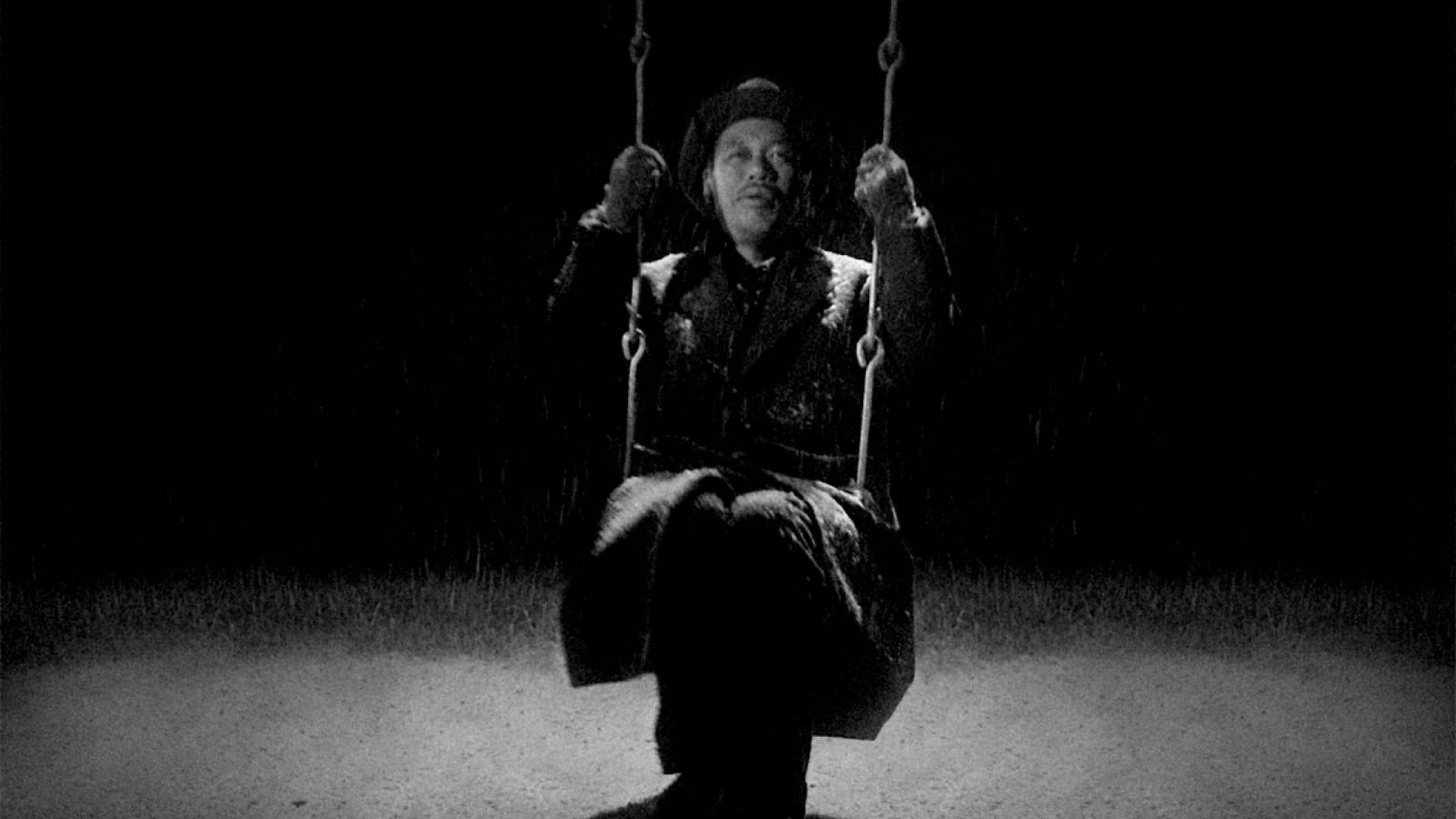
If there is a bright spot to be found in A Sudden Flicker of Light, it is in Thomson’s descriptions of the art-house cinema that was so in vogue back in the 1960s, when the films of Jean Renoir and Akira Kurosawa and the French New Wave washed up on American shores and across college campuses. When the foundations of film studies were being put into place. When Thomson and his peers—those professors and passionate students, not to mention all the nuns—debated the merits of watching pictures made by Robert Bresson, François Truffaut, or Jean-Luc Godard; of Ingmar Bergman, Federico Fellini, or Yasujirō Ozu. Thomson may not care for It’s a Wonderful Life (“a suppressed film noir,” he calls it), but at least he still likes films like Kurosawa’s Ikiru, a picture about a dying man’s final days that succeeds in capturing “a common human nature,” not just the imitation of it.
This bright spot is blotted out, though, by plenty of blind spots. There are predictable dismissals of Hollywood blockbusters and head-scratching diatribes against particular directors. Thomson thinks highly of Paul Schrader, for example, but calls the films of Terrence Malick, Schrader’s AFI classmate, “pretentious” and even, in some instances, “dreadful.” The nadir is Thomson’s discussion of Chantal Akerman’s 1975 picture Jeanne Dielman, 23 quai du Commerce, 1080 Bruxelles, which was declared the greatest film of all time by the 2022 Sight and Sound poll of film critics, sponsored by the British Film Institute (another role model for AFI). It was “a cruel and devastating elevation,” Thomson writes, especially for an overlong film lacking “stylish promise.” Never mind that Jeanne Dielman is a feminist classic, nor that it is about as far away from Hollywood fantasy or “fascism” as one can get, capturing the details of a single mother’s cloistered and repressed daily life. All Thomson sees in Akerman’s exacting masterpiece is “passive self-pity.” The rest of the chapter, ostensibly devoted to women filmmakers, discusses two other pictures about sex workers, Pretty Woman and Anora, both directed by men.
In the end, whether you prefer Jeanne Dielman to Anora or the other way around doesn’t really matter. I agree with Thomson that the ranking of films is a silly endeavor. What isn’t silly is learning how and why to pay close attention to them. Cinema is not just an escape from reality but also an invitation to consider it more closely. Siegfried Kracauer suggested as much in a book—Theory of Film—he wrote as a followup to From Caligari to Hitler. But you can find the same sentiment in novels, too, and I am glad Thomson still reads those with some pleasure, at least. He might like Tim Blake Nelson’s Superhero (2025), the saga of a doomed comic-book movie that reads like an extended Socratic dialogue, only with funnier jokes and set pieces.
Better still is Brian (2023), Jeremey Cooper’s portrait of a quiet man who lives alone in London until he one day decides to devote his life to moviegoing. Not much else happens in the book, but with Brian’s growing interest in film—thanks to regular visits to the British Film Institute’s theaters—comes a personal transformation that results in a newfound openness to the world and, ultimately, to life. “Tutored by film, by seeing it and then reading up in books about those movies that touched him,” Brian is no longer “a mouse, a termite, shut in dark tunnels of his own creation.” While he doesn’t become “a lion, of course not,” probably more like “a squirrel,” it is a “marked improvement all the same.” And all it took was a little film appreciation.
We welcome your comments about this article. Please send your response to [email protected].