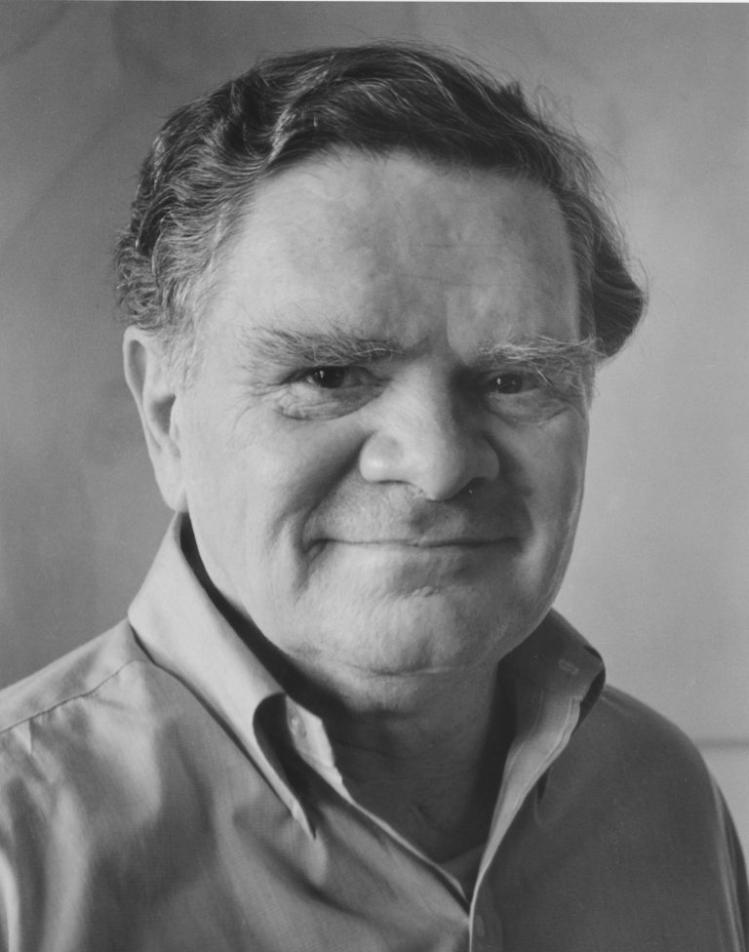
James Schuyler, along with John Ashbery, Barbara Guest, Kenneth Koch, and Frank O’Hara, made up the first generation of the “New York School” of poetry. Ron Padgett and Dick Gallup belong to that group’s second generation. Nathan Kernan’s A Day Like Any Other: The Life of James Schuyler traces Schuyler’s life and work. Padgett’s Dick: A Memoir of Dick Gallup, recounts a friendship of seventy-one years.
The last years before Schuyler’s death in 1991 were full of praise and prizes. I’ve always wondered what happened to Gallup, who led a poetry workshop I took in 1970. He died in 2021 but had vanished from the literary world decades earlier.
These two new books are entirely different in form, content, and intention. Kernan’s is a full-blown and well-documented account. It is not a critical biography, as Kernan makes clear in his prologue. Instead, he deftly incorporates brief explications of Schuyler’s poems that illuminate his life. Padgett’s book is an intimate recollection in 108 short sections, including sixteen pages of photographs. The measured and affectionate tone results in a moving portrait of a friend and his derailed career.
Schuyler’s work is still well known and celebrated. His book, The Morning of the Poem, won the Pulitzer Prize in 1981. The struggles he faced throughout his life make his success seem all the more unlikely. Kernan, who edited The Diary of James Schuyler and had become a friend of the poet in his final years, records the highlights and trials of Schuyler’s career amid a cast of numerous vividly depicted characters. In lesser hands, confusion might ensue, but this narrative is a page-turner of the best kind. We are taken from location to location, through crisis after crisis, witnessing stretches of painful stasis as well as moments of achievement. We are left with a feeling of immense sympathy for the book’s subject and the people who surrounded him.
For several reasons, Schuyler’s place among Ashbery, O’Hara, and Koch was “somewhat anomalous.” Schuyler left Bethany College without a degree after receiving failing grades. The others were Harvard graduates. Schuyler was also “relatively late to publish, retiring by nature…plagued by mental illness intermittently and lived long stretches outside the city.” His life entwined with notables such as Truman Capote, Larry Rivers, Marianne Moore, and W. H. Auden.
He was also deeply involved with the painter Fairfield Porter. Schuyler once visited Porter as a weekend guest and ended up staying with him for eleven years. In an account that captures the character of both men, Kernan describes Porter taking a walk with Schuyler to tell him it was time for him to leave. He writes that Porter must have “couched the request in fairly mild terms, for Jimmy’s reply…was ‘I’ll think about it.’” The next paragraph opens with: “And think about it he did, for three additional, uncomfortable years.”
Kernan carefully traces the development of Schuyler’s aesthetic. When Schuyler was in his mid-twenties, he served as secretary to Auden, typing his poems. While impressed with their formal qualities, Schuyler knew then that these were not the poems he wanted to write. Schuyler claimed D. H. Lawrence as his main influence, saying, “It was very liberating to pick up a book of poems by…Lawrence and not have to do these things.” “Things,” in this case, meant the formal elements of prosody that Auden had mastered and that Lawrence had eventually abandoned. Schuyler did acknowledge being stimulated by Auden’s poetry, and working for the older poet gave him “the opportunity to simply be ‘inside’ the physical fact of the poems through typing them.” Kernan concludes, “He learned to make a poem before he wrote a poem.”
Schuyler’s family had a history of depression. As a boy, he lived with a hostile stepfather, who, his mother confirmed late in life, hated him. After failing six of eight courses, he was “denied the privilege of further registration at Bethany College.” He joined the Navy, was imprisoned for going AWOL, and was discharged. His love life involved violence and abuse, and he endured manic episodes in which he believed he was Jesus Christ. He suffered third-degree burns from a fire he started by smoking in bed. He drank heavily and was robbed of notebooks, documents, and cash by a friend with a heroin addiction. “You made me pretty mad, but my real concern was for you, and that you shouldn’t seriously injure yourself,” Schuyler later wrote to that person. This shows the sweetness of Schuyler’s character and why so many cared so deeply about him.
And that quality accounts for the fact that, during most of his life, he was rescued time and again by offers of material support. Kernan quotes Knyaston McShine: “Jimmy had a real talent of being taken care of, and finding people to take care of him.” He sought out stable families, perhaps to replace the one he never had. The Porter residence appealed to him, as did, briefly, Kenneth Koch’s household. His medical and living expenses were sometimes paid by Auden, and in 1973, the Kenward Elmslie foundation provided him with five thousand dollars a year for life.
Schuyler died at sixty-seven. Kernan writes that the last six or so years of his life were “rich and full.” He was awarded grants, gave public readings, which he had previously eschewed, found a new love, and revived old friendships. Kernan describes Schuyler with a frank compassion, explicates his work incisively, and displays a deep historical knowledge. This is a study worthy of its subject.
Padgett, a well-known poet and translator, is not new to the genre of memoir. His previous memoirs include Ted: A Personal Memoir of Ted Berrigan and Joe: A Memoir of Joe Brainard. He begins Dick with a preface titled, “Why This Book.” It’s an answer to a question he’s sure many will ask, as Gallup is almost completely forgotten these days. “As his lifelong friend, I was unable to bear the thought of the effacement of such an extraordinary person and poet,” Padgett writes. “It’s time to bring Dick Gallup into the limelight where he belongs.”
Padgett met Gallup in Tulsa, Oklahoma, when the Gallups moved across the street from the Padgetts. They were both ten at the time. In high school, their classmate was writer and artist Joe Brainard. There, they also made the acquaintance of Ted Berrigan, who was enrolled at the University of Tulsa on the GI bill. All four would play important roles in New York City’s downtown literary life. John Ashbery would jokingly label them “the soi-disant Tulsa group.”
As the two boys became friends, they developed a private language with private gestures. “We gave a name to our recurrent lassitude: ‘I’m feeling dingly-dangly.’” A crazy dance accompanied this feeling. They were both attuned to language and looked out for occasions when it was spoken absurdly. An algebra teacher who resembled Nikita Khruschev used to warn the class, “There’s gonna be lots and lots of grief and misery.” Padgett and Gallup repeated those words to each other, “relishing every syllable.” Separated when they went to different colleges, Padgett wrote a letter to Gallup that said, “No one understands our communications…our vocabularies, our thoughts…like us.”
While in high school, the two boys started The White Dove Review, soliciting and publishing work by Allen Ginsberg, Robert Creeley and Jack Kerouac. Padgett left Tulsa for Columbia College in New York and Gallup eventually followed him. The two friends reunited there with Brainard and Berrigan.
Padgett traces Gallup’s ascent in the world of poetry, but notes that, along the way, Gallup was prone to “self-doubt, lassitude, and disorientation,” most often when he was without a partner. Throughout his life, he had a hard time making ends meet. As part of the Poet in the Schools program, he held positions in seven states, but these were temporary. He lost a good position in South Carolina due to distraction caused by his failing marriage.
When these jobs ended, he moved back to New York, where he lived off welfare and minute payments for readings and publications. He “clung to the irregular lifestyle of a bohemian poet, about which he moaned but seemed unable to relinquish or adjust.” Unlike Schuyler, Gallup’s circle did not include wealthy friends who could come to his rescue. He served for a short time as program director at Naropa University, but Gallup was not adept at navigating academic bureaucracies. He once wrote an amusing and prescient poem addressing this issue. The speaker of “Under the Big Top” spends most of his time “in Persia” because he took the “I Will Not Be An Academic Poet Oath.” The speaker insists on this stance, which he says he vowed when he was “very young.” The poem ends:
Unfortunately
I have had to make tents for a living
Ever since
Padgett comments that taking the vow meant Gallup “would end up driving a taxi for the rest of his life.”
Padgett praises Gallup’s work, particularly the way he allowed “each poem to grow organically from line to line, image to image, idea to idea, feeling to feeling, with an emphasis on feeling and a satisfying sense of structure.” Unfortunately, there were not many new poems after he “left the poetry world” in 1981 and moved to San Francisco “with very little money, no job prospects and nowhere to live.” His final book, Shiny Pencils at the Edge of Things: New and Selected Poems, was published in 2000.
Despite its sad recounting of a life of only partly fulfilled promise, the depth and warmth of Padgett’s love for his friend make Dick a heartening book to read. Their secret boyhood language found continued expression in the writing they did as adults. Gallup was a sensitive soul who drew strength from the work of others, including Schuyler. A diary entry from 1970 reads, “Jimmy Schuyler uses lyrical grace and simplicity.” Dick Gallup managed to maintain the “irregular lifestyle” of a bohemian till the very end. His obscurity was partly a function of his integrity: he was not of this world. As his ex-wife put it, “Of course he had not been a good provider or a faithful husband, but that on the other hand he was so beautiful and spiritual, and that rare thing, a real poet.”